- Home
- Dehydrated Food Recipes
- Stir-Fry with Dehydrated Vegetables

Stir-Fry with Dehydrated Vegetables: Quick & Easy

If you've got dehydrated vegetables in your pantry, you're well on your way to a colorful, healthy stir-fry. This simple recipe is perfect for busy weeknights—less chopping, less wasted produce, and plenty of delicious veggies ready to spring back to life in the wok.
✅ Quick Answer: How do you make stir-fry with dehydrated vegetables?Rehydrate enough dried vegetables to make approximately 2 cups once softened and drained. Stir-fry them with garlic, ginger, and your choice of protein, then add a simple soy-based sauce. Cook until the vegetables are tender, the protein is fully cooked, and everything is coated in sauce. Serve over rice or noodles.
With a little soaking time, your dried vegetables are ready to join fresh protein and a flavorful sauce for a satisfying meal that tastes like takeout but costs far less.
 Stir-fry chicken in a wok
Why Dehydrated Veggies Make Stir-Fries Faster and Easier
Dehydrated vegetables help simplify meal planning. Dried foods are lightweight, store well for months when properly dried and kept in airtight containers, and the best part to me is that they don't need refrigeration!
When I get home from the store, I like to prep my fresh veggies in one fell swoop. Once they're dehydrated and safely stored, I've got a handy supply ready whenever I need them.
Dehydrated vegetables work well in stir-fries, soups, and casseroles, making them ideal for quick dinners during the workweek.
What You’ll Need for a Perfect Stir-Fry
 Ingredients for a chicken stir-fry
First, we need to gather a few basic ingredients for a dehydrated food stir-fry.
- Dehydrated vegetables (bell peppers, onions, carrots, mushrooms, and broccoli work well)
- Protein of your choice (chicken, beef, tofu, or shrimp)
- Aromatics (garlic, ginger)
- Cooking oil
- Stir-fry sauce (store-bought or homemade)
NOTE: The meat we're using is fresh, not dehydrated. But first things first—we need to rehydrate our dried veggies before adding them to the stir-fry.
How to Rehydrate Dehydrated Vegetables for Stir-Fry Success
Don't forget to add the water back into your dried veggies! And, as stated in point 2 below, use broth for added flavor, and my go-to stock of choice is always Better Than Bouillon by Superior Touch.
Check out this variety 3-pack on Amazon:

As an Amazon Associate, I earn from qualifying purchases—this does not affect the price you pay. Read full disclosure.
- Hot water method: Place your dehydrated vegetables in a heatproof bowl and cover them generously with hot water. Soak until softened, checking after 10–15 minutes. Thinly sliced vegetables may be ready quickly, while thicker carrots, broccoli, and other dense vegetables can take 20–30 minutes or longer.
- Broth method: For extra flavor, use hot vegetable or chicken broth instead of water. Follow the same soaking method, allowing enough time for the vegetables to soften.
- Simmering method: For vegetables that need more time, gently simmer them in water or broth until tender. Drain thoroughly before adding them to your stir-fry.
OK, I have to admit that I'm not a fan of leaving dried foods soaking in warm water for too long. Bacteria can multiply when food sits at unsafe temperatures, so I prefer to rehydrate my vegetables just before cooking. If you're preparing them ahead of time, pop them into the refrigerator while they soak.
When your dried veggies have plumped back up and become tender, drain them thoroughly. You can save the soaking liquid for soups or sauces if it's suitable for reuse and has been handled safely. We don't want excess water getting in the way of our perfect stir-fry!
Pro Tip: Blanch Veggies Before Drying for Better Color and Quality

If you love bright red peppers, dark green broccoli, and gorgeous orange carrots, you might want to blanch your veggies BEFORE you dry them (yep going back to the beginning of prep when you get back home from the store!)
Blanching helps preserve the color and quality of certain vegetables, particularly broccoli and carrots. Briefly blanch them according to the vegetable's recommended preparation method, then cool promptly before draining and dehydrating. Not all vegetables need blanching—bell peppers and onions, for example, can generally be dried without it.
Stir-Fry Like a Pro: Techniques That Make the Difference
It's all about technique. Let's aim for a restaurant-quality look'n'taste at home!
- Use a hot pan: Preheat your wok or large skillet before adding the oil. A hot cooking surface helps develop flavor through browning and gives your ingredients that delicious stir-fried texture. Keep an eye on the heat so the oil doesn't smoke excessively.
- Cook in batches: Don't overcrowd the pan. Doing so leads to steaming rather than frying. Cook your protein first, then set it aside while you stir-fry the vegetables.
- Keep things moving: Stir and toss your ingredients frequently to prevent sticking and burning. It also makes it look like you know what you're doing!
- Time it right: Start with your rehydrated vegetables, adding firmer ones first if necessary. Add minced garlic and ginger toward the end of the vegetable cooking time so they become fragrant without burning. Return your cooked protein to the pan, add the sauce, and finish cooking everything together.
How to Build Bold, Layered Flavors in Your Stir-Fry
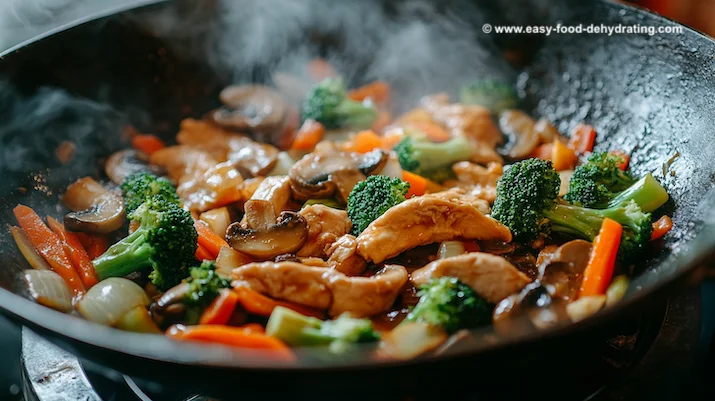 Chicken stir-fry, cooking in a wok
Time to focus on the flavor! Garlic, ginger, soy sauce, and a few other simple ingredients can turn your rehydrated vegetables into a delicious stir-fry.
- Add aromatics: Minced garlic and fresh ginger bring wonderful flavor. Add them toward the end of stir-frying your vegetables so they become fragrant without burning.
- Build savory depth: Combine soy sauce, oyster sauce, and a little sesame oil for a rich, satisfying umami flavor. For a vegetarian version, use vegetarian mushroom stir-fry sauce instead of oyster sauce.
- Balance with sweetness: A little brown sugar or honey helps balance the salty and savory ingredients.
- Finish with freshness: Sprinkle chopped cilantro or basil over your finished stir-fry for a fresh, colorful touch.

Easy Homemade Soy-Based Stir-Fry Sauce Recipe
 Making sauce for a stir-fry
A good stir-fry sauce makes all the difference, right? Here's a simple soy sauce recipe that goes well with dehydrated vegetables and meat:
Ingredients
- 1/4 cup soy sauce (regular)
- 2 tablespoons oyster sauce
- 1 tablespoon rice vinegar
- 1 tablespoon brown sugar
- 1 teaspoon sesame oil
- 1/4 cup water
Instructions
- Mix the sauce ingredients: Combine the soy sauce, oyster sauce, rice vinegar, brown sugar, sesame oil, and water in a bowl. Stir until the sugar has completely dissolved and you can't feel any grittiness.
- Add the sauce near the end of cooking: Pour the sauce into your wok after the vegetables and protein have cooked. Stir everything together and bring the sauce to a gentle simmer for 1–2 minutes.
Sauce a bit too runny for you?
For a thicker sauce, mix 1 teaspoon of cornstarch with 2 teaspoons of cold water in a separate small bowl until smooth. Stir this slurry into the simmering sauce and cook for another 30–60 seconds, or until the sauce thickens.
You can add a little more slurry if necessary, but give the sauce time to thicken before adding extra.
Yield: 1 batch (approximately ½ cup), enough for one stir-fry recipe serving 3 people.
Step-by-Step Stir-Fry with Dehydrated Vegetables
 Chicken stir-fry in a wok
Now we've got our sauce figured out, how about we get going with the full stir-fry recipe?
Ingredients
- Approximately 2 cups rehydrated and drained vegetables (bell peppers, onions, carrots, broccoli, or mushrooms)
- 12 oz. boneless chicken, beef, or shrimp, cut into bite-sized pieces, or firm tofu for a meat-free version
- 2 tablespoons cooking oil, divided
- 2 cloves garlic, minced
- 1 teaspoon fresh ginger, minced or grated
- 1 batch homemade stir-fry sauce (recipe above)
- Cooked rice or noodles, for serving
Instructions
- Rehydrate your vegetables using one of the methods described earlier. Drain thoroughly and set aside.
- Heat 1 tablespoon of oil in a wok or large skillet over medium-high to high heat.
- Cook your protein in a single layer, working in batches if necessary. Cook chicken to an internal temperature of 165°F, shrimp until opaque and firm, or beef to its appropriate safe temperature. Remove the protein and set aside on a clean plate.
- Add the remaining tablespoon of oil to the wok, followed by your rehydrated vegetables. Stir-fry for approximately 2–4 minutes, or until heated through and tender.
- Add the minced garlic and ginger and stir-fry for another 30 seconds, stirring constantly to prevent burning.
- Return the cooked protein to the wok and pour in your homemade stir-fry sauce.
- Stir everything together and simmer for 1–2 minutes, until the sauce is hot and the ingredients are well coated. If using the cornstarch slurry described above, add it now and cook until thickened.
- Serve immediately over hot cooked rice or noodles.
Servings: Approximately 3
Food Safety Tip: Chicken should reach 165°F internally. Whole cuts of beef should reach 145°F followed by a 3-minute rest, while ground beef needs 160°F. Cook shrimp until the flesh is pearly or white and opaque.
For a vegetarian version, use firm tofu or tempeh instead of meat, and swap the oyster sauce in the homemade stir-fry sauce for a vegetarian mushroom-based stir-fry sauce.

Time-Saving Hacks for Faster Weeknight Stir-Fries
To make weeknight stir-fries even easier, try these time-saving tricks:
- Prep ingredients in advance: Rehydrate your vegetables and mix your sauce the night before or earlier in the day. Keep the rehydrated vegetables refrigerated in a covered container until you're ready to cook. Refrigerate the prepared sauce, too.
- Use leftover rice or noodles: Cook extra rice or noodles ahead of time for another quick meal. Cool them promptly, refrigerate within two hours, and use refrigerated cooked rice within 3–4 days. Reheat thoroughly until steaming hot.
- Keep a stir-fry kit in your pantry: Store your dehydrated vegetables, unopened shelf-stable sauces, and dried aromatics together for quick access. Refrigerate sauces after opening when required by their labels.
- Incorporate leftovers: Leftover cooked meats or vegetables can make your stir-fry even quicker. Keep leftovers refrigerated, use them within 3–4 days, and reheat to 165°F.
Your Top Questions About Cooking Stir-Fry with Dehydrated Vegetables
Do dehydrated vegetables need to be rehydrated before stir-frying?
Do dehydrated vegetables need to be rehydrated before stir-frying?
Yes, for this recipe. Soak them in hot water or broth until tender. Thinly sliced vegetables may soften in 10–15 minutes, while thicker pieces can take 20–30 minutes or longer. Drain thoroughly before adding them to your wok.
Can I stir-fry only dehydrated vegetables without meat?
Can I stir-fry only dehydrated vegetables without meat?
Absolutely! Dehydrated vegetables make a colorful, satisfying meat-free stir-fry. Add tofu, tempeh, or cashews for extra protein. For a vegetarian version, replace the oyster sauce with a vegetarian mushroom-based stir-fry sauce.
Which dehydrated vegetables work best in stir-fry?
Which dehydrated vegetables work best in stir-fry?
Bell peppers, onions, carrots, mushrooms, and broccoli are excellent choices. They absorb flavor beautifully, although their texture may be softer than fresh vegetables once rehydrated.
Cooking a stir-fry with dehydrated vegetables is one of the easiest ways to put dinner on the table fast, while still keeping it healthy and delicious.
Before you go, grab the free 5 Dried Food Recipes That Actually Taste Great PDF below—featuring carrot soup, minestrone, split pea soup, spicy beef jerky, and even banana cinnamon rolls.

5 Free Dried Food Recipes
That Actually Taste Great
Put your dried food to delicious use!
Five very different recipes.
Not one dull bite...
5 Free Dried Food Recipes
That Actually Taste Great
Put your dried food to delicious use!
Five very different recipes.
Not one dull bite...
More From Easy Food Dehydrating
Tuna Pasta Bake – Classic, Cheesy & Crispy Comfort Dish
Make a cheesy, crispy tuna pasta bake in under an hour—simple, budget-friendly, and packed with cozy flavor.
Cranberry and Pineapple Pie: A Fruity Holiday Treat
Cranberry and Pineapple Pie: A Fruity Holiday Treat - our fave holiday dessert! It'll become a fast-favorite of yours too!
Millet & Quinoa: Nutrition, Cooking & Storage Tips
Discover millet and quinoa benefits, how to rinse and cook, and easy ways to use and store these gluten-free staples.
Green Split Pea Soup Made Easy in the Slow Cooker
Easy slow cooker green split pea soup with ham, carrots, and celery—comforting, flavorful, and simple to make.
Pea Soup with Dehydrated Peas: Smooth & Velvety
Make velvety pea soup with dehydrated peas, tarragon, and pantry staples—easy one-pot comfort in about 30 minutes.
Tuna Salad with Dehydrated Vegetables Recipe
Make an easy tuna salad with rehydrated celery and onion. Serve this creamy, crunchy lunch on homemade bread, with crackers, or over salad greens.






More From Easy Food Dehydrating
Tuna Pasta Bake – Classic, Cheesy & Crispy Comfort Dish
Make a cheesy, crispy tuna pasta bake in under an hour—simple, budget-friendly, and packed with cozy flavor.
Cranberry and Pineapple Pie: A Fruity Holiday Treat
Cranberry and Pineapple Pie: A Fruity Holiday Treat - our fave holiday dessert! It'll become a fast-favorite of yours too!
Millet & Quinoa: Nutrition, Cooking & Storage Tips
Discover millet and quinoa benefits, how to rinse and cook, and easy ways to use and store these gluten-free staples.
Green Split Pea Soup Made Easy in the Slow Cooker
Easy slow cooker green split pea soup with ham, carrots, and celery—comforting, flavorful, and simple to make.
Pea Soup with Dehydrated Peas: Smooth & Velvety
Make velvety pea soup with dehydrated peas, tarragon, and pantry staples—easy one-pot comfort in about 30 minutes.
Tuna Salad with Dehydrated Vegetables Recipe
Make an easy tuna salad with rehydrated celery and onion. Serve this creamy, crunchy lunch on homemade bread, with crackers, or over salad greens.
Before You Go...
If you enjoyed this page, tap the ❤️ in the lower right-hand corner. It saves this page to your Grow bookmarks so you can find it again later.
You’ll also see quick share buttons to copy the link, post to Facebook, or save it straight to Pinterest.

Test Your Food-Dehydrating
Know-How
Choose a food, make the right preparation, drying, and storage decisions—and see how many stars you can earn!
Play “Save the Harvest”Test Your Food-Dehydrating
Know-How
Choose a food, make the right preparation, drying, and storage decisions—and see how many stars you can earn!
What We Mean by “Dehydrate”
Here at Easy Food Dehydrating, “dehydrate” always means using an electric food dehydrator — the easy, reliable way to dry food at home.
What We Mean by “Dehydrate”
Here at Easy Food Dehydrating, “dehydrate” always means using an electric food dehydrator — the easy, reliable way to dry food at home.


LATEST READS on EFD


-
Pawcute Mason Jar Vacuum Sealer Review + FoodSaver Fix
Nov 03, 26 01:07 PM
 My hands-on Pawcute Mason Jar Vacuum Sealer review, with a video demonstration, FoodSaver V2240 hose workaround, and tips on choosing the manual pump kit.
-
Liver Dog Treats: Healthy Homemade Snacks for Dogs
Nov 03, 26 11:54 AM
 Make homemade liver dog treats with beef or chicken liver. Learn safe cooking temperatures, dehydrating tips, dryness checks, and proper storage.
-
Slow Cooker Beef Stew with Dehydrated Vegetables
Nov 03, 26 10:58 AM
 Make hearty slow cooker beef stew with dehydrated vegetables—no pre-soaking needed! An easy, comforting dinner with tender beef and rich gravy.



Unlock the Secrets of Food Dehydrating... from Fruit 'n' Veg to Doggie Dinners!




AFFILIATE DISCLOSURE: I am an Affiliate for Amazon, and other sellers of quality merchandise. Should you purchase an item through their links, I may receive compensation. The price you pay does not increase. THANKS for your support! Read full disclosure here.
easy FOOD DEHYDRATING: Making food preservation simple since 2010. I show you how to keep your food pantry full, whatever the reason or season!

HOME ARTICLES CONTACT ADVERTISING DISCLOSURE DISCLAIMER FAQ PRIVACY SITEMAP TERMS TESTIMONIALS
ALL CONTENT COPYRIGHT © 2010-2025 • ALL RIGHTS RESERVED REGARDLESS OF LINKS OR ATTRIBUTIONS.
POWERED BY SBI! (SOLO BUILD IT!)
As an Amazon Associate, I earn from qualifying purchases.