- Home
- Homemade Pet Treats
- How to Make Homemade Dog Food

How to Make Homemade Dog Food: Chicken and Beef Recipes
Making homemade dog food lets you choose every ingredient that goes into your dog’s bowl—but creating a nutritionally complete everyday diet requires more than combining meat, grains, and vegetables.
On this page, I’ll introduce you to my Chicken Chow and Bow Wow Beefy Chow recipes, share the touching story of how our Miniature Pinscher came into our lives, and explain what to consider before feeding your dog a homemade diet.

✅ Quick Answer: How do you make homemade dog food?
Homemade dog food generally combines properly cooked animal protein with other carefully measured ingredients and appropriate supplementation. However, adding meat, grains, vegetables, and a few vitamins does not automatically create a complete and balanced everyday diet. Before feeding a homemade recipe as your dog’s primary food, ask your veterinarian or a board-certified veterinary nutritionist whether it meets your particular dog’s nutritional needs.
✅ Quick Answer: How do you make homemade dog food?
Homemade dog food generally combines properly cooked animal protein with other carefully measured ingredients and appropriate supplementation. However, adding meat, grains, vegetables, and a few vitamins does not automatically create a complete and balanced everyday diet. Before feeding a homemade recipe as your dog’s primary food, ask your veterinarian or a board-certified veterinary nutritionist whether it meets your particular dog’s nutritional needs.
Important: Homemade does not automatically mean balanced
Dogs need specific amounts and proportions of protein, fat, vitamins, minerals, essential fatty acids, and other nutrients. Their needs can also change with their age, size, activity level, and health.
The recipes shared in my book are the homemade meals I prepared for our own Miniature Pinscher. They were not formulated specifically for your dog. Please show the recipe and supplement information to your veterinarian before using either recipe as your dog’s complete everyday diet.
How a Little Lost Dog Changed Our Lives

It all began when a tiny black dog wandered onto our property. My husband and I had never seen her before. She was thin, anxious, and determined not to let us get close enough to help her. That independent streak was our first introduction to the personality of a Miniature Pinscher!
A few weeks later, we walked to my brother and sister-in-law’s house for my dad’s 80th birthday celebration. Smack dab in the middle of the path was that same little dog.
She had an enormous tick attached to one ear and a smaller tick on the other. I cried on the spot.
My husband ran home for a clean towel. We gently wrapped her in it and carried her back to our house. This time, she didn’t resist. We could see the relief in her eyes.
We drove around the neighborhood looking for her owners, but nobody appeared to be missing her. We eventually concluded that she had been abandoned near the end of our road.
Our veterinarian gave her a thorough examination. Thankfully, she was in good condition apart from being thin and having those horrible ticks. She wasn’t microchipped, and although she wore a bright red collar with a tiny heart pendant, it had no name or contact information.
She was happy to be rescued. She made our day, and she completed our life.
Why I Began Making Homemade Food for Her
Around that time, reports of contaminated commercial pet food were understandably worrying many dog owners—including me. Having only just found this precious little dog, I wanted to know exactly what I was putting into her bowl.
During my research, I discovered a homemade dog-food recipe online. I adapted it and created the chicken meal I named Chicken Chow. Later, I developed a beef version called Bow Wow Beefy Chow.
This was a personal decision based on the information available to me at the time and my desire to prepare something Minnie enjoyed. It should not be interpreted as meaning that all commercial dog food is unsafe. Reputable complete-and-balanced commercial foods provide a convenient way to meet a dog’s established nutritional requirements.
Meet Chicken Chow and Bow Wow Beefy Chow
Chicken Chow combines cooked chicken with grains, vegetables, noodles, and the supplements described in my book. Bow Wow Beefy Chow follows a similar homemade approach using beef.
Minnie loved both versions and ate them enthusiastically. There were certainly no complaints from her—and I received plenty of appreciative licks!
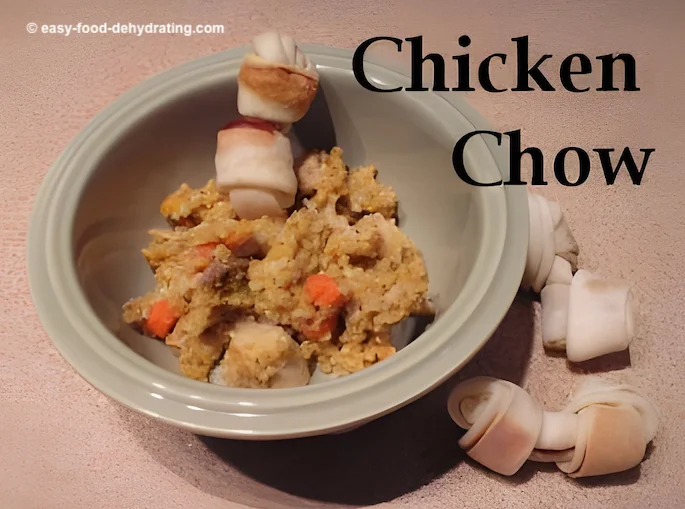
These meals contain recognizable ingredients, but recognizable ingredients alone do not establish whether a recipe is nutritionally complete. If you want to serve either recipe as your dog’s principal diet, take the complete recipe—including all ingredient quantities and supplements—to your veterinarian for review.
How I Prepared Minnie’s Homemade Food
I cooked the meat thoroughly without adding salt, pepper, onions, garlic, or seasoning blends. The remaining ingredients were prepared separately, combined in the recipe quantities, and allowed to cool before the supplements were mixed in.
You can cook the chicken in a pressure cooker, in a pan on the stove, or in the oven. Whichever method you use, cook it as plainly as possible and cut it into suitably sized pieces for your dog.
After everything is combined, divide the food into portions and refrigerate or freeze it promptly. Use clean utensils and containers, and never leave cooked meat-based food sitting at room temperature for extended periods.
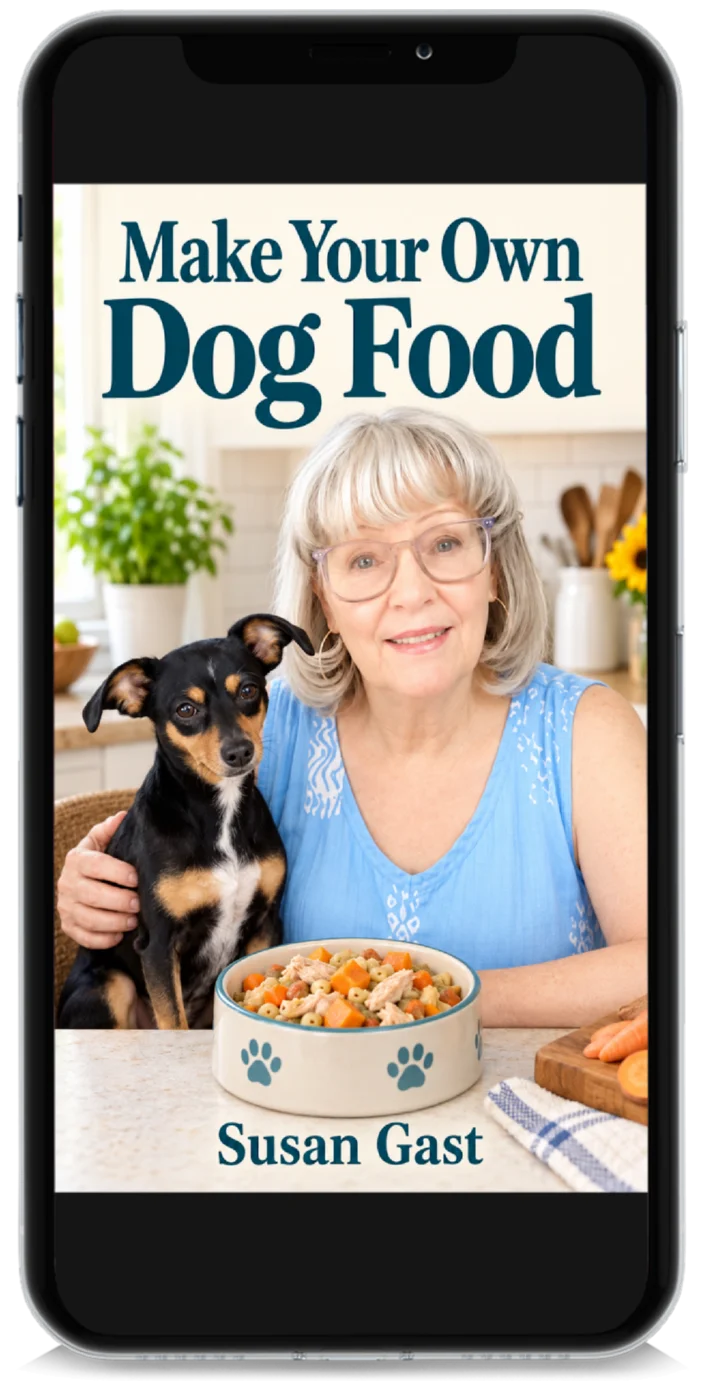
The complete ingredient amounts and preparation instructions are included in my Make Your Own Dog Food ebook and paperback.
What About Vitamins and Supplements?
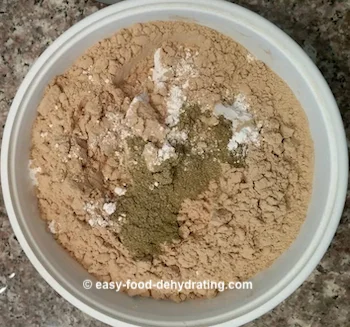
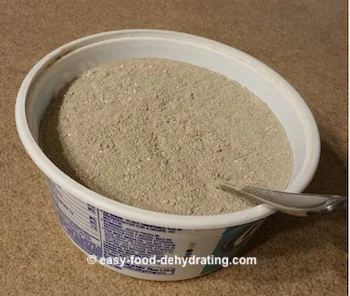
My recipe includes four supplements, with the quantities and mixing instructions provided in the book. However, the fact that a recipe contains supplements does not necessarily mean it meets every dog’s nutritional requirements.
Please do not guess at supplement amounts, substitute products without checking their nutrient content, or assume that more is better. Both deficiencies and excessive amounts of certain nutrients can cause problems.
Your veterinarian can help determine whether the recipe and supplements are appropriate for your dog. For a detailed nutritional analysis or individually formulated recipe, consult a board-certified veterinary nutritionist.
What We Observed in Minnie
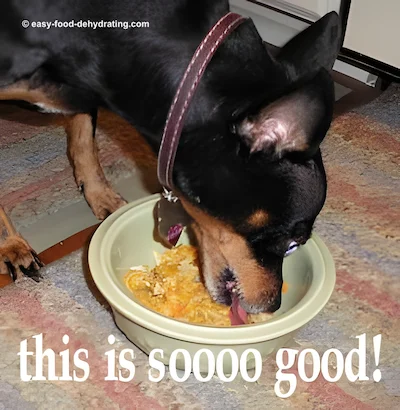
Minnie had been thin when we found her, but she regained weight after coming to live with us. Her skin and coat looked wonderful, her eyes were bright, and she remained lean and active.
During one visit for a nail trim, our veterinarian exclaimed, “Your dog’s in perfect health!” Naturally, I was delighted.
Those were our personal observations of Minnie—not a promise that this food will produce the same results for every dog. Her overall care, safe home, veterinary treatment, activity, genetics, and diet may all have contributed to her condition.
What I can say with complete confidence is that she loved her Chicken Chow and Bow Wow Beefy Chow.
Get the Homemade Dog Food Recipes
Make Your Own Dog Food includes the complete Chicken Chow and Bow Wow Beefy Chow recipes, ingredient quantities, supplement information, and step-by-step preparation instructions.
Before using either recipe as your dog’s complete everyday diet, please ask your veterinarian to review it for your dog’s individual nutritional needs.
eBook

Paperback

Homemade Dog Food FAQs
Can homemade dog food be fed every day?
Can homemade dog food be fed every day?
A homemade meal should only be used as a dog’s complete everyday diet when it supplies the appropriate nutrients in the correct amounts and proportions. Ask your veterinarian or a board-certified veterinary nutritionist to evaluate the complete recipe for your dog.
Is homemade dog food healthier than commercial dog food?
Is homemade dog food healthier than commercial dog food?
Not automatically. Either type of food can vary considerably in quality and nutritional suitability. The important question is whether the food is safe, nutritionally complete for the dog’s life stage, and appropriate for that individual dog.
Can I change the ingredients in a homemade dog-food recipe?
Can I change the ingredients in a homemade dog-food recipe?
Even seemingly minor substitutions can change the recipe’s calories and nutrient balance. Check with your veterinarian before removing ingredients, changing quantities, or substituting supplements.
Do homemade dog-food recipes need supplements?
Do homemade dog-food recipes need supplements?
Meat, grains, and vegetables alone may not provide every nutrient a dog requires. However, supplements must also be selected and measured carefully. Ask a veterinarian or veterinary nutritionist what is appropriate for your recipe and dog.
Can people eat homemade dog food?
Can people eat homemade dog food?
Plain, properly cooked ingredients may be suitable for people, but these recipes are intended for dogs—not prepared as human meals. Use good food-safety practices and keep your dog’s portions and utensils appropriately separated.
Purchasing and Returns
The ebook and paperback are purchased securely through Amazon. Any return or refund request is handled by Amazon and is subject to Amazon’s current eligibility requirements and return policies.
Check Amazon’s Return Policy or Kindle Book Return Information for the latest details.
Make Every Bowl with Care
Preparing Minnie’s food gave me control over the ingredients in her bowl and became one more way of showing her how deeply she was loved. She enthusiastically approved of both Chicken Chow and Bow Wow Beefy Chow—and watching her enjoy her dinner made every batch worthwhile.
If you would like to try the recipes, preview the book free and discuss the complete recipe with your veterinarian. With thoughtful preparation and professional guidance, you can decide whether homemade food is an appropriate choice for your best friend.
Susan
Easy Food Dehydrating


HOME ARTICLES CONTACT ADVERTISING DISCLOSURE DISCLAIMER FAQ PRIVACY SITEMAP TERMS TESTIMONIALS
ALL CONTENT COPYRIGHT © 2010-2025 • ALL RIGHTS RESERVED REGARDLESS OF LINKS OR ATTRIBUTIONS.
POWERED BY SBI! (SOLO BUILD IT!)
As an Amazon Associate, I earn from qualifying purchases.