- Home
- Dehydrated Food Recipes
- Homemade Jerky Guide
- Spicy Homemade Beef Jerky

Spicy Homemade Beef Jerky Recipe

Making jerky at home is rewarding, especially when you turn up the heat! This spicy homemade beef jerky recipe combines smoky flavor, bold seasoning, and a customizable kick. It makes a satisfying snack for road trips, hiking, or everyday eating.
✅ Quick Answer: How do you make spicy homemade beef jerky?
To make spicy beef jerky, trim visible fat from lean beef and slice it no thicker than ¼ inch. Marinate the strips in the refrigerator, then heat them to an internal temperature of 160°F before dehydrating at 140°F. The jerky is ready when a cooled strip feels firm and leathery, cracks slightly when bent, and shows no moisture when squeezed.
You're able to control the ingredients, spice level, and finished texture. You can adjust the hot sauce and red pepper flakes to make the recipe as mild or fiery as you prefer.
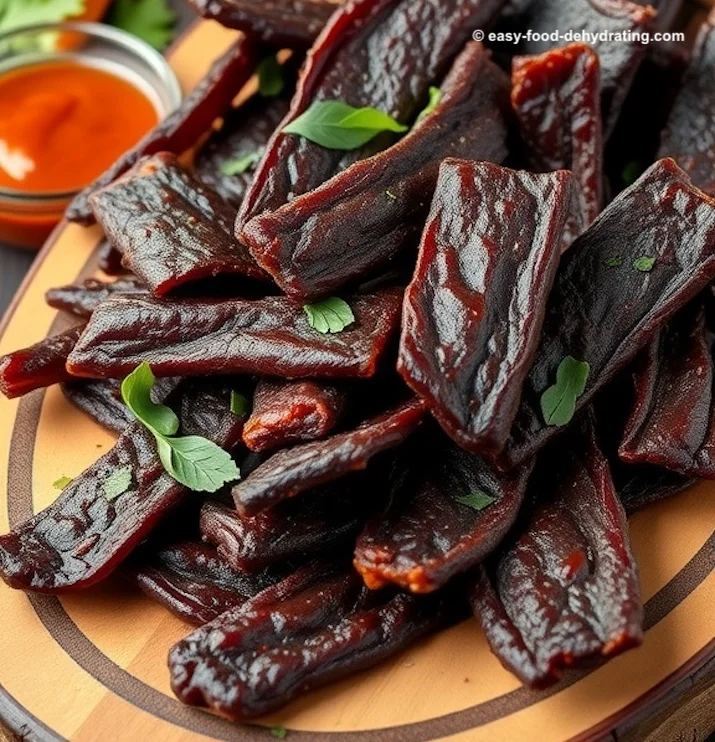
The marinade combines soy sauce, Worcestershire sauce, garlic, smoked paprika, hot sauce, and red pepper flakes for a savory flavor with adjustable heat. Follow the recipe below for the complete preparation, safe-heating, dehydrating, doneness, and storage steps.

How to Make Spicy Homemade Beef Jerky
This recipe combines a savory marinade with adjustable heat. Use the hot sauce and red pepper flakes as written for a spicy result, or reduce them to make a milder batch.
Ingredients
- 2 pounds lean beef, such as eye of round, top round, or lean flank steak
- 1/4 cup soy sauce
- 1/4 cup Worcestershire sauce
- 2 tablespoons brown sugar
- 1 tablespoon hot sauce (adjust to taste)
- 1 teaspoon garlic powder
- 1 teaspoon onion powder
- 1 teaspoon black pepper
- 1 teaspoon red pepper flakes (optional for extra heat)
- 1 teaspoon smoked paprika
- 1/2 teaspoon salt, optional
Instructions
- Prepare the Beef: Trim away all visible fat and connective tissue. Partially freeze the beef for approximately 30 to 60 minutes, until firm but not frozen solid, to make slicing easier.
- Slice the Meat: Slice the beef approximately ⅛ inch thick and no thicker than ¼ inch. Cut across the grain for more tender jerky or with the grain for a chewier texture.
- Make the Marinade: In a bowl, combine the soy sauce, Worcestershire sauce, brown sugar, hot sauce, garlic powder, onion powder, black pepper, red pepper flakes, smoked paprika, and optional salt. Mix well.
- Marinate the Beef: Place the beef strips in a sealable food-storage bag or covered glass or food-safe plastic container. Add the marinade and turn the strips until evenly coated. Refrigerate for at least 4 hours or overnight.
- Preheat the Oven and Dehydrator: Preheat the oven to 300°F and the electric food dehydrator to 140°F. Remove the beef from the marinade and discard the used marinade. Arrange the strips in a single layer on wire racks set over rimmed baking sheets.
- Heat the Beef: Place the baking sheets in the oven and heat the strips until they reach an internal temperature of 160°F. Check several strips with a food thermometer, inserting the probe sideways into the thickest part when possible.
- Dehydrate the Jerky: Transfer the heated strips to the dehydrator trays. Arrange them in a single layer without touching or overlapping. Dehydrate at 140°F and begin checking after approximately 3 hours. Rotate the trays if your dehydrator dries unevenly.
- Test for Doneness: Remove one strip and allow it to cool for several minutes. Properly dried jerky should feel firm and leathery, crack slightly when bent without breaking, and show no moisture when squeezed. Continue dehydrating and retesting as needed.
- Cool and Store: Blot away any beads of oil with clean, absorbent paper towels. Allow the jerky to cool completely before placing it in an airtight container and storing it according to the directions below.
Cook and Prep Times
- Preparation Time: Approximately 20 minutes
- Partial-Freezing Time: 30 to 60 minutes
- Marinating Time: At least 4 hours or overnight
- Heating Time: Until the beef reaches an internal temperature of 160°F
- Approximate Dehydrating Time: 3 to 6 hours
Preparation and dehydrating times will vary according to the cut of beef, thickness of the strips, dehydrator model, and humidity.
Yield: Varies according to the cut of beef and the amount of moisture removed during dehydrating.

Once the jerky has cooled, sample a piece and make a note of the spice level, texture, and dehydrating time. You can then adjust the hot sauce or red pepper flakes in your next batch.
Visit the homemade jerky guide to explore recipes for chicken, pork, turkey, fish, and hot honey chicken jerky, along with general preparation and safety guidance.
How to Store Spicy Beef Jerky Safely
Allow the jerky to cool completely before packaging it. Place it in a clean, airtight container, heavy-duty food-storage bag, or vacuum-sealed bag. Package larger batches in smaller portions so the entire supply isn’t repeatedly exposed to air and moisture.
Properly prepared and dried beef jerky can be kept in a sealed container at room temperature for up to two weeks. For more conservative storage, refrigerate it and use it within one to two months. Freeze jerky that you want to keep longer, and label each package with the date it was made.
Vacuum sealing reduces exposure to air, but it doesn’t make underdried jerky safe or remove moisture already present. Check stored jerky for condensation, mold, an unusual odor, or other signs of spoilage. If any appear, discard the entire package.
If you use resealable vacuum-sealer bags, learn how to use the adapter and clean the bags properly.
How to Rehydrate Beef Jerky for Soups and Meals
Rehydrated beef jerky can be added to soups, stews, pasta dishes, chili, casseroles, or other cooked meals.
Cut the jerky into bite-sized pieces, cover it with hot water or beef broth, and soak it for approximately 15 to 30 minutes. Thicker or drier pieces may require additional time.
Rehydrate only the amount you intend to use and add it promptly to the dish you’re cooking. Once moisture has been added back, don’t treat the jerky as a shelf-stable food. Refrigerate any leftovers promptly.
Want More Meals Made With Dehydrated Food?

My collection of
20 Taste-Tested Easy Recipes shows you how to turn dehydrated ingredients into meals your family will genuinely want to eat.

Recipes include pizza, shepherd’s pie, beef stew, cauliflower soup and mash, carrot soup, carrot cake, cranberry-pineapple pie, and more.
Fresh-ingredient amounts are included, too.
Ways to Adjust the Flavor and Heat
Adjust the marinade to suit your preferred heat level:
- Milder: Omit the red pepper flakes and use a mild hot sauce.
- Smokier: Add ½ teaspoon of liquid smoke.
- Sweet heat: Replace the brown sugar with 2 tablespoons of honey.
- Hotter: Add cayenne pepper in small amounts until the marinade reaches your preferred heat level.
Keep the total amount of liquid approximately the same so the strips don’t become excessively wet. Record any changes so you can repeat the flavor combination in a future batch.
If you're having issues with your jerky-making, check out my Jerky Troubleshooting Guide here.
Spicy Beef Jerky FAQ
How long does homemade beef jerky last?
How long does homemade beef jerky last?
Properly prepared and dried beef jerky can be stored in a sealed container at room temperature for up to two weeks. For more conservative storage, refrigerate it and use it within one to two months. Freeze jerky that you want to keep longer.
Can I make beef jerky less spicy?
Can I make beef jerky less spicy?
Yes. Omit the red pepper flakes and reduce or omit the hot sauce. The smoked paprika will provide flavor without adding substantial heat.
What’s the best cut of beef for jerky?
What’s the best cut of beef for jerky?
Lean cuts such as eye of round, top round, bottom round, or lean flank steak work well. Trim away visible fat because fat doesn’t dehydrate well and can become rancid during storage.
Why must the beef reach 160°F before dehydrating?
Why must the beef reach 160°F before dehydrating?
A food dehydrator may not heat moist, raw beef to a safe internal temperature quickly enough. Heating the strips to 160°F before dehydration destroys harmful bacteria before the meat loses moisture and the bacteria become more resistant to heat.
Before you go, grab the free 5 Dried Food Recipes That Actually Taste Great PDF below—featuring carrot soup, minestrone, split pea soup, spicy beef jerky, and even banana cinnamon rolls.

5 Free Dried Food Recipes
That Actually Taste Great
Put your dried food to delicious use!
Five very different recipes.
Not one dull bite...
5 Free Dried Food Recipes
That Actually Taste Great
Put your dried food to delicious use!
Five very different recipes.
Not one dull bite...
More From Easy Food Dehydrating
Tuna Pasta Bake – Classic, Cheesy & Crispy Comfort Dish
Make a cheesy, crispy tuna pasta bake in under an hour—simple, budget-friendly, and packed with cozy flavor.
Cranberry and Pineapple Pie: A Fruity Holiday Treat
Cranberry and Pineapple Pie: A Fruity Holiday Treat - our fave holiday dessert! It'll become a fast-favorite of yours too!
Millet & Quinoa: Nutrition, Cooking & Storage Tips
Discover millet and quinoa benefits, how to rinse and cook, and easy ways to use and store these gluten-free staples.
Green Split Pea Soup Made Easy in the Slow Cooker
Easy slow cooker green split pea soup with ham, carrots, and celery—comforting, flavorful, and simple to make.
Pea Soup with Dehydrated Peas: Smooth & Velvety
Make velvety pea soup with dehydrated peas, tarragon, and pantry staples—easy one-pot comfort in about 30 minutes.
Tuna Salad with Dehydrated Vegetables Recipe
Make an easy tuna salad with rehydrated celery and onion. Serve this creamy, crunchy lunch on homemade bread, with crackers, or over salad greens.






More From Easy Food Dehydrating
Tuna Pasta Bake – Classic, Cheesy & Crispy Comfort Dish
Make a cheesy, crispy tuna pasta bake in under an hour—simple, budget-friendly, and packed with cozy flavor.
Cranberry and Pineapple Pie: A Fruity Holiday Treat
Cranberry and Pineapple Pie: A Fruity Holiday Treat - our fave holiday dessert! It'll become a fast-favorite of yours too!
Millet & Quinoa: Nutrition, Cooking & Storage Tips
Discover millet and quinoa benefits, how to rinse and cook, and easy ways to use and store these gluten-free staples.
Green Split Pea Soup Made Easy in the Slow Cooker
Easy slow cooker green split pea soup with ham, carrots, and celery—comforting, flavorful, and simple to make.
Pea Soup with Dehydrated Peas: Smooth & Velvety
Make velvety pea soup with dehydrated peas, tarragon, and pantry staples—easy one-pot comfort in about 30 minutes.
Tuna Salad with Dehydrated Vegetables Recipe
Make an easy tuna salad with rehydrated celery and onion. Serve this creamy, crunchy lunch on homemade bread, with crackers, or over salad greens.
Before You Go...
If you enjoyed this page, tap the ❤️ in the lower right-hand corner. It saves this page to your Grow bookmarks so you can find it again later.
You’ll also see quick share buttons to copy the link, post to Facebook, or save it straight to Pinterest.

Test Your Food-Dehydrating
Know-How
Choose a food, make the right preparation, drying, and storage decisions—and see how many stars you can earn!
Play “Save the Harvest”Test Your Food-Dehydrating
Know-How
Choose a food, make the right preparation, drying, and storage decisions—and see how many stars you can earn!
What We Mean by “Dehydrate”
Here at Easy Food Dehydrating, “dehydrate” always means using an electric food dehydrator — the easy, reliable way to dry food at home.
What We Mean by “Dehydrate”
Here at Easy Food Dehydrating, “dehydrate” always means using an electric food dehydrator — the easy, reliable way to dry food at home.


LATEST READS on EFD


-
How to Dehydrate Citrus Slices: Lemons, Limes & Oranges
Sep 19, 26 03:28 PM
 Learn how to dehydrate citrus slices at 135°F. Easy steps for lemons, limes, and oranges with tips for checking doneness, conditioning, and storage.
 -
How to Dehydrate Cabbage: Temperature, Storage & Creamy Slaw
Sep 19, 26 11:57 AM
 Learn how to dehydrate cabbage at 125°F, including how to prepare, steam-blanch, test for doneness, condition, store, rehydrate, and make creamy coleslaw.
 -
How to Make Homemade Dog Food: Chicken & Beef Recipes
Sep 18, 26 01:11 PM
 Meet Chicken Chow-Chow and Bow Wow Beefy Chow, learn how I prepared Minnie’s meals, and discover what to consider before feeding homemade dog food daily.


Unlock the Secrets of Food Dehydrating... from Fruit 'n' Veg to Doggie Dinners!




AFFILIATE DISCLOSURE: I am an Affiliate for Amazon, and other sellers of quality merchandise. Should you purchase an item through their links, I may receive compensation. The price you pay does not increase. THANKS for your support! Read full disclosure here.
easy FOOD DEHYDRATING: Making food preservation simple since 2010. I show you how to keep your food pantry full, whatever the reason or season!

HOME ARTICLES CONTACT ADVERTISING DISCLOSURE DISCLAIMER FAQ PRIVACY SITEMAP TERMS TESTIMONIALS
ALL CONTENT COPYRIGHT © 2010-2025 • ALL RIGHTS RESERVED REGARDLESS OF LINKS OR ATTRIBUTIONS.
POWERED BY SBI! (SOLO BUILD IT!)
As an Amazon Associate, I earn from qualifying purchases.