- Home
- How to Dehydrate Fruit
- How to Dehydrate Strawberries

How to Dehydrate Strawberries for Snacks and Smoothies

Fresh strawberries are lovely, especially when they're sweet, juicy, and on sale! But they don't last forever in the refrigerator, and there's nothing more disappointing than finding a few furry berries at the bottom of the container.
Dehydrating strawberries is a handy way to preserve them while they're still fresh. Once dried, you can enjoy them as a snack, add them to homemade trail mix, or use them in smoothies, oatmeal, and other recipes.
✅ Quick Answer: How do you dehydrate strawberries at home?
Wash and hull fresh strawberries, then slice them evenly, approximately ¼ inch thick. Arrange the slices in a single layer on dehydrator trays without overlapping. Dry at approximately 135°F (57°C), allowing roughly 6–15 hours depending on slice thickness, humidity, and your dehydrator. The strawberries should feel leathery and pliable, with no visible moisture when cut or squeezed. Allow them to cool completely, then condition the dried fruit in a loosely filled jar for 7–10 days, shaking daily and checking for condensation. Once properly conditioned, store in airtight containers somewhere cool, dark, and dry.
Whether you're starting with fresh or frozen strawberries, I'll walk you through preparing and drying them, checking for doneness, and storing them properly.
And if you'd rather use an air fryer, I've got a separate guide for that, too!

Strawberries go on BOGO often—stock up then to get even more value from every dehydrated batch!
And if you're wondering why anyone would dehydrate frozen strawberries, I've got two words for you: power outages.
Living in Florida, we've experienced our fair share of hurricanes and the power outages that come with them. When the electricity goes off for an extended period, frozen food can thaw, and some of it may have to be thrown away.
That's one reason I like having properly dehydrated food safely stored in the pantry before hurricane season arrives. It's one less thing to worry about if the power goes out.


OXO Good Grips Strawberry Hullers
You WON'T be sorry you got this handy dandy hulling tool...
As an Amazon Associate, I earn from qualifying purchases—this does not affect the price you pay. Read full disclosure.
Step-by-Step: How to Dehydrate Strawberries Like a Pro
Let’s get busy dehydrating strawberries—whether they’re fresh or frozen!
🥶 If using frozen strawberries:
You can dehydrate frozen strawberries, too! If they're whole, allow them to thaw just enough to slice safely. If they're already sliced, you can thaw them in the refrigerator until they're easy to separate.
Drain away any excess juice before arranging the strawberries on your dehydrator trays. Frozen berries may take longer to dry because their texture changes during freezing and thawing.
🍓 For fresh strawberries:
- Wash the strawberries under cool running water, then remove the green tops with a strawberry huller or small knife.
- Slice evenly, approximately ¼ inch thick. Smaller strawberries can also be halved, although thicker pieces will take longer to dry.
- Arrange the slices in a single layer on your dehydrator trays without overlapping. If using halves, place them cut-side up.
- Set the temperature to approximately 135°F (57°C), or follow your dehydrator manufacturer's instructions.
- Dry until leathery and pliable, with no visible moisture when you cut or squeeze a cooled piece. Depending on the thickness of your slices and your dehydrator, allow roughly 6–15 hours as a starting estimate.
- Rotate trays if needed to encourage even drying, following your dehydrator manufacturer's recommendations.
Move the slider to convert temperatures instantly.
Move the slider to convert temperatures instantly.

Cooling and Conditioning Dried Strawberries
Once your strawberries are completely dry, allow them to cool before packaging. Warm fruit can create condensation inside a sealed container, which is exactly what we want to avoid.
Next, condition your dried strawberries to help distribute any remaining moisture evenly.
- Loosely fill a clean, dry glass jar with the cooled strawberry slices.
- Close the jar and leave it somewhere cool and dry for 7–10 days.
- Shake the jar daily to separate the pieces and check for condensation.
- If you notice condensation, return the strawberries to the dehydrator for additional drying, then cool them and restart the conditioning process.
- If you discover mold, discard the affected batch.
Once conditioning is complete and there's no sign of moisture, transfer the strawberries to airtight containers for storage in a cool, dark, dry location.
No Dehydrator? Use Your Air Fryer to Dry Strawberries
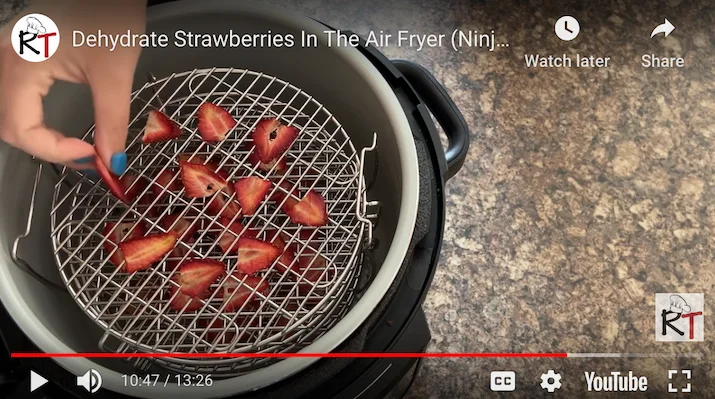
Check out my full post on Dehydrated Strawberries in an Air Fryer—including a clever tip to boost drying volume!
How to Rehydrate Dried Strawberries
Dried strawberries are lovely eaten straight from the jar, but you can also soften them in water when a recipe calls for it.
Simply place the dried strawberry slices in a bowl, cover them with warm water, and let them soak for approximately 10–20 minutes, or until they've softened to your liking. Thicker pieces may need a little longer.
You can also add dried strawberries directly to smoothies, oatmeal, or other recipes that contain enough liquid to soften them.
Keep in mind that rehydrated strawberries won't have quite the same texture as fresh ones, but they're still useful in plenty of recipes.
Want to learn more? Take a look at my guide to rehydrating dehydrated food for additional tips and instructions.
How to Store Dehydrated Strawberries
Once your strawberries have been thoroughly dried, cooled, and conditioned, they're ready for storage.
Pack them into clean, dry, airtight containers such as Mason jars or suitable vacuum-sealer bags. Keep them somewhere cool, dark, and dry to help maintain their quality.
Properly dried fruit is generally best used within approximately 6–12 months under suitable storage conditions, although quality may decline sooner.
For more information, take a look at my guide to storing dehydrated food, where I explain the process in greater detail.
Strawberry FAQs: Drying, Storing, and More
What’s the best way to dehydrate strawberries?
What’s the best way to dehydrate strawberries?
Wash and hull fresh strawberries, then slice them approximately ¼ inch thick. Arrange them in a single layer on your dehydrator trays and dry at 135°F (57°C) for roughly 6–15 hours. They're ready when they feel leathery and pliable, with no visible moisture. Once cooled, condition them before putting them into long-term storage.
Can you dehydrate frozen strawberries?
Can you dehydrate frozen strawberries?
Yes! If they're whole, let them thaw just enough to slice safely. If they're already sliced, thaw them in the refrigerator until you can separate the pieces. Drain off excess liquid before arranging them on your dehydrator trays. Frozen strawberries may take longer to dry than fresh ones.
Can you dehydrate strawberries in an air fryer?
Can you dehydrate strawberries in an air fryer?
You certainly can, provided your air fryer has a sufficiently low temperature setting and good airflow. Drying times will vary depending on the model. I've got a separate guide to dehydrating strawberries in an air fryer if you'd like to try that method.
Can you rehydrate dried strawberries?
Can you rehydrate dried strawberries?
Yes. Cover the dried slices with warm water and let them soak for approximately 10–20 minutes, or until they've softened enough for your recipe. You can also add them directly to smoothies or oatmeal, where they'll absorb some of the liquid.
How long do dehydrated strawberries last?
How long do dehydrated strawberries last?
Properly dried, conditioned, and stored strawberries can maintain good quality for approximately 6–12 months, depending on storage conditions. Keep them in airtight containers somewhere cool, dark, and dry. Always check for moisture or signs of spoilage before using them, and discard any that develop mold.
And there you have it! Now you know how to dehydrate strawberries, whether you're making a batch for snacking, adding them to smoothies, or putting some away for later.
If you've enjoyed learning how to dry strawberries, take a look at my How to Dehydrate Fruit guide for more delicious fruits you can preserve at home.
Thanks for stopping by, and happy dehydrating!
Want more tasty ideas? Grab your free copy of 5 Dried Food Recipes That Actually Taste Great PDF below—featuring carrot soup, minestrone soup, split pea soup, spicy beef jerky, and banana cinnamon rolls!

5 Free Dried Food Recipes
That Actually Taste Great
Put your dried food to delicious use!
Five very different recipes.
Not one dull bite...
5 Free Dried Food Recipes
That Actually Taste Great
Put your dried food to delicious use!
Five very different recipes.
Not one dull bite...
More From Easy Food Dehydrating
How to Dehydrate Fruit Rolls: Easy Fruit Leather Guide
Make fruit rolls with fresh, frozen, or canned fruit. Dry at 135–140°F for chewy, kid-approved leathers.
How to Dehydrate Berries (Blueberries & Cranberries)
Learn how to dehydrate blueberries and cranberries at 135°F, with fresh and frozen berry prep, drying times, doneness tests, conditioning, and storage tips.
How to Dehydrate Peaches for Snacks & Recipes
Learn how to dehydrate peaches for snacks, smoothies, and cobblers. Step-by-step tips for drying and storing peaches.
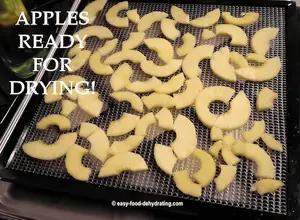
Dehydrate Apples for Snacks and Pantry Storage
Learn how to dehydrate apples in a food dehydrator: prevent browning, dry at 125–135°F, test for doneness, and store them for snacks, pies, and more.
How to Dehydrate Plums for Prunes and Snacks
Learn how to dehydrate plums at 135°F for chewy prunes or crisp chips, with preparation, drying times, doneness tests, conditioning, and storage.
How to Dehydrate Mango: Easy Steps for Tasty Dried Fruit
Learn how to dehydrate mango at 135°F with easy slicing, drying, conditioning, and storage tips. Make sweet, chewy dried mango at home!





More From Easy Food Dehydrating
How to Dehydrate Fruit Rolls: Easy Fruit Leather Guide
Make fruit rolls with fresh, frozen, or canned fruit. Dry at 135–140°F for chewy, kid-approved leathers.
How to Dehydrate Berries (Blueberries & Cranberries)
Learn how to dehydrate blueberries and cranberries at 135°F, with fresh and frozen berry prep, drying times, doneness tests, conditioning, and storage tips.
How to Dehydrate Peaches for Snacks & Recipes
Learn how to dehydrate peaches for snacks, smoothies, and cobblers. Step-by-step tips for drying and storing peaches.
Dehydrate Apples for Snacks and Pantry Storage
Learn how to dehydrate apples in a food dehydrator: prevent browning, dry at 125–135°F, test for doneness, and store them for snacks, pies, and more.
How to Dehydrate Plums for Prunes and Snacks
Learn how to dehydrate plums at 135°F for chewy prunes or crisp chips, with preparation, drying times, doneness tests, conditioning, and storage.
How to Dehydrate Mango: Easy Steps for Tasty Dried Fruit
Learn how to dehydrate mango at 135°F with easy slicing, drying, conditioning, and storage tips. Make sweet, chewy dried mango at home!
Before You Go...
If you enjoyed this page, tap the ❤️ in the lower right-hand corner. It saves this page to your Grow bookmarks so you can find it again later.
You’ll also see quick share buttons to copy the link, post to Facebook, or save it straight to Pinterest.

Test Your Food-Dehydrating
Know-How
Choose a food, make the right preparation, drying, and storage decisions—and see how many stars you can earn!
Play “Save the Harvest”Test Your Food-Dehydrating
Know-How
Choose a food, make the right preparation, drying, and storage decisions—and see how many stars you can earn!
What We Mean by “Dehydrate”
Here at Easy Food Dehydrating, “dehydrate” always means using an electric food dehydrator — the easy, reliable way to dry food at home.
What We Mean by “Dehydrate”
Here at Easy Food Dehydrating, “dehydrate” always means using an electric food dehydrator — the easy, reliable way to dry food at home.


LATEST READS on EFD


-
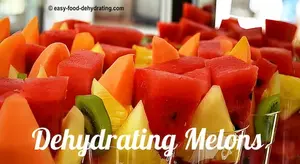
How to Dehydrate Melons for Sweet Snacks & Safe Storage
Oct 29, 26 02:29 PM
 Learn how to dehydrate melons, including watermelon and honeydew, for sweet snacks and long-term storage.
-
How to Dehydrate Pumpkin: Slices, Powder & Dog Treats
Oct 29, 26 01:52 PM
 Learn how to dehydrate pumpkin at 135°F for brittle slices and powder, with preparation, drying, storage, troubleshooting, and dog treat tips.
-
Homemade Jerky Guide: Beef, Chicken, Pork, Turkey & Fish
Oct 29, 26 11:35 AM
Learn how to make beef, chicken, pork, turkey, and fish jerky safely, with marinades, heating steps, doneness checks, and storage tips.


Unlock the Secrets of Food Dehydrating... from Fruit 'n' Veg to Doggie Dinners!




AFFILIATE DISCLOSURE: I am an Affiliate for Amazon, and other sellers of quality merchandise. Should you purchase an item through their links, I may receive compensation. The price you pay does not increase. THANKS for your support! Read full disclosure here.
easy FOOD DEHYDRATING: Making food preservation simple since 2010. I show you how to keep your food pantry full, whatever the reason or season!

HOME ARTICLES CONTACT ADVERTISING DISCLOSURE DISCLAIMER FAQ PRIVACY SITEMAP TERMS TESTIMONIALS
ALL CONTENT COPYRIGHT © 2010-2025 • ALL RIGHTS RESERVED REGARDLESS OF LINKS OR ATTRIBUTIONS.
POWERED BY SBI! (SOLO BUILD IT!)
As an Amazon Associate, I earn from qualifying purchases.