- Home
- How to Dehydrate Fruit
- How to Dehydrate Fruit Rolls

How to Dehydrate Fruit Rolls for Tasty Homemade Fruit Leathers

Looking for a delicious homemade snack that's easy to pack and fun to eat? Learn how to dehydrate fruit rolls (also called fruit leathers or roll-ups) using fresh, frozen, or canned fruit.
These chewy, naturally sweet treats are a wonderful way to use up extra fruit, and you control exactly what goes into them. No unnecessary additives, and no added sugar unless you want it!
✅ Quick Answer: How do you dehydrate fruit rolls?
Purée your chosen fruit until smooth, then spread it approximately ⅛–¼ inch thick on dedicated fruit roll sheets. Dry at 135°F–140°F (57°C–60°C), typically for 4–8 hours, until pliable and no longer sticky. Cool, peel, and roll the fruit leather, then package it in an airtight container.

Once you've mastered the basics, try combining different fruits, adding a little cinnamon, or experimenting with your favorite flavors.
Fruit rolls are a great alternative to store-bought snacks—and you know exactly what's in them!
Natural Sweeteners & Flavor Hacks for Fruit Rolls

You can make fruit rolls from almost any combination of fruit. Naturally sweet fruits often need no additional sweetener, while tart fruits may benefit from a little honey.
For each quart of fruit purée, try adding one or two tablespoons of honey or corn syrup, if desired. Taste the mixture before spreading it onto your dehydrator sheets.
You can also experiment with spices and flavor combinations.
Try cinnamon with apples and pears, bananas with pineapple, strawberries with rhubarb, or pineapple with cranberries.
The possibilities are endless, so choose combinations that appeal to you and your family!
Why Seasonal Fruit Makes Rolls Tastier (and Cheaper)
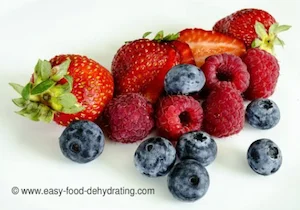
Making fruit rolls is a great way to take advantage of fresh fruit when it's in season, plentiful, and often less expensive.
You can also use slightly overripe or misshapen fruit, provided it's still wholesome and free from mold or spoilage. Trim away minor bruised areas before preparing the fruit.
This is a perfect use for those imperfect fruits!
(I'll never tell!)
Can You Use Frozen or Canned Fruit for Fruit Rolls?
Absolutely! Fresh fruit isn't your only option when making homemade fruit leather.
Canned fruit: Drain the fruit thoroughly before blending. Fruit packed in juice or water is a good choice if you want to control the sweetness.
Frozen fruit: Thaw the fruit first and drain away excess liquid. Frozen fruit often releases additional juice as it thaws, which can make your purée too thin.
If your mixture is still runny, try blending in some unsweetened applesauce or a fresh apple to help thicken it.
Aim for a smooth, thick purée that spreads easily without running across the dehydrator tray.
Step-by-Step Guide: How to Dehydrate Fruit Rolls at Home
Making homemade fruit leather is easy once you've prepared your fruit and achieved the right purée consistency.
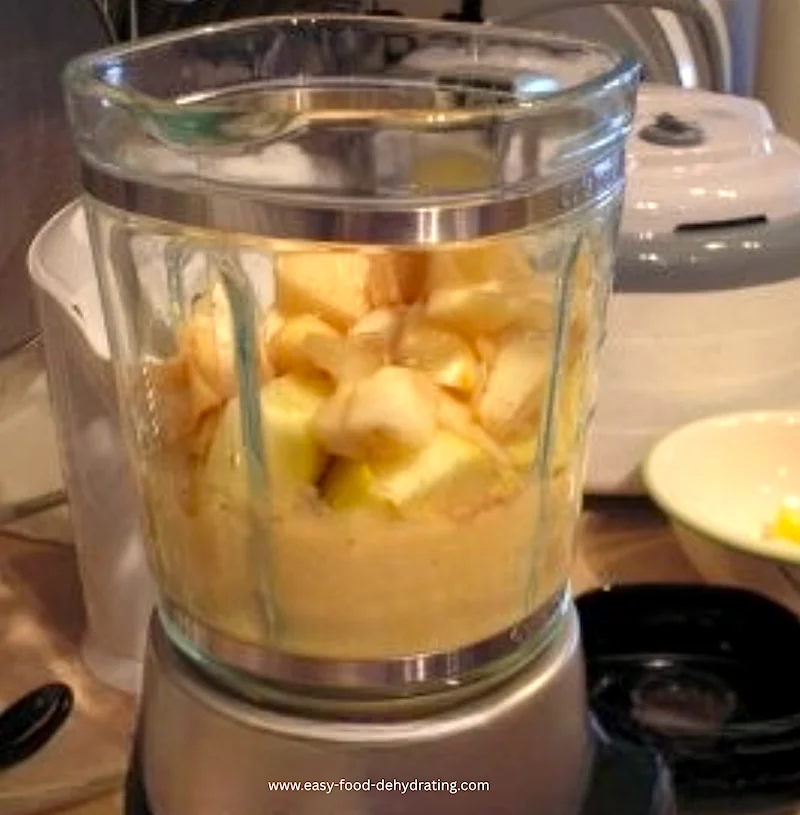
- Prepare the fruit. Wash fresh fruit thoroughly, remove cores, pits, seeds, and any inedible skins, then cut into approximately 1-inch pieces. Discard moldy or spoiled fruit.
- Blend until smooth. Place the prepared fruit in a blender or food processor and purée until smooth. Add a tablespoon or two of water only if needed to help the blender operate.
- Adjust the flavor. Taste the purée and add a little honey, cinnamon, or another flavoring if desired. Many fruits are sweet enough without anything added.
- Prepare your dehydrator sheets. Use dedicated fruit roll sheets or suitable manufacturer-approved solid liners. Lightly oil the sheets only if recommended by the manufacturer.
- Spread the purée evenly. Pour approximately 1½ cups of purée onto each tray as a starting point, adjusting for tray size. Spread to approximately ⅛–¼ inch thick, keeping the center slightly thinner than the edges.
Drying Fruit Rolls in a Food Dehydrator
- Set your dehydrator to approximately 135°F–140°F (57°C–60°C), or follow your manufacturer's instructions.
- Dry the fruit leather for approximately 4–8 hours as a starting estimate. Thicker purées, high humidity, and different fruit combinations can increase drying time.
- Check for doneness by allowing a small section to cool before touching it. The fruit leather should be pliable and leathery, with no wet or sticky areas. It may have a slightly shiny appearance.
- Rotate your trays if necessary to encourage even drying, following your dehydrator manufacturer's recommendations. If some areas finish before others, continue drying until the entire sheet is properly dried.
Move the slider to convert temperatures instantly.
Move the slider to convert temperatures instantly.
Cooling and Packaging Homemade Fruit Rolls
Once the fruit leather is thoroughly dry, allow it to cool completely before removing it from the dehydrator sheets.
- Carefully peel the fruit leather away from the sheet, starting at one edge and working slowly to avoid tearing.
- Cut into strips or portions using clean kitchen scissors or a knife.
- Roll each strip with a piece of parchment paper between the layers to help prevent sticking.
- Wrap or package the rolls in food-safe wrapping or airtight containers to protect them from moisture.
- Store in a cool, dry location away from direct sunlight and heat. Refrigerate or freeze for longer storage.
Properly dried fruit leather generally keeps for approximately one month at room temperature when packaged appropriately. Refrigeration or freezing can help preserve quality longer.
How to Blend Fruit Purée So Smooth It Spreads Like Silk
A smooth fruit purée is the secret to making fruit rolls that dry evenly. A good blender helps break down the fruit so you can spread it across your dehydrator's fruit roll sheets without leaving large lumps.
I use a Vitamix in my own kitchen, but you don't need an expensive blender to make delicious homemade fruit leathers.
A Blender Worth Considering: Ninja Professional BL660

Ninja® Professional Blender (BL660)
The Ninja Professional BL660 is an option worth considering if you're looking for a blender to prepare fruit purées, smoothies, and other everyday recipes.
With its large 72-ounce pitcher and powerful motor, it's designed to handle bigger batches of fruit—handy when you're making several trays of fruit leather at once.
My tip: Blend your fruit until smooth, adding only a little liquid if necessary. Too much water makes the purée runny and increases drying time.
As an Amazon Associate, I earn from qualifying purchases—this does not affect the price you pay. Read full disclosure.
Fruit Roll Sheets: What Works Best?
Dedicated fruit roll sheets are the easiest way to keep purée from dripping through your dehydrator trays.
If you use a Nesco dehydrator, choose the solid fruit roll sheets designed for your model. These fit the trays and allow the dehydrator's airflow system to work as intended.
Avoid using ordinary household plastic wrap as a substitute unless your dehydrator manufacturer specifically approves it for that purpose.
If you're using a different brand of dehydrator, look for compatible solid sheets or reusable liners recommended by the manufacturer.
Spreading Secrets: How to Prevent Cracks and Uneven Drying
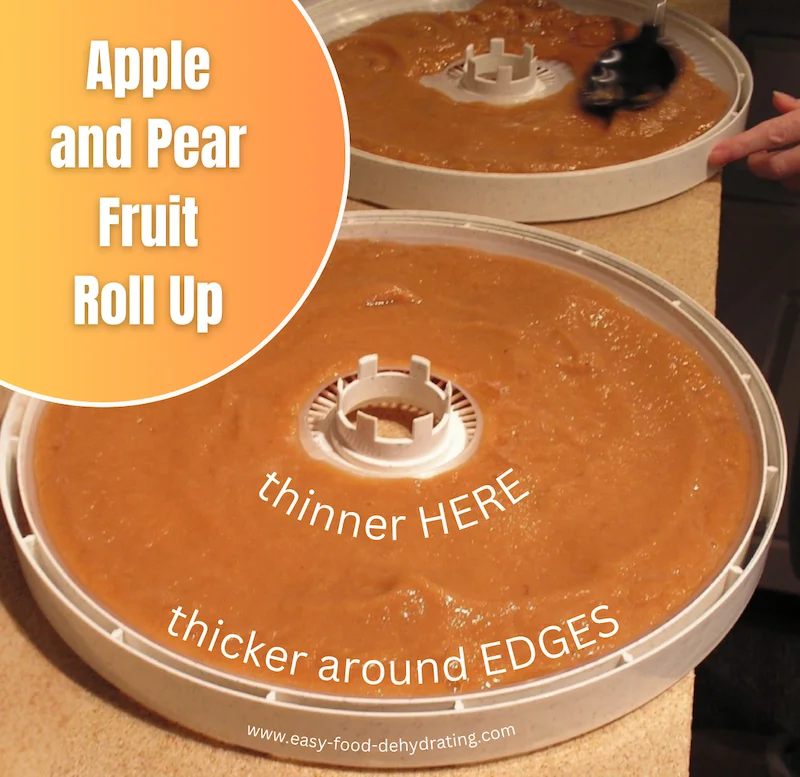
When spreading your fruit purée, aim for an even layer approximately ⅛–¼ inch thick.
Here's a useful trick: Make the center portion slightly thinner than the outer edges.
The outer edges tend to dry faster, so this helps encourage more even drying across the entire sheet.
When I made two trays of apple-and-pear fruit leather in my Nesco dehydrator, I used two large apples and four pears. That gives you a rough idea of how much fruit you might need for two fruit roll sheets.
I also added extra dehydrator trays between the fruit roll trays, following Nesco's recommendations for proper air circulation.
Always follow the minimum tray requirements for your particular dehydrator model.
Read more about Nesco dehydrators.
The Satisfying Peel: How to Remove Fruit Leather Without Tears

Once your fruit leather is thoroughly dried and cooled, gently lift one edge and begin peeling it away from the sheet.
Take your time, especially with thinner sections.
If the leather sticks or tears, it may need additional drying. Check for damp patches before trying again.
Don't worry if your first batch isn't picture-perfect. You'll get better with practice!
If you're getting large holes in your fruit leather, see my fruit leather troubleshooting tips for help.
How to Store Fruit Rolls So They Stay Fresh
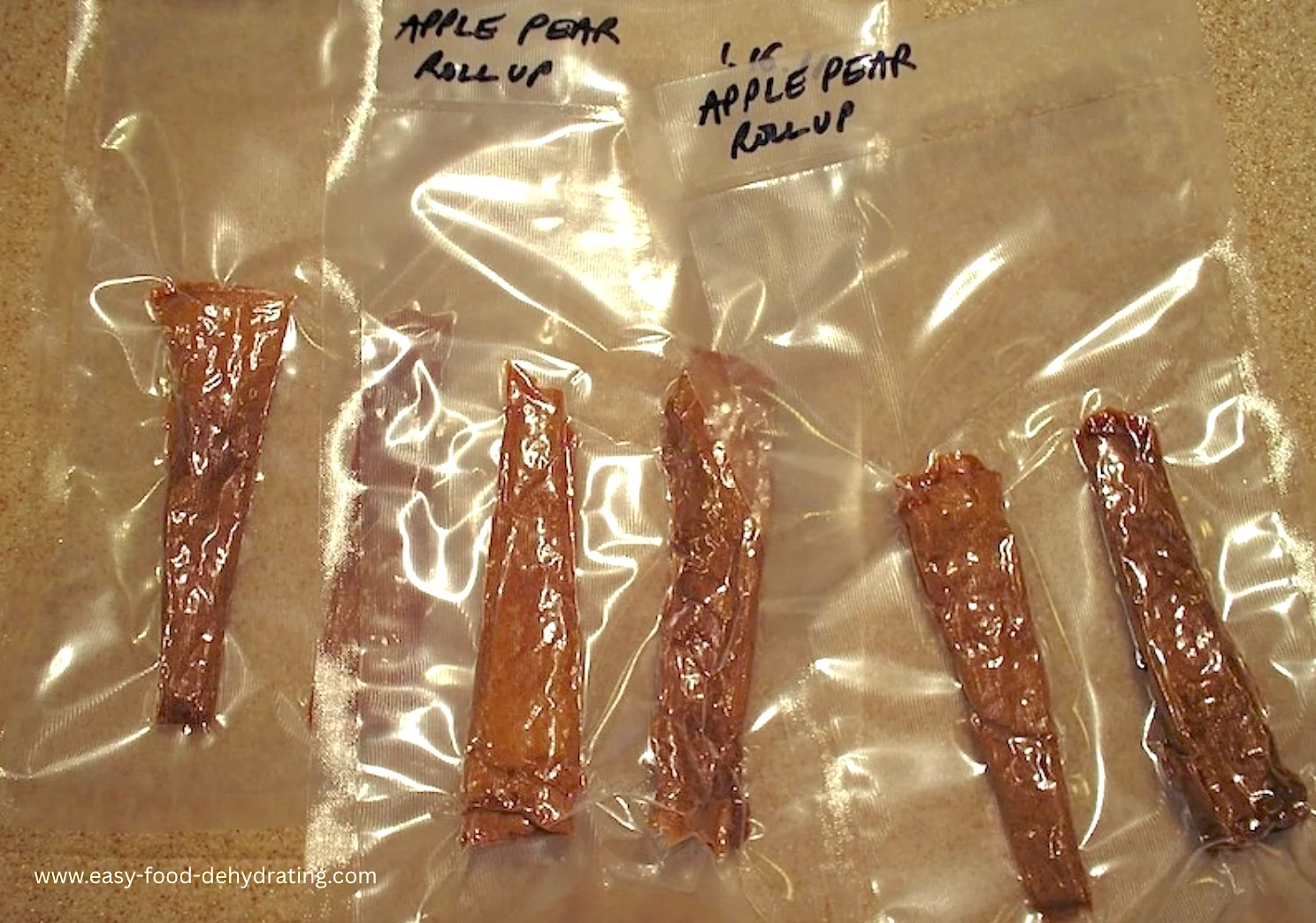
Proper storage helps keep homemade fruit rolls chewy and flavorful.
Once your fruit leather is completely cool, roll or cut it into portions and wrap them individually using parchment paper or suitable food-safe wrapping.
Place the rolls in an airtight container and keep them somewhere cool, dry, and dark.
For longer storage, refrigerate or freeze the wrapped rolls in suitable airtight packaging.
Vacuum sealing is another option for reducing exposure to air, but it doesn't replace thorough drying or proper storage temperatures.
Always check stored fruit leather for moisture, mold, or unusual odors before eating.
Make Fruit Leather with No Added Sugar
You don't need to add sugar to make delicious homemade fruit leather!
Here are a few ways to bring out the fruit's natural sweetness:
- Choose naturally sweet fruits. Ripe bananas, mangoes, pears, apples, and peaches are excellent starting points.
- Combine sweet and tart fruits. Try strawberries with bananas, or cranberries with apples or pineapple.
- Add spices for extra flavor. Cinnamon, vanilla, ginger, nutmeg, and finely grated citrus zest can make fruit combinations more interesting.
- Use unsweetened applesauce. It can help thicken some runnier purées while adding natural sweetness.
- Keep added liquids to a minimum. Too much water or juice increases drying time and may make the mixture difficult to spread evenly.
Taste your fruit mixture before spreading it onto the dehydrator sheets. You might be surprised how sweet ripe fruit can be on its own!
Frequently Asked Questions About Dehydrating Fruit Rolls
Can I mix different fruits when making fruit leather?
Can I mix different fruits when making fruit leather?
Absolutely! Mixing fruits is a wonderful way to balance sweet and tart flavors.
Try strawberry and banana, apple and blueberry, peach and mango, or pineapple and cranberry.
Blend until smooth and adjust the flavor before spreading the purée onto your trays.
How long do dehydrated fruit rolls last?
How long do dehydrated fruit rolls last?
Properly dried and packaged fruit leather generally keeps for approximately one month at room temperature.
For longer storage, refrigerate or freeze the rolls in airtight packaging. Storage life varies depending on moisture content, ingredients, and conditions.
Why are my fruit rolls cracking or becoming brittle?
Why are my fruit rolls cracking or becoming brittle?
Fruit leather can become brittle if the purée is spread too thinly or dried for too long.
Aim for approximately ⅛–¼ inch thickness, and begin checking for doneness before the estimated drying time has elapsed.
Adding naturally moist fruits such as apples or pears may also help produce a more pliable texture.
Can I make fruit rolls without a dehydrator?
Can I make fruit rolls without a dehydrator?
Yes, provided your oven can maintain a suitably low temperature and allow moisture to escape.
Spread the purée onto an appropriate lined baking sheet and use an oven-drying method recommended for fruit leather.
Drying times vary considerably, so check regularly for a pliable, non-sticky texture.
How do I keep fruit rolls from sticking to the tray?
How do I keep fruit rolls from sticking to the tray?
Use dedicated fruit roll sheets or compatible manufacturer-approved liners.
Spread the purée evenly, avoid overly thin areas, and allow the finished leather to cool before peeling.
If your dehydrator manufacturer recommends lightly oiling the sheets, follow those instructions.
Can I make fruit leather without adding sugar?
Can I make fruit leather without adding sugar?
Yes! Many ripe fruits contain enough natural sweetness to make delicious fruit leather without additional sugar.
Bananas, mangoes, apples, pears, and peaches are particularly useful for balancing tart fruit combinations.
Why is my fruit leather drying unevenly?
Why is my fruit leather drying unevenly?
Uneven thickness is one of the most common causes.
Spread the purée consistently, keeping the center slightly thinner than the edges, and rotate trays if recommended by your dehydrator manufacturer.
Can I use canned or frozen fruit for fruit rolls?
Can I use canned or frozen fruit for fruit rolls?
Yes. Drain canned fruit thoroughly, and thaw frozen fruit before blending.
If the purée becomes too runny, add a little unsweetened applesauce or another suitable fruit to thicken it.
Enjoy Your Homemade Fruit Rolls!
Once you've made your first batch of homemade fruit rolls, you'll see how easy it is to turn fresh, frozen, or canned fruit into a chewy snack.
Experiment with different combinations, keep your purée evenly spread, and take your time with drying and cooling.
If you’d like more ideas for tasty ways to use dehydrated foods, be sure to grab the free 5 Dried Food Recipes That Actually Taste Great PDF below. Inside you’ll find reader favorites like carrot soup, minestrone, split pea soup, spicy beef jerky, and even banana cinnamon rolls—perfect companions to your fruit leathers.

5 Free Dried Food Recipes
That Actually Taste Great
Put your dried food to delicious use!
Five very different recipes.
Not one dull bite...
5 Free Dried Food Recipes
That Actually Taste Great
Put your dried food to delicious use!
Five very different recipes.
Not one dull bite...
More From Easy Food Dehydrating
How to Dehydrate Berries (Blueberries & Cranberries)
Learn how to dehydrate blueberries and cranberries at 135°F, with fresh and frozen berry prep, drying times, doneness tests, conditioning, and storage tips.
How to Dehydrate Strawberries for Snacks and Smoothies
How to dehydrate strawberries for snacks, cereals, and smoothies, with step-by-step preparation, drying, and storage tips.
How to Dehydrate Peaches for Snacks & Recipes
Learn how to dehydrate peaches for snacks, smoothies, and cobblers. Step-by-step tips for drying and storing peaches.
Dehydrate Apples for Snacks and Pantry Storage
Learn how to dehydrate apples in a food dehydrator: prevent browning, dry at 125–135°F, test for doneness, and store them for snacks, pies, and more.
How to Dehydrate Plums for Prunes and Snacks
Learn how to dehydrate plums at 135°F for chewy prunes or crisp chips, with preparation, drying times, doneness tests, conditioning, and storage.
How to Dehydrate Mango: Easy Steps for Tasty Dried Fruit
Learn how to dehydrate mango at 135°F with easy slicing, drying, conditioning, and storage tips. Make sweet, chewy dried mango at home!




More From Easy Food Dehydrating
How to Dehydrate Berries (Blueberries & Cranberries)
Learn how to dehydrate blueberries and cranberries at 135°F, with fresh and frozen berry prep, drying times, doneness tests, conditioning, and storage tips.
How to Dehydrate Strawberries for Snacks and Smoothies
How to dehydrate strawberries for snacks, cereals, and smoothies, with step-by-step preparation, drying, and storage tips.
How to Dehydrate Peaches for Snacks & Recipes
Learn how to dehydrate peaches for snacks, smoothies, and cobblers. Step-by-step tips for drying and storing peaches.
Dehydrate Apples for Snacks and Pantry Storage
Learn how to dehydrate apples in a food dehydrator: prevent browning, dry at 125–135°F, test for doneness, and store them for snacks, pies, and more.
How to Dehydrate Plums for Prunes and Snacks
Learn how to dehydrate plums at 135°F for chewy prunes or crisp chips, with preparation, drying times, doneness tests, conditioning, and storage.
How to Dehydrate Mango: Easy Steps for Tasty Dried Fruit
Learn how to dehydrate mango at 135°F with easy slicing, drying, conditioning, and storage tips. Make sweet, chewy dried mango at home!
Before You Go...
If you enjoyed this page, tap the ❤️ in the lower right-hand corner. It saves this page to your Grow bookmarks so you can find it again later.
You’ll also see quick share buttons to copy the link, post to Facebook, or save it straight to Pinterest.

Test Your Food-Dehydrating
Know-How
Choose a food, make the right preparation, drying, and storage decisions—and see how many stars you can earn!
Play “Save the Harvest”Test Your Food-Dehydrating
Know-How
Choose a food, make the right preparation, drying, and storage decisions—and see how many stars you can earn!
What We Mean by “Dehydrate”
Here at Easy Food Dehydrating, “dehydrate” always means using an electric food dehydrator — the easy, reliable way to dry food at home.
What We Mean by “Dehydrate”
Here at Easy Food Dehydrating, “dehydrate” always means using an electric food dehydrator — the easy, reliable way to dry food at home.


LATEST READS on EFD


-
How to Dehydrate Melons for Sweet Snacks & Safe Storage
Oct 29, 26 02:29 PM
 Learn how to dehydrate melons, including watermelon and honeydew, for sweet snacks and long-term storage.
-
How to Dehydrate Pumpkin: Slices, Powder & Dog Treats
Oct 29, 26 01:52 PM
 Learn how to dehydrate pumpkin at 135°F for brittle slices and powder, with preparation, drying, storage, troubleshooting, and dog treat tips.
-
Homemade Jerky Guide: Beef, Chicken, Pork, Turkey & Fish
Oct 29, 26 11:35 AM
Learn how to make beef, chicken, pork, turkey, and fish jerky safely, with marinades, heating steps, doneness checks, and storage tips.



Unlock the Secrets of Food Dehydrating... from Fruit 'n' Veg to Doggie Dinners!




AFFILIATE DISCLOSURE: I am an Affiliate for Amazon, and other sellers of quality merchandise. Should you purchase an item through their links, I may receive compensation. The price you pay does not increase. THANKS for your support! Read full disclosure here.
easy FOOD DEHYDRATING: Making food preservation simple since 2010. I show you how to keep your food pantry full, whatever the reason or season!

HOME ARTICLES CONTACT ADVERTISING DISCLOSURE DISCLAIMER FAQ PRIVACY SITEMAP TERMS TESTIMONIALS
ALL CONTENT COPYRIGHT © 2010-2025 • ALL RIGHTS RESERVED REGARDLESS OF LINKS OR ATTRIBUTIONS.
POWERED BY SBI! (SOLO BUILD IT!)
As an Amazon Associate, I earn from qualifying purchases.