- Home
- How to Dehydrate Vegetables
- How to Dehydrate Zucchini

How to Dehydrate Zucchini: Slices, Shreds & Chips

If you’re wondering how to dehydrate zucchini, you’re in the right place! This versatile veggie is one of the easiest to dry, and once dehydrated, it lasts for months in your pantry. Use it later for soups, casseroles, zucchini bread, or even crunchy chips.
✅ Quick Answer: How do you dehydrate zucchini?
Wash and slice zucchini into ⅜-inch pieces, then place on dehydrator trays at 125–135°F. Dry for 5–11 hours until brittle. Cool and condition before storing in airtight containers. Optionally, steam slices first to keep their bright green color.
Dehydrating zucchini helps you save space, reduce waste, and enjoy garden-fresh flavor long after harvest season. Whether you slice, shred, or spiralize it, the process is simple—and I’ll walk you through it step by step.

Step-by-Step Guide: Dehydrate Zucchini Like a Pro
There's not much preparation necessary aside from washing and lightly scrubbing zucchini first in cool, clean water!

Preparing Zucchini for Dehydrating
- Wash the zucchini. Rinse under cool running water and lightly scrub the skin. Trim and discard both ends.
- Slice evenly. Cut the zucchini into approximately ⅜-inch slices. Uniform thickness helps the pieces dry at the same rate.
- Steam if desired. Steam the slices over boiling water for a few minutes to help retain their bright green color. This step is optional.
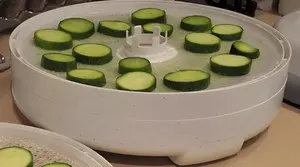
- Arrange on dehydrator trays. Spread the slices in a single layer without overlapping, allowing space for air to circulate.
Note: You may skip the steaming step if you're not concerned about retaining the bright green color of the zucchini skin.
Drying Zucchini in a Food Dehydrator
- Set the temperature. Preheat or set your food dehydrator to 125°F–135°F (52°C–57°C), or follow your manufacturer's instructions.
- Dehydrate the slices. Dry for approximately 5–11 hours, depending on thickness, humidity, and your dehydrator.
- Rotate trays if needed. Follow your dehydrator manufacturer's recommendations to encourage even drying.
- Check for doneness. Allow a sample slice to cool before testing. Fully dried zucchini slices should be brittle, with no remaining moist or flexible areas.
Move the slider to convert temperatures instantly.
Move the slider to convert temperatures instantly.
Cooling, Conditioning, and Storing Dried Zucchini
- Cool completely. Allow the dried zucchini to reach room temperature before packaging.
- Condition the zucchini. Loosely fill a clean, dry glass Mason jar with the cooled pieces, leaving room to shake them.
- Check for moisture. Close the jar and shake it daily for 7–10 days, checking for condensation or pieces sticking together.
- Dry again if necessary. If you notice moisture, return the zucchini to the dehydrator until thoroughly dry, then cool and repeat conditioning. Discard any batch showing mold.
- Package for storage. Once conditioning is complete, transfer the zucchini to airtight Mason jars or suitable vacuum-sealer bags.
- Store properly. Keep your dried zucchini somewhere cool, dry, and dark. Label containers with the contents and drying date.
Properly dried and stored zucchini can retain good quality for several months, although actual storage life depends on drying conditions and packaging.
Handy Slicers for Preparing Zucchini

Progressive International Mandoline Slicer
The Progressive International PL8 mandoline makes it easier to create evenly sized slices that will dry at approximately the same rate. Always use its hand guard and keep your fingers well away from the blade.
As an Amazon Associate, I earn from qualifying purchases—this does not affect the price you pay. Read full disclosure.

The SupMaKin slicer works particularly well for producing uniform vegetable slices, although cleaning the blades and all those little grooves can be time-consuming—especially after preparing a large batch.
It's useful for slicing, but for bigger chopping jobs, I personally prefer my food processor.
You can read my full multi-function slicer review for a closer look at its advantages and drawbacks.
As an Amazon Associate, I earn from qualifying purchases—this does not affect the price you pay. Read full disclosure.
Ratatouille Upgrade: How to Add Dehydrated Zucchini
I love this veggie in ratatouille, which is a dish comprising onions, squash, zucchini, black olives, Italian herbs, tomatoes...

You can use it either fresh or dehydrated, and I'll show you how easy it is to add to ratatouille. Check out my ratatouille recipe here!
If you want to make our ratatouille with fresh veggies, see the fresh ingredients to use instead of
dehydrated vegetables on that page. Also, see my Recipes hub page here.
Best Zucchini Varieties for Dehydrating Success

There are many different types of zucchini that you can grow.
Some of the most popular varieties include:
- Black Beauty
- Costata Romanesco
- Eight Ball
- Golden
- Ronde de Nice
Yellow Zucchini vs. Summer Squash: What’s the Difference?
Yellow zucchini is one variety of summer squash, but not all summer squash is zucchini!
Summer squash includes green zucchini, yellow zucchini, yellow crookneck squash, and pattypan squash. Unlike winter squash, these varieties are generally harvested while their skins are still tender and edible.
You can dehydrate yellow zucchini using the same basic method as green zucchini. Just remember that slice thickness and moisture content affect drying time.
Zoodles 101: Fresh & Dehydrated Zucchini Noodles
Zucchini Noodles (Zoodles): Fresh or Dried
Zucchini squash can be enjoyed raw, cooked, or even turned into a healthy pasta substitute. Zucchini noodles—also called “zoodles”—are lower in calories and carbs than traditional pasta, yet full of vitamins and minerals. They’re quick to prepare and can be eaten fresh or dehydrated for long-term storage.
How to Make Zucchini Noodles (Fresh):
- Trim the ends off the zucchini.
- Spiralize lengthwise into noodle strands (use *Blade C for wide, pappardelle-style noodles). If you don’t have a spiralizer, carefully slice thin noodles with a sharp knife.
- Scoop out seeds if the zucchini is large.
- Serve raw, sauté lightly, or add to your favorite sauce.
How to Dehydrate Zucchini Noodles (for Year-Round Use):
- Wash and spiralize zucchini into long noodle shapes.
- Optional: Sprinkle with salt, let sit 10 minutes, then pat dry to remove excess moisture.
- Arrange in a single layer on dehydrator trays, avoiding overlap.
- Dry at 125°F–135°F (52°C–57°C) for approximately 6–10 hours, checking regularly. Rotate trays and gently separate or turn the noodles as needed to encourage even drying.
- Zoodles are ready when lightweight, brittle, and slightly shrunken but still holding shape.
To Use Dried Zoodles:
Soak for 10–30 minutes to rehydrate, then sauté, bake, or toss with sauces. Adjust drying time depending on humidity and desired final texture.
Note: Blade C is part of Paderno, Mueller, or Inspiralizer spiralizers.
Use our Fahrenheit to Celsius converter here on the site if needed!
Crispy Zucchini Chips: Easy Dehydrator Recipe
Here is a simple recipe for making tasty dehydrated zucchini chips:
Ingredients:
- 2 medium zucchini
- 1 tbsp olive oil
- 1⁄4 tsp sea salt
- 1⁄2 tsp Italian herb seasoning blend
Instructions:
- Slice zucchini very thin (1/8 to 1⁄4 inch). Pat dry thoroughly with paper towels.
- In a small bowl, mix together olive oil, salt and herbs.
- Arrange zucchini slices in a single layer on dehydrator trays and lightly brush herb-oil mix evenly over the tops.
- Dehydrate at 135°F for 6 to 10 hours, until the slices are dried and crispy chips.
- Flip chips halfway through and rotate trays periodically for even drying.
- Cool and store. Allow the chips to cool completely before placing them in an airtight container. Because these chips contain olive oil, they're best made in small batches and enjoyed soon after drying. Store them in the refrigerator for longer freshness.
Enjoy as a crispy, nourishing snack! Sprinkle additional salt, spices, cheese, or dip.
Feel free to experiment with other seasonings like chili powder, cumin, garlic powder, or lemon pepper before dehydrating. Create your own signature zucchini chips!
Delicious Recipes with Rehydrated Zucchini Slices
Baked Zucchini Recipe from Spend With Pennies

When you've finished dehydrating zucchini and you want to make something special, here's an easy Baked Zucchini recipe from Spend with Pennies.
Don't these zucchini slices look delicious?
Remember to rehydrate your zucchini prior to using it in the recipe.
Baked Zucchini stuffed with
Chouriço Sausage and Cream Cheese Recipe

How about this delicious baked zucchini stuffed with Chouriço and cream cheese recipe complete with step-by-step pictures and detailed instructions?
Notice how the zucchini is in LONG strips, so maybe this recipe is better for fresh zucchini, but I wanted to share this with you all!
Zucchini Dehydrating FAQs: Answers You’ll Actually Use
Do you need to blanch or steam zucchini before dehydrating?
Do you need to blanch or steam zucchini before dehydrating?
Steaming isn’t required, but it helps preserve the zucchini’s bright green skin. Skipping it won’t affect taste or drying quality—it’s mostly about appearance.
How long does it take to dehydrate zucchini?
How long does it take to dehydrate zucchini?
Between 5–11 hours at 125–135°F, depending on slice thickness and your dehydrator. Rotate trays for even drying and check for brittleness before storing.
Can you dehydrate shredded zucchini for baking?
Can you dehydrate shredded zucchini for baking?
Yes! Spread shredded zucchini on mesh sheets. Once dry, store airtight. Rehydrate before adding to zucchini bread or muffins.
What’s the best way to rehydrate dried zucchini?
What’s the best way to rehydrate dried zucchini?
Soak slices or shreds in warm water for 15–30 minutes, then drain. Use in casseroles, soups, ratatouille, or baked dishes.
How should I store dehydrated zucchini for longest shelf life?
How should I store dehydrated zucchini for longest shelf life?
Allow dehydrated zucchini to cool completely, then condition the dried pieces in a clean, dry glass Mason jar for 7–10 days, checking daily for any signs of moisture.
Once conditioned, store the zucchini in airtight Mason jars or food vacuum-sealer bags in a cool, dry, dark place.
Oxygen absorbers and desiccant packets may be useful in certain properly dried and packaged foods, but they aren't substitutes for thorough drying and conditioning.
For more information, see my guides to Mason jars, food vacuum-sealer bags, oxygen absorbers, and desiccant packets.
Thanks for stopping by to learn how to dehydrate zucchini the right way. From crunchy chips to hearty soups, casseroles, and even zucchini bread, it’s amazing how far a few trays of dried zucchini can go.
If you’d like more tasty ways to use dried food, don’t miss my free 5 Dried Food Recipes That Actually Taste Great PDF below. Inside you’ll find carrot soup, minestrone, split pea soup, spicy beef jerky, and even banana cinnamon rolls—all proven favorites that make dehydrating fun and delicious!

5 Free Dried Food Recipes
That Actually Taste Great
Put your dried food to delicious use!
Five very different recipes.
Not one dull bite...
5 Free Dried Food Recipes
That Actually Taste Great
Put your dried food to delicious use!
Five very different recipes.
Not one dull bite...
More From Easy Food Dehydrating
How to Dehydrate Vegetables: Step-by-Step Guides by Type
Learn how to dehydrate vegetables with preparation, blanching, temperatures, doneness, storage, and guides for carrots, broccoli, potatoes, and more.
How to Dehydrate Carrots for Easy, Long-Term Storage
Learn how to dehydrate carrots for long-term storage—plus slicing, color, drying temps, and storage tips.
How to Dehydrate Celery: Preparation, Drying, and Storage
Learn how to dehydrate celery for soups, stews, and pantry storage, with preparation, drying tips, and homemade celery salt.
How to Dehydrate Green Beans: Fresh, Frozen, or Canned
Learn how to dehydrate fresh, frozen, or canned green beans with blanching, 140°F drying, doneness, conditioning, storage, and rehydration guidance.
How to Dehydrate Butternut Squash (Fresh or Frozen)
Learn how to dehydrate fresh or frozen butternut squash, test it for dryness, store it, and rehydrate it for soups, stews, and dog food.
How to Dehydrate Spinach for Flakes and Powder
Learn how to dehydrate spinach with blanching, dehydrator and oven tips. Make dried spinach flakes or powder for soups, sauces, and smoothies.




More From Easy Food Dehydrating
How to Dehydrate Vegetables: Step-by-Step Guides by Type
Learn how to dehydrate vegetables with preparation, blanching, temperatures, doneness, storage, and guides for carrots, broccoli, potatoes, and more.
How to Dehydrate Carrots for Easy, Long-Term Storage
Learn how to dehydrate carrots for long-term storage—plus slicing, color, drying temps, and storage tips.
How to Dehydrate Celery: Preparation, Drying, and Storage
Learn how to dehydrate celery for soups, stews, and pantry storage, with preparation, drying tips, and homemade celery salt.
How to Dehydrate Green Beans: Fresh, Frozen, or Canned
Learn how to dehydrate fresh, frozen, or canned green beans with blanching, 140°F drying, doneness, conditioning, storage, and rehydration guidance.
How to Dehydrate Butternut Squash (Fresh or Frozen)
Learn how to dehydrate fresh or frozen butternut squash, test it for dryness, store it, and rehydrate it for soups, stews, and dog food.
How to Dehydrate Spinach for Flakes and Powder
Learn how to dehydrate spinach with blanching, dehydrator and oven tips. Make dried spinach flakes or powder for soups, sauces, and smoothies.
Before You Go...
If you enjoyed this page, tap the ❤️ in the lower right-hand corner. It saves this page to your Grow bookmarks so you can find it again later.
You’ll also see quick share buttons to copy the link, post to Facebook, or save it straight to Pinterest.

Test Your Food-Dehydrating
Know-How
Choose a food, make the right preparation, drying, and storage decisions—and see how many stars you can earn!
Play “Save the Harvest”Test Your Food-Dehydrating
Know-How
Choose a food, make the right preparation, drying, and storage decisions—and see how many stars you can earn!
What We Mean by “Dehydrate”
Here at Easy Food Dehydrating, “dehydrate” always means using an electric food dehydrator — the easy, reliable way to dry food at home.
What We Mean by “Dehydrate”
Here at Easy Food Dehydrating, “dehydrate” always means using an electric food dehydrator — the easy, reliable way to dry food at home.


LATEST READS on EFD


-
How to Dehydrate Melons for Sweet Snacks & Safe Storage
Oct 29, 26 02:29 PM
 Learn how to dehydrate melons, including watermelon and honeydew, for sweet snacks and long-term storage.
-
How to Dehydrate Pumpkin: Slices, Powder & Dog Treats
Oct 29, 26 01:52 PM
 Learn how to dehydrate pumpkin at 135°F for brittle slices and powder, with preparation, drying, storage, troubleshooting, and dog treat tips.
-
Homemade Jerky Guide: Beef, Chicken, Pork, Turkey & Fish
Oct 29, 26 11:35 AM
Learn how to make beef, chicken, pork, turkey, and fish jerky safely, with marinades, heating steps, doneness checks, and storage tips.



Unlock the Secrets of Food Dehydrating... from Fruit 'n' Veg to Doggie Dinners!




AFFILIATE DISCLOSURE: I am an Affiliate for Amazon, and other sellers of quality merchandise. Should you purchase an item through their links, I may receive compensation. The price you pay does not increase. THANKS for your support! Read full disclosure here.
easy FOOD DEHYDRATING: Making food preservation simple since 2010. I show you how to keep your food pantry full, whatever the reason or season!

HOME ARTICLES CONTACT ADVERTISING DISCLOSURE DISCLAIMER FAQ PRIVACY SITEMAP TERMS TESTIMONIALS
ALL CONTENT COPYRIGHT © 2010-2025 • ALL RIGHTS RESERVED REGARDLESS OF LINKS OR ATTRIBUTIONS.
POWERED BY SBI! (SOLO BUILD IT!)
As an Amazon Associate, I earn from qualifying purchases.