- Home
- How to Dehydrate Vegetables
- How to Dehydrate Cabbage

How to Dehydrate Cabbage for Storage, Soups, and Creamy Slaw

Learning how to dehydrate cabbage is easier than you think—and it’s one of the best ways to enjoy this budget-friendly veggie year-round. Whether you’re stocking up for long-term storage, making quick weeknight soups, or prepping for camping trips, dehydrated cabbage saves space, lasts for months, and rehydrates beautifully.
✅ Quick Answer: How do you dehydrate cabbage?
To dehydrate cabbage, wash and slice it thinly, then blanch for 1–2 minutes. Arrange slices on dehydrator trays and dry at 125°F–135°F for 7–11 hours until crisp. Store dried cabbage in airtight jars or vacuum-sealed bags with oxygen absorbers. Rehydrate in hot water before adding to soups, stews, or coleslaw.
Cabbage may not be the first vegetable that comes to mind for dehydrating, but once you try it, you’ll see how versatile it really is. From slaws to stews, this humble veggie transforms into a pantry powerhouse.
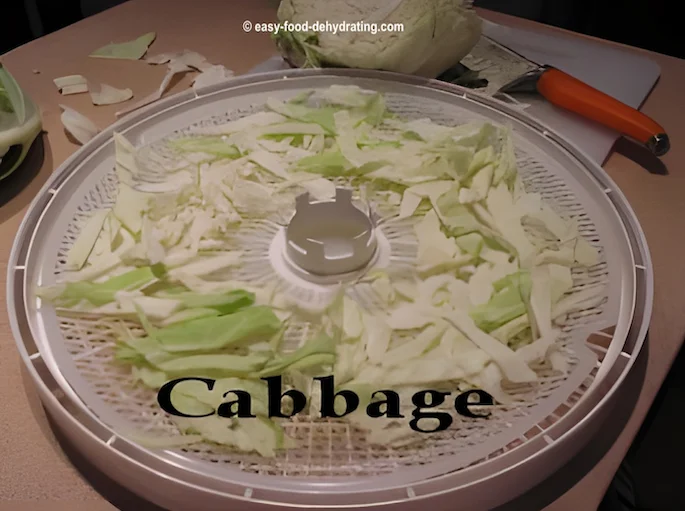
Why Cabbage Is Perfect for Dehydrating (and Saving Money)
As a kid, I loved hot cabbage bathed in butter, with a sprinkle of salt and white pepper. And let’s be honest—I still do!
Cabbage is not only inexpensive but it's also packed with nutrients. The best part? It absorbs flavors really well, so if you’re adding it to soups, stir-fries, or slaws, it takes on the taste of whatever you're cooking.
Cabbage Nutrition Info.
VITAMINS: Vitamin A, Vitamin K, and Folate.
MINERALS: A good source of Potassium and Calcium, along with Phosphorus, with trace minerals of Selenium, Zinc, and Manganese.
Cabbage also contains Omega-6 fatty acids.
Step-by-Step: Dehydrating Cabbage in a Dehydrator
Using an electric dehydrator is hands down the best method. It ensures even drying without burning.
- Remove the outer leaves (save them for stuffed cabbage rolls!). Rinse the head under cold water if needed.
- Slice cabbage into thin strips, about 1/2-inch wide.
- Arrange evenly on dehydrator trays. A little overlap is fine.
- Set your dehydrator between 125°F and 135°F (or per your model’s instructions).
- Drying time: 7-11 hours. Rotate trays for even drying.
💡 Outside the United States? Use my quick Fahrenheit-to-Celsius converter to find the equivalent Celsius temperature.
Fully dehydrated cabbage will be brittle and crisp.
No Dehydrator? How to Dry Cabbage in Your Oven
If you don’t have a dehydrator, use your oven. Just keep an eye on the cabbage toward the end to prevent scorching.
- Preheat the oven to 200°F.
- Slice cabbage thinly and discard the core.
- Spread slices in a single layer on a baking sheet.
- Bake for about 2 hours or until fully dried.
💡 Outside the United States? Use my quick Fahrenheit-to-Celsius converter to find the equivalent Celsius temperature.
How Much Dried Cabbage Do You Get from One Head?
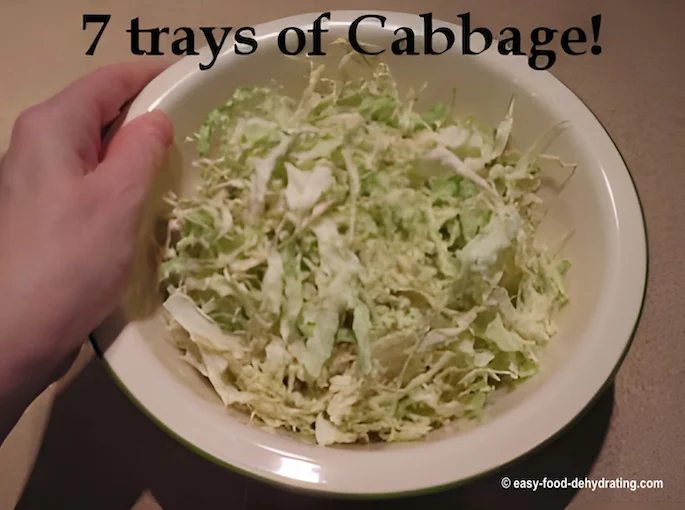
Can you believe this small bowl holds seven full trays of dehydrated cabbage? 😲 That’s the magic of dehydration—it shrinks your food and keeps the majority of the nutrients intact.
One head of cabbage fills an entire dehydrator! When dried, it takes up just a fraction of the space as you see in my previous image!
💡 Storage Tip: Store your cabbage in Mason jars for frequent use in soups and stews, or vacuum-sealed bags for long-term storage.
Smart Ways to Use Dehydrated Cabbage in Everyday Meals
Dehydrated cabbage is an awesome soup ingredient—just toss it in, and it will rehydrate as it simmers! Gain extra fiber and nutrients when added to stews, broth-based soups, and even ramen.
Add dehydrated cabbage to smoothies. Blend it dry for a fiber boost, or rehydrate it first if you want a smoother texture. It’s an easy way to sneak more veggies into your diet.
Recipe: Small-Batch Creamy Coleslaw (Fresh or Dehydrated Cabbage)

Ingredients
- 1/2 medium green cabbage (about 1 lb), shredded
- 1 carrot, peeled and grated
- 1/4 small red onion, finely sliced
- 1/3 cup mayonnaise
- 1 Tbsp apple cider vinegar
- 1 Tbsp sugar (or honey)
- 1/2 tsp Dijon mustard
- 1/4 tsp celery seed (optional)
- Salt and freshly ground black pepper, to taste
Instructions
- If using dehydrated cabbage, place the dried cabbage in a bowl and cover with hot water. Let it sit for 20–30 minutes until fully rehydrated, then drain well and allow it to cool completely before adding to your coleslaw.
- In a large bowl, combine the cabbage, carrot, and onion.
- In a separate bowl, whisk together the mayonnaise, vinegar, sugar, mustard, and celery seed until smooth.
- Pour dressing over the cabbage mixture. Toss well until coated.
- Season with salt and pepper. Cover and refrigerate at least 30 minutes before serving.
Tips:
- Great for small households or when you just need a side dish.
- Easily doubled if you’re serving a crowd.
- Keeps well in the fridge for 2–3 days.
The Surprising Benefits of Dehydrating Cabbage
Here’s why it’s worth the effort:
- Saves Space: A single head of cabbage takes up a lot of room in the fridge, but once dehydrated, it fits into a Mason jar.
- Long Shelf Life: Properly stored dehydrated cabbage lasts 12+ months, unlike fresh cabbage, which goes off within weeks.
- Nutrient Retention: Dehydrating does reduce water content, but it preserves most of the vitamins and minerals that make cabbage a healthy choice.
- Quick & Easy Rehydration: Just soak in water, and it’s ready to use in soups, stews, or slaws.
- Budget-Friendly: Buying cabbage in bulk or on sale, then dehydrating it, saves money and prevents waste.
- Versatile Use: Once rehydrated, cabbage works in coleslaw, stir-fries, soups, casseroles, and even egg rolls.
- Emergency Preparedness: Lightweight and shelf-stable, dehydrated cabbage is perfect for camping, backpacking, or long-term storage.
Best Storage Tips for Long-Lasting Dehydrated Cabbage
Dehydrated cabbage needs proper storage to keep it fresh.
- Short-term storage: Mason jars with airtight lids work well for quick access (great if you use it frequently and they look good on your pantry shelves).
- Long-term storage: Mylar bags with added oxygen absorbers help keep the cabbage dry and extends shelf life up to 12-18 months.
- Avoid humidity: Keep stored cabbage in a cool, dark place like a closed kitchen cupboard or a pantry to prevent re-absorption of moisture.
Cutting Cabbage the Easy Way (My Knife Tip)
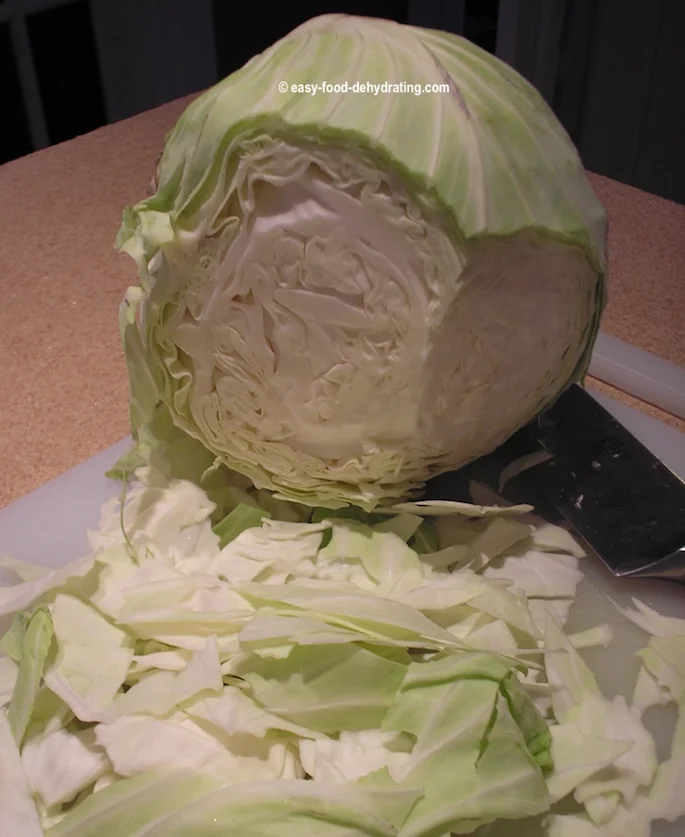 Cabbage being sliced
See the Cutluxe Chef's Knife I Use
A sharp knife makes it much easier to halve grapes cleanly without crushing them or letting the blade slip. I use my Cutluxe chef’s knife, which has a full-tang blade extending through the handle for strength and stability. It costs more than a basic kitchen knife, but mine has been a dependable tool when kept properly sharpened.
As an Amazon Associate, I earn from qualifying purchases — this does not affect the price you pay. Read full disclosure.
Your Top Questions About Dehydrating Cabbage, Answered
Do I need to blanch cabbage before dehydrating?
Do I need to blanch cabbage before dehydrating?
You don’t have to, but blanching for 1–2 minutes helps preserve color and texture. If you skip it, your cabbage may turn slightly lighter over time—it’s still safe to use.
How long does dehydrated cabbage last?
How long does dehydrated cabbage last?
Properly stored in airtight jars or Mylar bags with oxygen absorbers, dehydrated cabbage lasts 12–18 months. Kept cool, dark, and dry, it may last even longer.
Can I dehydrate cabbage without a dehydrator?
Can I dehydrate cabbage without a dehydrator?
Yes! Use your oven at the lowest setting (around 200°F) and bake for about 2 hours. Watch carefully near the end to avoid scorching.
What’s the best way to rehydrate cabbage?
What’s the best way to rehydrate cabbage?
Soak dried cabbage in hot water for 20–30 minutes, then drain and cool. It’s ready for coleslaw, stir-fries, soups, or casseroles.
Final Thoughts: Is Dehydrating Cabbage Really Worth It?
If you love cabbage, dehydrating it is a smart way to save space and always have this versatile veggie on hand. It works beautifully in soups, stews, slaws, and even smoothies.
Before you go, don’t forget to grab your free 5 Dried Food Recipes You'll Actually Love PDF (below)—including carrot soup, minestrone, split pea soup, spicy beef jerky, and even banana cinnamon rolls. They’re all tried-and-true favorites you’ll enjoy making with your dehydrated foods!

5 Free Dried Food Recipes
That Actually Taste Great
Put your dried food to delicious use!
Five very different recipes.
Not one dull bite...
5 Free Dried Food Recipes
That Actually Taste Great
Put your dried food to delicious use!
Five very different recipes.
Not one dull bite...
You Might Like These
How Many Vegetables Fill a Dehydrator: Tray Guide & Tips
Find out how many vegetables fill a dehydrator using Nesco tray estimates, with tips for slicing, spacing, and planning each batch.
How to Dehydrate Broccoli: Easy, Tasty, and Foolproof
Learn how to dehydrate broccoli—fresh or frozen—at 125–135°F. Easy steps, storage tips, and tasty ways to use it.
How to Dehydrate Peppers: Easy, Bold Flavor Storage
Step-by-step guide to dehydrate peppers for long-term storage, quick cooking, and homemade spice blends.
How to Dehydrate Peas: Fresh, Frozen & Canned
Learn how to dehydrate fresh, frozen, or canned peas with the right preparation, temperature, drying time, storage tips, and an easy glove trick!
Dehydrate Brussels Sprouts for Tasty Snacks & Storage
Learn how to dehydrate Brussels sprouts with simple steps, storage tips, and tasty ways to enjoy them year-round.
How to Dehydrate Pumpkin: Slices, Powder & Dog Treats
Learn how to dehydrate pumpkin at 135°F for brittle slices and powder, with preparation, drying, storage, troubleshooting, and dog treat tips.



You Might Like These
How Many Vegetables Fill a Dehydrator: Tray Guide & Tips
Find out how many vegetables fill a dehydrator using Nesco tray estimates, with tips for slicing, spacing, and planning each batch.
How to Dehydrate Broccoli: Easy, Tasty, and Foolproof
Learn how to dehydrate broccoli—fresh or frozen—at 125–135°F. Easy steps, storage tips, and tasty ways to use it.
How to Dehydrate Peppers: Easy, Bold Flavor Storage
Step-by-step guide to dehydrate peppers for long-term storage, quick cooking, and homemade spice blends.
How to Dehydrate Peas: Fresh, Frozen & Canned
Learn how to dehydrate fresh, frozen, or canned peas with the right preparation, temperature, drying time, storage tips, and an easy glove trick!
Dehydrate Brussels Sprouts for Tasty Snacks & Storage
Learn how to dehydrate Brussels sprouts with simple steps, storage tips, and tasty ways to enjoy them year-round.
How to Dehydrate Pumpkin: Slices, Powder & Dog Treats
Learn how to dehydrate pumpkin at 135°F for brittle slices and powder, with preparation, drying, storage, troubleshooting, and dog treat tips.
Before You Go...
If you enjoyed this page, tap the ❤️ in the lower right-hand corner.
It saves this page to your Grow bookmarks so you can find it again later.
You’ll also see quick share buttons to copy the link, post to Facebook,
or save it straight to Pinterest.
What We Mean by “Dehydrate”
Here at Easy Food Dehydrating, “dehydrate” always means using an electric food dehydrator — the easy, reliable way to dry food at home.
What We Mean by “Dehydrate”
Here at Easy Food Dehydrating, “dehydrate” always means using an electric food dehydrator — the easy, reliable way to dry food at home.


LATEST READS on EFD


-
Better Than Bouillon: Uses, Storage & Cube Comparison
Sep 11, 26 10:46 AM
 Learn how to use Better Than Bouillon, how much makes one cup of broth, how it compares with cubes, and how to store opened jars safely.
 -
How to Dehydrate Bananas for Easy, Healthy Snacking
Sep 09, 26 02:32 PM
 Learn how to dehydrate bananas at 135°F, reduce browning, test for doneness, condition, and store them for delicious homemade snacks.
 -
How to Dehydrate Peas: Fresh, Frozen & Canned
Sep 09, 26 11:21 AM
 Learn how to dehydrate fresh, frozen, or canned peas with the right preparation, temperature, drying time, storage tips, and an easy glove trick!


Unlock the Secrets of Food Dehydrating... from Fruit 'n' Veg to Doggie Dinners!



AFFILIATE DISCLOSURE: I am an Affiliate for Amazon, and other sellers of quality merchandise. Should you purchase an item through their links, I may receive compensation. The price you pay does not increase. THANKS for your support! Read full disclosure here.
easy FOOD DEHYDRATING: Making food preservation simple since 2010. I show you how to keep your food pantry full, whatever the reason or season!

HOME ARTICLES CONTACT ADVERTISING DISCLOSURE DISCLAIMER FAQ PRIVACY SITEMAP TERMS TESTIMONIALS
ALL CONTENT COPYRIGHT © 2010-2025 • ALL RIGHTS RESERVED REGARDLESS OF LINKS OR ATTRIBUTIONS.
POWERED BY SBI! (SOLO BUILD IT!)
As an Amazon Associate, I earn from qualifying purchases.