
Home Freeze Dryer Costs in 2026: Is One Worth It?

A home freeze dryer is a major investment, so it makes sense to look beyond the advertised price before deciding whether one is worth buying. Let’s compare current purchase prices, electricity and supply costs, capacity, maintenance, and the factors that determine whether a freeze dryer could actually save you money.
✅ Quick Answer: How much does a home freeze dryer cost, and is it worth it?
Most home freeze dryers currently cost approximately $1,700 to $5,000 or more, depending on the brand, size, pump, and included accessories. Electricity generally costs several dollars per batch, but the amount varies with the machine, cycle length, food, room temperature, and local electricity rate. A freeze dryer may be worth buying if you will use it regularly to preserve garden produce, bulk purchases, complete meals, or foods you would otherwise buy freeze-dried. However, it does not guarantee savings, and there is no dependable payback period that applies to every household.
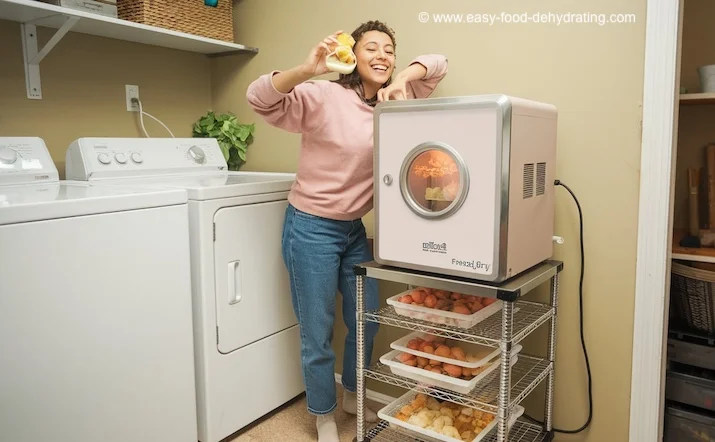 Depiction of a freeze-dryer, not an actual brand
When Is a Home Freeze Dryer Worth the Cost?
Dehydrating—which I obviously love!—remains one of the easiest and most affordable ways to preserve food at home. Freeze-drying costs considerably more, but it can be worthwhile for households that regularly preserve large harvests, complete meals, bulk purchases, or foods they would otherwise buy commercially freeze-dried. Freeze-dried food also tends to rehydrate more closely to its original texture than dehydrated food.
The investment makes the most financial sense when you have enough food and time to keep the machine in regular use. Any payback period will depend on what you preserve, how often you run it, your electricity and supply costs, and whether the food replaces something you genuinely would have purchased.
How Does Freeze-Drying Actually Work?
The Mountain House video below shows how freeze-drying works on a commercial scale. Home freeze dryers use the same basic process, although the equipment and batch sizes are considerably smaller.

Freeze-drying first freezes the food and then lowers the pressure inside a vacuum chamber. Controlled heat allows the frozen water in the food to change directly from ice into vapor without becoming liquid—a process called sublimation. A final drying stage removes additional bound moisture.
Because freeze-drying removes so much moisture, properly processed and packaged food can remain shelf-stable for years. However, the actual shelf life depends on the food, its fat and sugar content, how thoroughly it was dried, the packaging used, and storage temperature. There is not enough long-term research on home freeze-dried food to promise that every food will remain safe and good-quality for 25 years.
What Foods Can You Freeze-Dry?
You can freeze-dry far more than fruits and vegetables. Depending on the machine and the manufacturer’s instructions, suitable foods may include:
- Fruits and vegetables
- Cooked lean meats, poultry, and eggs
- Dairy products such as yogurt and shredded cheese
- Soups, sauces, and complete cooked meals
- Herbs, snacks, desserts, and ice cream
Freeze-drying does not make improperly prepared food safe. Meat, poultry, eggs, and complete meals should be cooked and handled safely before freeze-drying, and the finished food must be thoroughly dry before it is packaged.
Home Freeze Dryer Prices: What You’ll Really Pay
Current home freeze dryers generally begin at approximately $1,700 for a small model and can exceed $5,000 for a high-capacity machine. The advertised price may include the vacuum pump and a starter supply kit, but shipping, taxes, upgraded pumps, electrical work, carts, extra trays, and packaging supplies can increase the final cost.
Prices and promotions change frequently, so treat the following ranges as a starting point rather than a guaranteed quote.
| General Price Level | Approximate Purchase Price | What Usually Affects the Price | May Suit |
|---|---|---|---|
| Small or budget model | $1,700–$2,500 | Lower batch capacity, fewer trays, pump, and finish selected | Occasional users, couples, and smaller households |
| Mid-capacity model | $2,500–$4,000 | Greater tray area, larger batches, included accessories, and pump type | Families, gardeners, and regular users |
| Large or high-capacity model | $4,000–$5,000+ | Much larger batches, heavier electrical demand, commercial-style capacity, and upgraded equipment | Large harvests, frequent use, group purchasing, or a food business |
Compare usable tray area and pounds processed per batch—not simply the number of trays—because tray dimensions and recommended capacities vary among manufacturers.
VEVOR Home Freeze Dryer: What to Check Before Buying
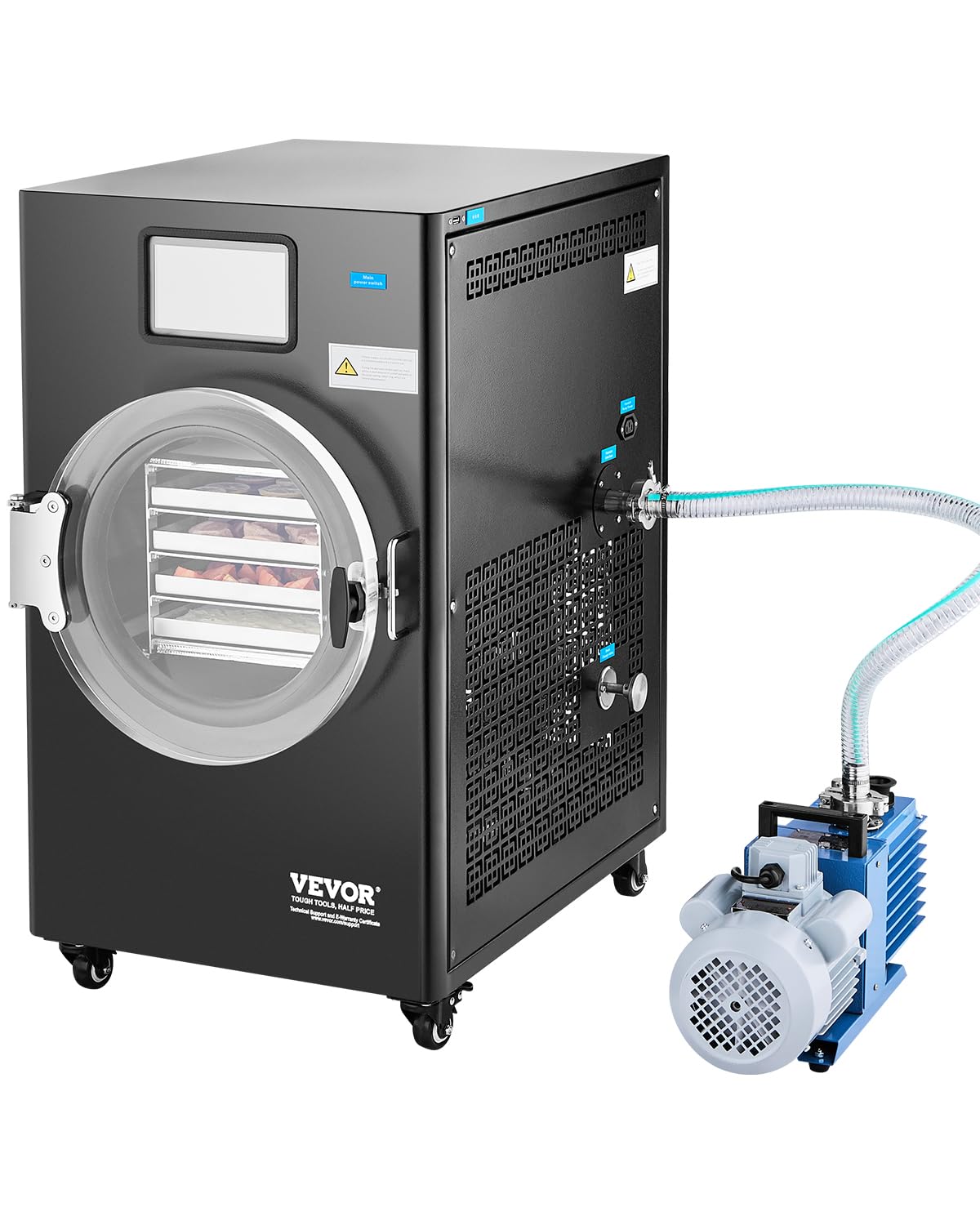
VEVOR Vacuum Freeze Dryer Machine
The VEVOR HFD-4 is a four-tray freeze dryer with a manufacturer-listed processing capacity of 8.8 to 13.2 pounds per batch. Its published specifications include a 1,550-watt power rating, a cold-trap temperature of –31°F (–35°C), a vacuum pump, programmable controls, and an operating noise rating of 60 decibels or less.
This is a large, heavy machine weighing approximately 246 pounds, so check its dimensions, electrical requirements, ventilation needs, delivery arrangements, warranty, replacement-parts availability, and return policy before purchasing. Also confirm whether the retailer provides clear operating instructions and accessible technical support.
When comparing products online, don’t rely solely on the words “freeze dryer” in a product title. A genuine freeze dryer must both freeze the food and operate under a sufficiently deep vacuum so the frozen water can be removed through sublimation. Shelf-temperature settings alone do not prove—or disprove—that a machine is a true freeze dryer.
Prices and availability change frequently, so check the current listing and specifications before ordering.
As an Amazon Associate, I earn from qualifying purchases—this does not affect the price you pay. Read full disclosure.
⚠️ Watch Out for Misleading “Freeze Dryer” Listings
When shopping on Amazon or elsewhere, make sure the machine is a genuine freeze dryer—not an ordinary heated food dehydrator using “freeze dryer” in its product title. I found several supposed freeze dryers that listed only an operating-temperature range of 86°F to 194°F, with no freezing system, cold-trap temperature, or deep-vacuum specifications.
A genuine freeze dryer must first freeze the food and then remove the frozen water under a sufficiently deep vacuum. Look for a clearly stated cold-trap or freezing temperature below 32°F, along with vacuum-pump and vacuum-pressure specifications. If the listing mentions only warm drying temperatures, it is almost certainly a dehydrator—not a freeze dryer.
Home Freeze Dryer Brand Comparison
Here is a snapshot of several home freeze dryer brands currently available in the United States. Prices, sales, specifications, and included equipment can change, so use this comparison to narrow your choices and confirm everything directly with the manufacturer or retailer before ordering.
| Brand and Models | Advertised Price | Listed Batch Capacity | Warranty Information | Important Buying Notes |
|---|---|---|---|---|
|
Harvest Right Small, Medium, Large, and X-Large |
Starting at $1,695 during the sale checked; price increases with size, finish, and pump selection |
Small: 6–10 lb Medium: 10–15 lb Large: 18–27 lb X-Large: 40–50 lb |
Three-year limited warranty | Premier oil pump and starter supplies are included with current home bundles. Check the circuit requirement for the selected size and configuration. |
|
Blue Alpine Medium and Large home models |
Medium models start at approximately $2,995; larger models and upgraded pumps cost more |
Medium: up to 15 lb Large: up to 25 lb |
One-year full warranty, three years on the refrigeration system, and a separate one-year vacuum-pump warranty | Medium uses a 120V, 15-amp circuit. Large requires a 120V, 20-amp circuit. Manufacturer emphasizes repair access and replacement-parts availability. |
|
Stay Fresh Home and larger-capacity models |
Home model was listed at $2,699 during the sale checked; pump options and larger models cost more |
Home model: 12–18 lb Larger models: up to 35 lb, depending on the model |
Confirm the current written warranty for the machine, refrigeration system, and selected pump before ordering | Current home model includes five trays and lists 800 square inches of tray space. Check delivery terms, power requirements, support, and parts availability. |
|
VEVOR HFD-4 |
Approximately $3,660 when checked; retailer prices and availability vary |
8.8–13.2 lb Four trays |
Verify the manufacturer warranty separately from any optional retailer protection plan | Rated at 1,550 watts and approximately 246 pounds. Check operating instructions, technical support, replacement parts, electrical needs, and return terms carefully. |
Price check: August 18, 2026. Advertised prices may be temporary sale prices and may not include taxes, delivery surcharges, electrical work, upgraded pumps, carts, or additional supplies.
For a fair comparison, check usable tray area, realistic pounds per batch, vacuum-pump type, electrical requirements, machine weight, included supplies, warranty exclusions, return terms, replacement-parts availability, and access to technical support.
Don’t Overlook These Ongoing Costs
The purchase price is only part of the investment. Your ongoing expenses will depend on the machine, how frequently you use it, the foods you process, your electricity rate, and the type of vacuum pump and packaging you choose.
Electricity
Published manufacturer and retailer estimates generally place electricity costs at approximately $1.25 to $8 per batch. That wide range reflects differences in machine size, cycle length, food moisture, room temperature, and local electricity rates.
To estimate your own cost, multiply the machine’s average kilowatt usage by the number of operating hours and then by your electricity price per kilowatt-hour. Check whether your utility offers lower off-peak rates, but don’t assume that every household can save a particular percentage.
Vacuum-Pump Maintenance and Repairs
Oil-based vacuum pumps require oil changes or filtering at intervals specified by the manufacturer. For example, Harvest Right currently recommends replacing its Premier pump oil approximately every 20 to 30 batches. Other pumps may have different requirements, while an oil-free pump avoids oil changes but costs considerably more upfront.
Allow for replacement oil, filters, door gaskets, cleaning supplies, and eventual repairs, but avoid relying on one fixed annual figure. Repair costs will depend on the machine’s age, warranty coverage, parts availability, and whether service can be completed at home.
Packaging and Other Supplies
Freeze-dried food must be packaged promptly to protect it from moisture and oxygen. Ongoing supplies may include Mylar bags, oxygen absorbers, Mason jars, vacuum-sealing accessories, labels, and replacement trays or silicone mats. The annual cost depends primarily on how many batches you process and the type and size of packaging you use.
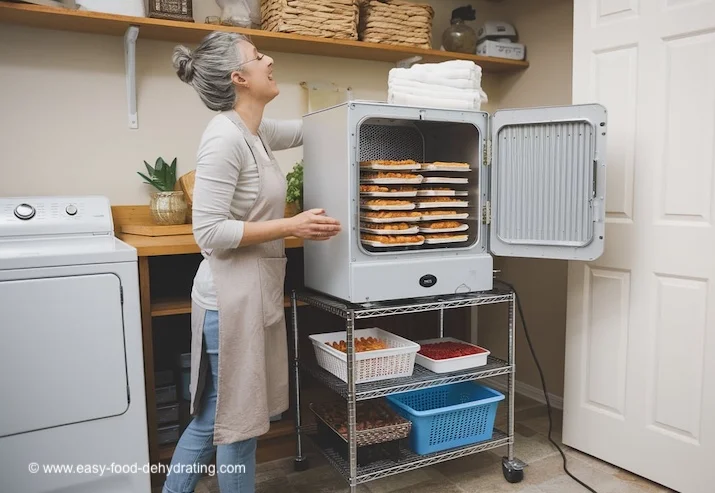 Depiction of a freeze-dryer, not an actual brand
Also consider possible one-time costs for a sturdy cart or table, dedicated electrical work, ventilation or cooling, and suitable storage space. Delivery arrangements matter too, because many freeze dryers arrive by curbside freight and are far too heavy for one person to move safely.
Cost-Saving Tips: How to Afford a Freeze Dryer
A lower purchase price can help, but compare the complete cost rather than automatically choosing the least expensive machine. A model with inadequate capacity, unclear instructions, limited support, or difficult-to-find replacement parts could cost more in the long run.
Ways to reduce the initial and ongoing expense include:
- Compare manufacturer sales, included accessories, shipping charges, and warranty coverage.
- Look for manufacturer-certified refurbished machines with a written warranty.
- Inspect a pre-owned machine carefully and ask for its serial number, service history, operating hours, included pump, and proof that it completes a full cycle.
- Choose a capacity that matches the amount of food you will realistically process.
- Run reasonably full—but not overloaded—batches to make better use of each cycle.
- Operate the machine in a cool, well-ventilated location within the manufacturer’s recommended temperature range.
- Purchase frequently used packaging supplies in larger quantities when the per-unit savings are worthwhile.
- Track electricity, oil, packaging, food, and maintenance costs for each batch instead of estimating from memory.
Sharing a freeze dryer with relatives, friends, or a neighborhood group may reduce the cost per household, but agree beforehand on where it will stay, who is responsible for maintenance and repairs, how operating costs will be divided, and what happens if the machine is damaged.
Can You Make Money With a Home Freeze Dryer?
A home freeze dryer may support a small business, but earning enough to recover the machine’s cost is not guaranteed. Before calculating a profit, include the food, electricity, packaging, labels, payment-processing fees, insurance, permits, maintenance, rejected batches, and your working time.
Possible products and services include:
- Freeze-dried fruits, vegetables, candy, or other foods permitted under your state’s laws
- Lightweight camping snacks and meal ingredients
- Nonfood services such as preserving flowers or wedding bouquets
- Demonstrations or classes based on your genuine experience and qualifications
Check federal, state, county, and city requirements before selling or processing anything for someone else. The FDA’s Starting a Food Business guidance explains which authorities may regulate a home-based food business. Cottage-food laws vary considerably and may not permit freeze-dried meats, dairy products, complete meals, or other foods requiring additional safety controls.
Pet treats are regulated separately as animal food and may require registration, approved ingredients, testing, and specific labeling. Review the FDA’s How Do I Start an Animal Food Business? guidance before producing pet treats for sale.
If you intend to sell freeze-dried food, confirm the applicable permits, approved preparation location, labeling rules, food-safety requirements, insurance, sales-tax obligations, and whether your machine is suitable for commercial use. Treat possible business income as a separate business decision—not as a guaranteed way to make the freeze dryer pay for itself.
Will a Home Freeze Dryer Actually Save You Money?
There is no reliable monthly savings figure that applies to every household. The fairest way to judge the investment is to calculate your own costs and compare them with purchases or food waste the freeze dryer would genuinely replace.
Use the following worksheet with your actual figures:
| Monthly Figure | What to Include | Your Amount |
|---|---|---|
| Equipment cost | Monthly loan payment, or a portion of the purchase price if you paid cash | $________ |
| Electricity | Number of batches multiplied by your estimated electricity cost per batch | $________ |
| Packaging | Mylar bags, oxygen absorbers, jars, lids, labels, and sealing supplies | $________ |
| Maintenance | Pump oil, filters, cleaning supplies, replacement parts, and a repair allowance | $________ |
| Food purchased | Food bought specifically for freeze-drying that you would not otherwise purchase | $________ |
| Total monthly cost | Add all of the costs above | $________ |
| Purchases replaced | Commercial freeze-dried foods or prepared foods you genuinely no longer buy | $________ |
| Food waste prevented | Food that would genuinely have spoiled—not the full value of everything preserved | $________ |
| Net business income | Revenue remaining after ingredients, packaging, fees, taxes, and other business expenses | $________ |
| Total monthly value | Add the three value or savings figures above | $________ |
Subtract your total monthly cost from your total monthly value. A positive result suggests the machine may be saving money under your current habits. A negative result does not necessarily mean the purchase has no value—food security, convenience, ingredient control, and preserving a homegrown harvest may still matter to you—but those benefits should not be presented as guaranteed financial savings.
If you finance the machine, include the interest and fees in your calculations. If you pay cash, consider how many months or years of genuine savings it would take to recover the purchase price.
Should You Buy a Home Freeze Dryer?
A home freeze dryer may be a good investment if you:
- Regularly preserve substantial garden harvests or bulk food purchases
- Frequently purchase expensive commercial freeze-dried food
- Want to preserve complete meals or ingredients that rehydrate more closely to their original texture
- Have enough food to run reasonably full batches regularly
- Have suitable space, ventilation, electrical service, and storage for the finished food
- Can comfortably afford the complete cost without depending on uncertain savings or business income
- Are willing to maintain the vacuum pump, clean the machine, package food promptly, and learn how to judge dryness
It may not be the right purchase if you:
- Preserve only small amounts of food occasionally
- Primarily want to dry herbs, fruit, vegetables, or jerky that a food dehydrator can handle affordably
- Do not have a suitable location for a large, heavy machine and its vacuum pump
- Would need guaranteed savings or sales income to make the payments
- Are unlikely to keep up with maintenance, packaging, and safe food-handling requirements
- Have not yet calculated the electrical, supply, repair, and storage costs
Household size alone should not decide it. One person who gardens heavily or buys commercial freeze-dried meals may use a machine more than a large family that rarely preserves food.
Affordable Alternatives to a Home Freeze Dryer
If a home freeze dryer does not fit your budget, space, or preservation needs, several less expensive methods may be more practical:
- Food dehydrator: An affordable choice for herbs, fruits, vegetables, jerky, fruit leather, and many other foods. It uses less space and is generally easier to operate and maintain than a freeze dryer.
- Freezer: Preserves the texture of many foods well and works for meat, produce, complete meals, and leftovers. However, the food remains dependent on electricity and available freezer space.
- Water-bath or pressure canner: Produces shelf-stable food when you follow properly tested recipes and processing instructions. Low-acid foods such as vegetables, meat, poultry, and soups require pressure canning.
- Vacuum sealer: Helps protect refrigerated or frozen foods from air and freezer burn and can also package thoroughly dried food. Vacuum sealing alone does not make moist or perishable food shelf-stable.
You can also combine preservation methods. For example, dehydrate herbs and vegetables, freeze complete meals, and can foods for which safe, tested recipes are available. The best choice is the one you can use correctly and consistently.
What Foods Should You Avoid Freeze-Drying at Home?
Some foods contain too much fat, oil, sugar, or alcohol to freeze-dry effectively in a home machine. These include:
- Oils, butter, and other foods made primarily from fat
- Peanut butter and other high-fat nut butters
- Mayonnaise and oil-heavy salad dressings
- Pure chocolate
- Very fatty meats
- Honey, syrups, jams, and jellies
- Foods or beverages containing substantial amounts of alcohol
Fat does not sublimate because it is not water. High-fat foods may remain oily, dry unevenly, become rancid during storage, or retain enough moisture to make long-term storage unreliable. Foods with very high concentrations of sugar or alcohol may not freeze solidly or may remain sticky after an extremely long cycle.
Other foods require safe preparation rather than automatic exclusion. Raw meat, poultry, seafood, and eggs may contain pathogens that survive freeze-drying and become active again after rehydration. Cook these foods safely before freeze-drying or use an appropriately validated process that includes a reliable cooking step before eating. Use only pasteurized dairy products; many pasteurized dairy foods can be freeze-dried successfully, although high-fat varieties have a greater risk of rancidity.
Freeze-drying does not kill bacteria. Start with safely prepared food, keep the equipment and work area clean, dry the food completely, and package it immediately to prevent moisture from returning.
For a detailed food-by-food reference, see Utah State University Extension’s practical guide to safe and effective freeze-drying.
Final Thoughts on Home Freeze Dryer Costs
A home freeze dryer may be worth the investment if you will use it regularly, have suitable space and electrical service, and can comfortably afford the full cost without relying on uncertain savings.
Before ordering, compare realistic batch capacity, electrical requirements, pump maintenance, warranty coverage, replacement parts, and technical support. This guide is based on current manufacturer and retailer information—not my hands-on testing of every machine—so confirm prices and specifications before purchasing.
FAQs About Buying and Using a Freeze Dryer
Can a food dehydrator freeze-dry candy?
Can a food dehydrator freeze-dry candy?
No. A food dehydrator removes moisture with warm air, but a freeze dryer freezes the food and removes ice as vapor under a deep vacuum. A dehydrator can dry or melt certain candies, but it cannot produce genuinely freeze-dried candy. Read more about why a food dehydrator cannot freeze-dry candy.
How long will it take for a home freeze dryer to pay for itself?
How long will it take for a home freeze dryer to pay for itself?
There is no standard payback period. It depends on the purchase price, financing, number of batches, electricity and supply costs, food preserved, waste genuinely prevented, and commercial freeze-dried products you no longer buy. Use your actual figures rather than assuming the machine will pay for itself within 18 to 24 months.
Is a home freeze dryer difficult to use?
Is a home freeze dryer difficult to use?
Modern home freeze dryers automate much of the cycle, but there is still a learning curve. You must prepare and load food correctly, maintain the vacuum pump, recognize when food is completely dry, package it promptly, and troubleshoot vacuum or moisture problems when they occur.
Can I freeze-dry any food?
Can I freeze-dry any food?
No. Most fruits, vegetables, cooked lean meats, pasteurized dairy products, and complete cooked meals can be freeze-dried, but very fatty, oily, sugary, or alcoholic foods may not dry properly. Freeze-drying also does not kill bacteria, so potentially hazardous foods must be prepared and handled safely.
How loud is a home freeze dryer?
How loud is a home freeze dryer?
Noise varies by machine and vacuum pump. Some manufacturers publish ratings around 60 decibels or less, but the compressor, fans, and pump may run for many hours. Check the selected model’s published rating and owner feedback before deciding where to place it.
How much food can a home freeze dryer process at once?
How much food can a home freeze dryer process at once?
Capacity varies considerably by brand and model. Current home machines list capacities ranging from approximately 6 pounds for smaller batches to 50 pounds for some extra-large models. Compare pounds per batch and total usable tray area rather than relying only on the number of trays.
If you’d like more tasty ways to use dried food, don’t miss my free 5 Dried Food Recipes That Actually Taste Great PDF below—featuring carrot soup, minestrone, split pea soup, spicy beef jerky, and even banana cinnamon rolls.

5 Free Dried Food Recipes
That Actually Taste Great
Put your dried food to delicious use!
Five very different recipes.
Not one dull bite...
5 Free Dried Food Recipes
That Actually Taste Great
Put your dried food to delicious use!
Five very different recipes.
Not one dull bite...
More From Easy Food Dehydrating
Food Shortage Preparedness: How to Get Ready Now
Practical steps to prepare for food shortages: what to stock, how to grow, dehydrate, & store food safely—without panic.
How to Rehydrate Dehydrated Pasta Using Less Water and Fuel
Learn how to rehydrate dehydrated pasta with boiling water, plus Lori’s tests using macaroni, wide noodles, and mostaccioli.
Dehydrated Potato-Beaded Necklace: Janetta’s DIY Idea
Make a dehydrated potato-beaded necklace like Janetta: dry, paint, seal, and string rock-hard potato beads.
Selling Dehydrated Food for Fun and Profit
Can you make money selling dehydrated food? Explore product ideas, cottage food laws, labeling, safety, costs, and practical tips before you start.
Why Dehydrate Food: 7 Important Reasons to Consider
Discover 7 practical reasons to dehydrate food: reduce waste, save space and money, preserve seasonal produce, and prepare convenient snacks.
How to Dehydrate Nuts and Seeds: Drying and Storage
Learn when nuts and seeds need dehydrating, whether soaking is optional, how to test for dryness, and how refrigeration or freezing protects quality.





More From Easy Food Dehydrating
Food Shortage Preparedness: How to Get Ready Now
Practical steps to prepare for food shortages: what to stock, how to grow, dehydrate, & store food safely—without panic.
How to Rehydrate Dehydrated Pasta Using Less Water and Fuel
Learn how to rehydrate dehydrated pasta with boiling water, plus Lori’s tests using macaroni, wide noodles, and mostaccioli.
Dehydrated Potato-Beaded Necklace: Janetta’s DIY Idea
Make a dehydrated potato-beaded necklace like Janetta: dry, paint, seal, and string rock-hard potato beads.
Selling Dehydrated Food for Fun and Profit
Can you make money selling dehydrated food? Explore product ideas, cottage food laws, labeling, safety, costs, and practical tips before you start.
Why Dehydrate Food: 7 Important Reasons to Consider
Discover 7 practical reasons to dehydrate food: reduce waste, save space and money, preserve seasonal produce, and prepare convenient snacks.
How to Dehydrate Nuts and Seeds: Drying and Storage
Learn when nuts and seeds need dehydrating, whether soaking is optional, how to test for dryness, and how refrigeration or freezing protects quality.
Before You Go...
If you enjoyed this page, tap the ❤️ in the lower right-hand corner. It saves this page to your Grow bookmarks so you can find it again later.
You’ll also see quick share buttons to copy the link, post to Facebook, or save it straight to Pinterest.
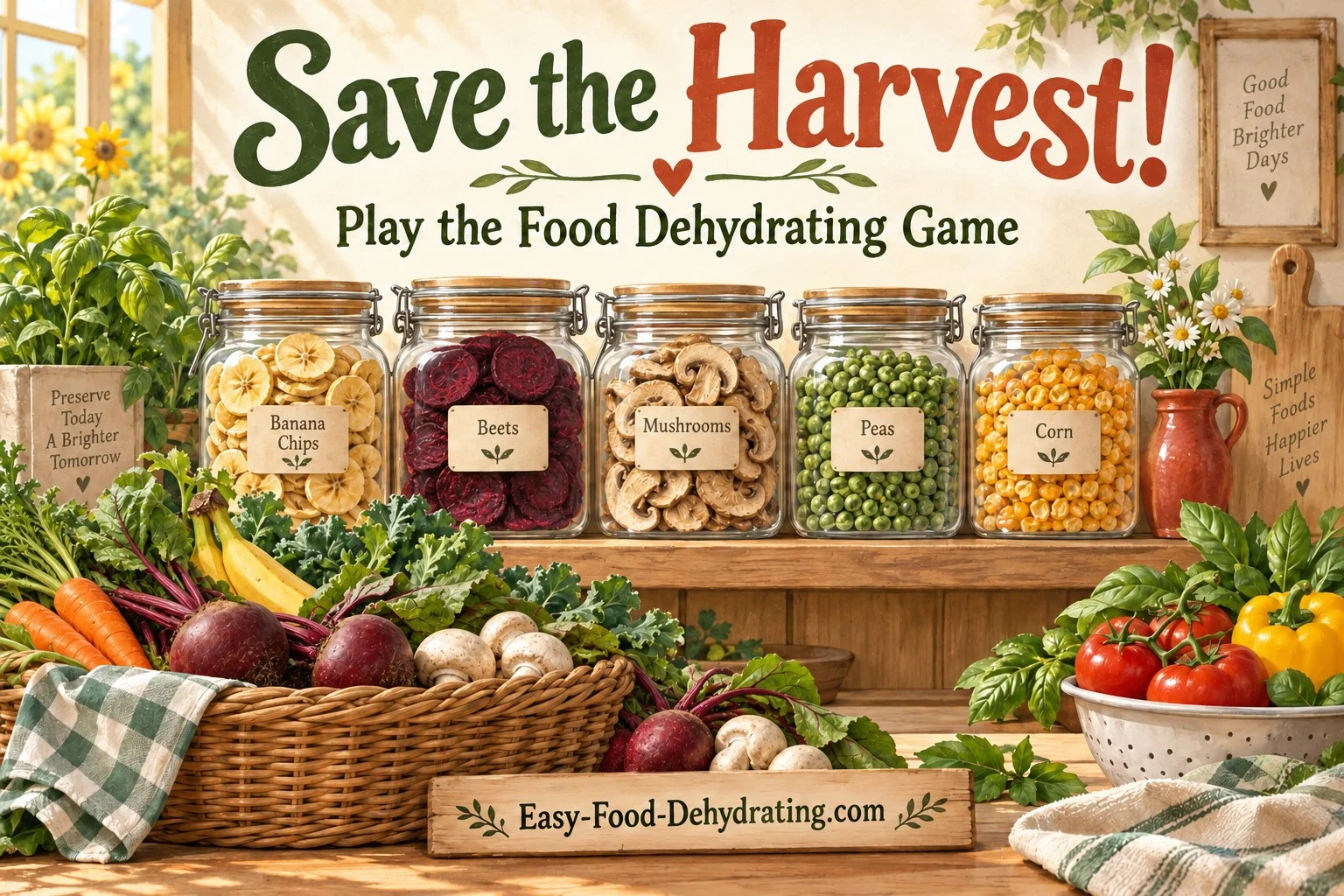
Test Your Food-Dehydrating
Know-How
Choose a food, make the right preparation, drying, and storage decisions—and see how many stars you can earn!
Play “Save the Harvest”Test Your Food-Dehydrating
Know-How
Choose a food, make the right preparation, drying, and storage decisions—and see how many stars you can earn!
What We Mean by “Dehydrate”
Here at Easy Food Dehydrating, “dehydrate” always means using an electric food dehydrator — the easy, reliable way to dry food at home.
What We Mean by “Dehydrate”
Here at Easy Food Dehydrating, “dehydrate” always means using an electric food dehydrator — the easy, reliable way to dry food at home.


📌 Pin It for Later

LATEST READS on EFD


-
How to Dehydrate Citrus Slices: Lemons, Limes & Oranges
Sep 19, 26 03:28 PM
 Learn how to dehydrate citrus slices at 135°F. Easy steps for lemons, limes, and oranges with tips for checking doneness, conditioning, and storage.
 -
How to Dehydrate Cabbage: Temperature, Storage & Creamy Slaw
Sep 19, 26 11:57 AM
 Learn how to dehydrate cabbage at 125°F, including how to prepare, steam-blanch, test for doneness, condition, store, rehydrate, and make creamy coleslaw.
 -
How to Make Homemade Dog Food: Chicken & Beef Recipes
Sep 18, 26 01:11 PM
 Meet Chicken Chow-Chow and Bow Wow Beefy Chow, learn how I prepared Minnie’s meals, and discover what to consider before feeding homemade dog food daily.


Unlock the Secrets of Food Dehydrating... from Fruit 'n' Veg to Doggie Dinners!



AFFILIATE DISCLOSURE: I am an Affiliate for Amazon, and other sellers of quality merchandise. Should you purchase an item through their links, I may receive compensation. The price you pay does not increase. THANKS for your support! Read full disclosure here.
easy FOOD DEHYDRATING: Making food preservation simple since 2010. I show you how to keep your food pantry full, whatever the reason or season!

HOME ARTICLES CONTACT ADVERTISING DISCLOSURE DISCLAIMER FAQ PRIVACY SITEMAP TERMS TESTIMONIALS
ALL CONTENT COPYRIGHT © 2010-2025 • ALL RIGHTS RESERVED REGARDLESS OF LINKS OR ATTRIBUTIONS.
POWERED BY SBI! (SOLO BUILD IT!)
As an Amazon Associate, I earn from qualifying purchases.