- Home
- How to Dehydrate Vegetables
- How to Dehydrate Beets

How to Dehydrate Beets for Slices, Chips, or Powder

Dehydrating beets is a practical way to preserve their earthy sweetness and gorgeous color. You can keep the dried pieces for soups and stews, season them as beet chips, or grind them into a colorful beet powder. I’ll show you how to prepare and dry them properly—and how to tell when they’re genuinely dry enough to store.
- ✅ Quick Answer: How do you dehydrate beets?
- Wash the beets and trim the tops, leaving about 1 inch of stem and the taproot attached to reduce color loss while cooking.
- Cook the beets in boiling water or steam them until tender. Cool them, then remove the skins, stems, and taproots.
- Cut the cooked beets into even slices or shoestring strips about ⅛ inch thick.
- Arrange them in a single layer and dehydrate at 140°F for approximately 10–12 hours, or until the pieces are brittle and dark red, with no soft or moist spots.
- Let the beets cool completely before packing them in an airtight container. For powder, grind the brittle pieces and store the powder in a moisture-proof container.
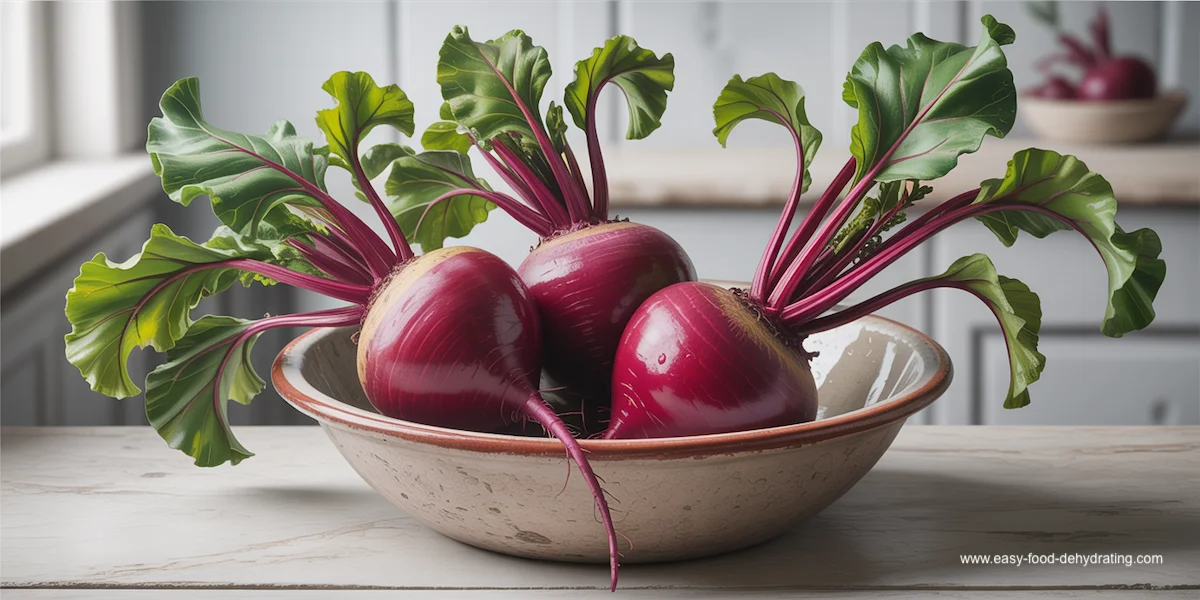
Should You Cook Beets Before Dehydrating? Yes—Here’s Why
Unlike many vegetables that need only a brief blanch, beets should be cooked before dehydrating. Cook them whole in boiling water or steam them until tender, then cool and peel them before cutting them into ⅛-inch slices or shoestring strips.
Cooking softens the beets, makes the skins easier to remove, and prepares the dense flesh for more even drying. Leaving about 1 inch of stem and the taproot attached during cooking also helps reduce color loss. This cook-first method and the 140°F drying guidance follow recommendations from Colorado State University Extension.
Don’t worry—we’ll go through the preparation step by step below.
How to Prepare Beets for Dehydrating
Good results begin with fresh, firm beets and even preparation. Let’s start with choosing the best beets for drying, then we’ll wash, cook, peel, and slice them.
How to Pick the Best Beets for Drying (and Which to Avoid)
Choose firm, smooth beets without soft spots, shriveled skin, or obvious damage. If the leafy tops are still attached, they should look fresh and crisp rather than wilted.
I prefer small to medium beets because they’re usually tender and easier to cook and slice evenly. Very large or over-mature beets can sometimes have tough, woody centers—so give each beet a gentle squeeze and make sure it feels firm.
If you have a choice of varieties, don’t worry: red, golden, Chioggia, and other table beets can all be dehydrated.
How to Dehydrate Beets Step by Step
Step 1: Wash and Cook the Beets
Wash the beets thoroughly and scrub away any soil with a clean vegetable brush. Trim off the leafy tops, but leave about 1 inch of stem and the taproot attached. This helps reduce the amount of color that escapes while the beets cook.
Place the whole beets in boiling water or steam them until tender when pierced with a fork. Cooking time will vary according to their size, so begin checking smaller beets after about 25 minutes.
Cool the cooked beets until they’re comfortable to handle. Remove the skins, then trim away the remaining stems and taproots.
Step 2: Slice the Cooked Beets Evenly
Cut the cooked, peeled beets into ⅛-inch-thick rounds or shoestring strips using a mandoline or a sharp knife. (Amazon affiliate link—thanks!) Keeping the pieces as uniform as possible helps them dry at approximately the same rate.
Gently blot away excess surface moisture before placing the pieces on your dehydrator trays.
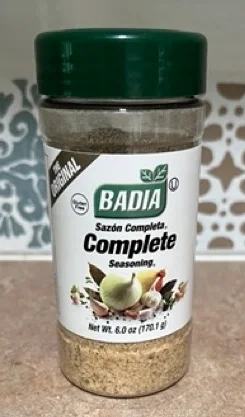
If you’re making beet chips, you can lightly season them with salt or your favorite dry seasoning now. Avoid adding oil to beets intended for pantry storage because oil can become rancid.
I love Badia Complete, which I put in just about every savory dish I make. It’s readily available in many supermarkets—and Amazon probably has it too. They have everything... right?
💡 Outside the United States? Use my quick Fahrenheit-to-Celsius converter to find the equivalent Celsius temperature.
Step 3: Dehydrate the Beets at 140°F
- Arrange the cooked beet slices or strips in a single layer on your dehydrator trays without overlapping them.
- Set the dehydrator to 140°F.
- Dehydrate for approximately 10–12 hours, checking periodically as the beets approach the end of the drying time.
- Rotate the trays during drying if your dehydrator requires it. Models with strong, even airflow may not need tray rotation.
- Remove a test piece and allow it to cool before checking it. Properly dried beet pieces should be brittle and dark red, with no soft or moist spots.
Drying time is always an estimate. Beet thickness, moisture content, humidity, dehydrator airflow, and the amount loaded onto the trays can all affect how long the process takes.
Can You Dehydrate Beets in the Oven? Yes—Here’s How
You can dehydrate beets in an oven, but the oven must be able to maintain a low temperature of approximately 140°F. Use an oven thermometer to check the actual temperature rather than relying entirely on the oven dial.
- Arrange the cooked, ⅛-inch beet slices or strips in a single layer on oven-safe drying racks set over baking sheets. Don’t let the pieces overlap.
- Set the oven to its lowest temperature and aim to maintain 140°F.
- Prop the oven door slightly open to allow moist air to escape, provided your oven manufacturer permits this. A fan positioned safely near the open door can help improve air circulation.
- Turn the pieces and rearrange the trays periodically for more even drying.
- Begin checking after approximately 10–12 hours, but expect oven drying to take longer than dehydrator drying—sometimes considerably longer.
- Cool a test piece before checking it. The dried beets should be brittle and dark red, with no soft or moist spots.
Important: If your oven cannot hold a steady temperature near 140°F, it isn’t suitable for dehydrating beets. Don’t add oil to beet pieces intended for pantry storage.
Oven drying requires careful watching because household ovens can fluctuate in temperature and scorch food more easily than a dehydrator.
Want Air-Fryer Beet Chips Instead?
If you want a quick beet snack rather than pantry-ready dried beets, you can make beet chips in an air fryer:
- Slice raw, peeled beets into very thin, even rounds—approximately ⅛ inch thick or slightly thinner.
- Toss the slices with a small amount of olive oil and salt, if desired.
- Preheat the air fryer to 320°F.
- Arrange the slices in a single layer without overcrowding the basket. You’ll probably need to cook them in batches.
- Air-fry for approximately 15–20 minutes, turning or shaking the slices every 5 minutes.
Watch them closely toward the end because thin beet slices can go from crisp to burned remarkably quickly. Allow them to cool before eating—they’ll crisp up a little more as they cool.
Important: Air-fryer beet chips are cooked with oil, not dehydrated for long-term storage. Enjoy them promptly rather than adding them to your shelf-stable dried-food supply.
Which Beet Varieties Work Best for Dehydrating?
I used to think there was only one kind of beet—I was so accustomed to buying canned pickled red beets for salads! It turns out that several colorful varieties can be dehydrated.
| Beet variety | What to expect |
|---|---|
| Red beets | The familiar deep-red variety with a strong, earthy beet flavor |
| Golden beets | Yellow-orange beets with a generally milder flavor—and less chance of staining everything in sight |
| Chioggia beets | Striking pink-and-white rings that make especially pretty slices |
| Cylindra beets | Long, deep-red beets that are conveniently shaped for making evenly sized slices |
Any fresh table beet can work, so you don’t need to hunt down a special variety. Choose the color and flavor you enjoy—and remember that freshness, tenderness, and even slicing matter more than the variety.
Chioggia beets are particularly gorgeous when sliced. Take a look at the photo below, courtesy of rareseeds.com.

How to Make and Use Beet Powder
To make beet powder, continue drying the cooked beet pieces until they’re completely brittle. Let them cool, then grind them in a high-speed blender, food processor, or clean spice grinder until the powder is as fine as you like.
Allow the powder to settle for a minute before removing the lid—you don’t want a cloud of beet dust escaping all over your kitchen! If any pieces remain, sift the powder and grind those larger bits again.
Beet powder adds earthy flavor and gorgeous color to:
- Smoothies
- Soups and stews
- Sauces and dips
- Breads, cakes, and other baked goods
- Homemade energy bars
- Frostings and other foods needing natural color
Start with a small amount because beet powder has a concentrated flavor and color. Store it in a clean, airtight, moisture-proof container away from heat, light, and humidity.
How to Make Dehydrated Beet Chips
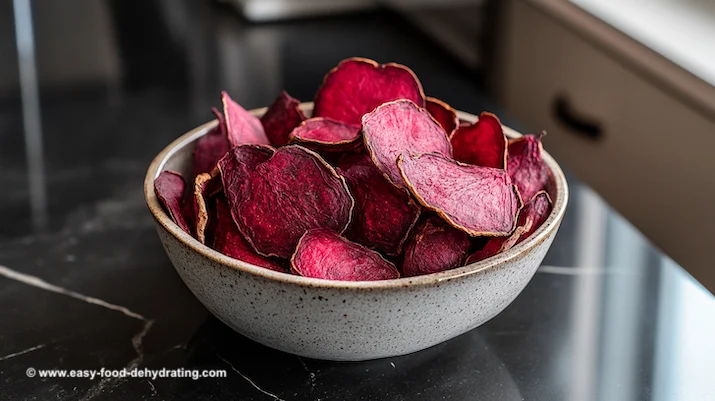
Ingredients:
- 2–3 medium beets
- ½ teaspoon salt, or to taste
- ¼ teaspoon black pepper
- Optional dry seasonings such as garlic powder, onion powder, smoked paprika, or your favorite herb blend
Instructions:
- Wash and scrub the beets. Leave approximately 1 inch of stem and the taproots attached.
- Cook the beets whole in boiling water or steam them until tender.
- Cool and peel the beets, then remove the remaining stems and taproots.
- Cut the beets into even ⅛-inch slices.
- Lightly season the slices. Don’t add oil if you intend to store the finished beet chips.
- Arrange the slices in a single layer on your dehydrator trays without overlapping them.
- Dehydrate at 140°F for approximately 10–12 hours. Rotate the trays if your dehydrator requires it.
- Cool a test piece before checking it. Continue drying until the chips are crisp or brittle, with no soft or moist spots.
- Let the chips cool completely, then package them in an airtight, moisture-proof container.
Homemade beet chips won’t necessarily have the light, crunchy texture of commercially fried chips—but they will have plenty of concentrated beet flavor!
How to Store and Rehydrate Dried Beets
Allow the dried beets to cool completely before packaging them. Store them in clean, airtight Mason jars or vacuum-sealer bags, then label each container with the contents and drying date.
Keep the containers in a cool, dark, dry place. Check them during the first several days for condensation or other signs of moisture. If moisture appears, return the beets to the dehydrator and dry them again before repackaging.
An oxygen absorber is optional and should be used only with beets that are thoroughly dried. A food-safe desiccant packet may be helpful in humid conditions, but neither packet can make inadequately dried food safe to store.
For more packaging choices, see my guide to how to store dehydrated food.
To rehydrate dried beets, place them in a saucepan, cover them with hot water, and simmer until they reach the tenderness you want. You can also add the dried pieces directly to soups and stews, where they’ll rehydrate as the dish cooks—just allow a little extra liquid. Easy peasy.
For additional methods and tips, see my complete guide to rehydrating dehydrated food.
FAQs About Dehydrating Beets
Do I need to peel beets before dehydrating?
Do I need to peel beets before dehydrating?
Yes. Cook the beets first, allow them to cool, and remove the skins before slicing. The skins should slip off fairly easily once the beets are cooked.
How long do dehydrated beets last?
How long do dehydrated beets last?
Properly dried beets generally keep well for 6–12 months when packaged in an airtight container and stored in a cool, dark, dry place. Their quality and storage life depend on how thoroughly they were dried, their packaging, and the storage conditions.
Can I dehydrate beets raw without cooking them first?
Can I dehydrate beets raw without cooking them first?
Some people dehydrate raw beet slices, but tested home-preservation guidance recommends cooking beets before drying them. That is the method I recommend following on this page.
What’s the best way to make beet powder?
What’s the best way to make beet powder?
Dry the beet pieces until completely brittle, allow them to cool, and grind them in a high-speed blender or clean spice grinder. Let the powder settle before opening the lid, then store it in an airtight, moisture-proof container.
Can I dehydrate canned beets?
Can I dehydrate canned beets?
Yes, provided they are plain canned beets rather than pickled beets. Drain and rinse them, blot away excess moisture, cut any thick pieces smaller if necessary, and dehydrate at 140°F until brittle and completely dry.
Now you know how to turn fresh beets into brittle dried pieces, seasoned beet chips, or colorful beet powder. You can snack on them, add them to soups and stews, or keep them ready for recipes whenever you need them.
If you’d like more tasty ways to use dried food, don’t miss my free 5 Dried Food Recipes That Actually Taste Great PDF below—featuring carrot soup, minestrone, split pea soup, spicy beef jerky, and even banana cinnamon rolls.

5 Free Dried Food Recipes
That Actually Taste Great
Put your dried food to delicious use!
Five very different recipes.
Not one dull bite...
5 Free Dried Food Recipes
That Actually Taste Great
Put your dried food to delicious use!
Five very different recipes.
Not one dull bite...
More From Easy Food Dehydrating
How to Dehydrate Corn: Frozen, Fresh, or Canned
Learn how to dehydrate frozen, fresh, or canned corn at 140°F, then cool, store, and rehydrate the dried kernels for soups, chowders, and more.
How to Dehydrate Onions: Smell-Safe Drying & Storage
Learn how to dehydrate onions with less odor: slice, dry at 125–135°F for 4–12 hours, and store safely away from pets.
How to Dehydrate Tomatoes: Powder, Sauce & Oil-Packed
Learn how to dehydrate tomatoes, then make powder, quick sauce, or oil-packed slices for pizza, soups, and gifts.
How to Dehydrate Garlic: Elephant & Regular Varieties
Learn how to dehydrate garlic - elephant and regular - for chips, powder, and long-lasting flavor.
How to Dehydrate Cauliflower for Soups, Sides & Rice
Step-by-step: blanch, dry at 125–135°F, store airtight. Perfect for soups, sides, rice, or low-carb cauliflower powder.
How to Dehydrate Mushrooms: Temperature, Time & Storage
Learn how to dehydrate mushrooms at 120°F until crisp, with preparation, drying-time, storage, rehydration, and wild-mushroom safety tips.


More From Easy Food Dehydrating
How to Dehydrate Corn: Frozen, Fresh, or Canned
Learn how to dehydrate frozen, fresh, or canned corn at 140°F, then cool, store, and rehydrate the dried kernels for soups, chowders, and more.
How to Dehydrate Onions: Smell-Safe Drying & Storage
Learn how to dehydrate onions with less odor: slice, dry at 125–135°F for 4–12 hours, and store safely away from pets.
How to Dehydrate Tomatoes: Powder, Sauce & Oil-Packed
Learn how to dehydrate tomatoes, then make powder, quick sauce, or oil-packed slices for pizza, soups, and gifts.
How to Dehydrate Garlic: Elephant & Regular Varieties
Learn how to dehydrate garlic - elephant and regular - for chips, powder, and long-lasting flavor.
How to Dehydrate Cauliflower for Soups, Sides & Rice
Step-by-step: blanch, dry at 125–135°F, store airtight. Perfect for soups, sides, rice, or low-carb cauliflower powder.
How to Dehydrate Mushrooms: Temperature, Time & Storage
Learn how to dehydrate mushrooms at 120°F until crisp, with preparation, drying-time, storage, rehydration, and wild-mushroom safety tips.
Before You Go...
If you enjoyed this page, tap the ❤️ in the lower right-hand corner.
It saves this page to your Grow bookmarks so you can find it again later.
You’ll also see quick share buttons to copy the link, post to Facebook,
or save it straight to Pinterest.
What We Mean by “Dehydrate”
Here at Easy Food Dehydrating, “dehydrate” always means using an electric food dehydrator — the easy, reliable way to dry food at home.
What We Mean by “Dehydrate”
Here at Easy Food Dehydrating, “dehydrate” always means using an electric food dehydrator — the easy, reliable way to dry food at home.


📌 Pin It for Later

LATEST READS on EFD


-
Better Than Bouillon: Uses, Storage & Cube Comparison
Sep 11, 26 10:46 AM
 Learn how to use Better Than Bouillon, how much makes one cup of broth, how it compares with cubes, and how to store opened jars safely.
 -
How to Dehydrate Bananas for Easy, Healthy Snacking
Sep 09, 26 02:32 PM
 Learn how to dehydrate bananas at 135°F, reduce browning, test for doneness, condition, and store them for delicious homemade snacks.
 -
How to Dehydrate Peas: Fresh, Frozen & Canned
Sep 09, 26 11:21 AM
 Learn how to dehydrate fresh, frozen, or canned peas with the right preparation, temperature, drying time, storage tips, and an easy glove trick!


Unlock the Secrets of Food Dehydrating... from Fruit 'n' Veg to Doggie Dinners!




AFFILIATE DISCLOSURE: I am an Affiliate for Amazon, and other sellers of quality merchandise. Should you purchase an item through their links, I may receive compensation. The price you pay does not increase. THANKS for your support! Read full disclosure here.
easy FOOD DEHYDRATING: Making food preservation simple since 2010. I show you how to keep your food pantry full, whatever the reason or season!

HOME ARTICLES CONTACT ADVERTISING DISCLOSURE DISCLAIMER FAQ PRIVACY SITEMAP TERMS TESTIMONIALS
ALL CONTENT COPYRIGHT © 2010-2025 • ALL RIGHTS RESERVED REGARDLESS OF LINKS OR ATTRIBUTIONS.
POWERED BY SBI! (SOLO BUILD IT!)
As an Amazon Associate, I earn from qualifying purchases.