- Home
- How to Dehydrate Vegetables
- How to Dehydrate Carrots

How to Dehydrate Carrots for Easy, Long-Term Storage

Carrots are one of the easiest and most rewarding vegetables to dehydrate. By drying them, you’ll not only save freezer space but also keep a ready-to-use pantry staple for soups, stews, casseroles, or even baked goods like carrot cake.
✅ Quick Answer: How do you dehydrate carrots?
To dehydrate carrots, peel and slice them evenly, then blanch briefly or spray with lemon juice to preserve color. Arrange slices on dehydrator trays and dry at 125–135°F for 6–12 hours until leathery. Store in airtight containers with oxygen absorbers for long-term freshness.
Whether you start with fresh slices, shredded carrots, or even frozen ones, the process is simple—and the results are delicious.
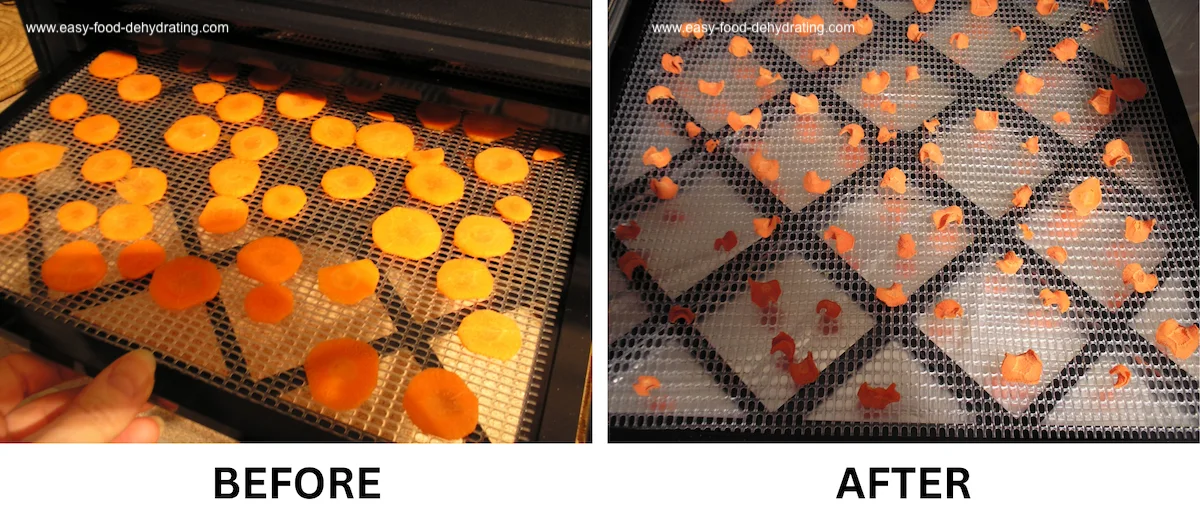
PRO TIP: By slicing as coins (or thin lengthwise cuts), you'll save on dehydrator time vs leaving them whole. That makes sense, right?
Carrot Nutrition: Why They’re Worth Dehydrating
VITAMINS: Beta carotene (Vitamin A) and are a great source of Folate, and Vitamin K.
MINERALS: Calcium, Phosphorus, Potassium, and Magnesium. Trace minerals are Fluoride, Manganese, Zinc, Selenium, and Copper.
Carrots contain Omega-3 and Omega-6 fatty acids too...
...and they give you orange hands when handling, so use those latex gloves for protection - and to keep your germs off the carrots!
Eating carrots can help regulate blood sugar levels. This is especially important for people with diabetes.
As the saying goes, "Carrots are good fer yer eyes" ... yes, carrots can also help you improve your vision. This is because they contain beta carotene (vitamin A) that's well known as being good for vision improvement.
Step-by-Step Guide: Drying Carrots for Perfect Results
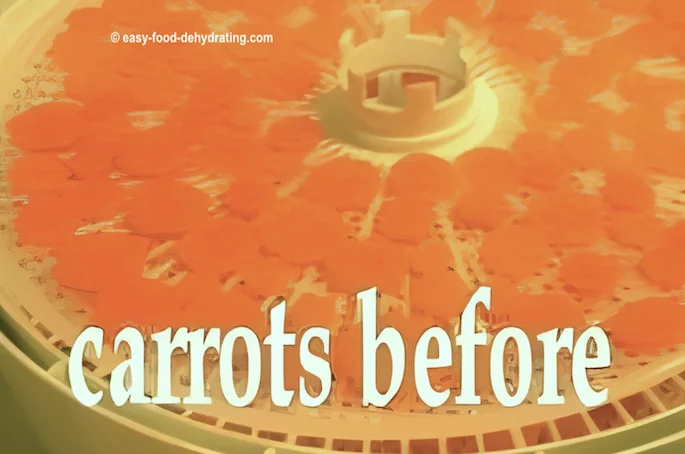 Sprayed carrots on dehydrator before drying
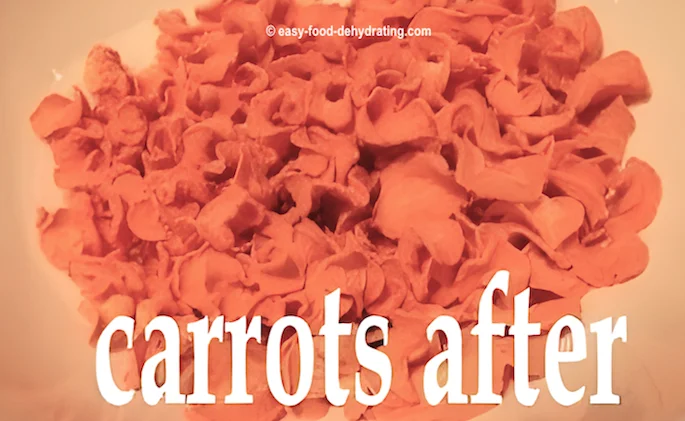 Fully dehydrated carrots in a bowl
Whichever way you slice carrots, make sure that they are pretty much the same thickness; this again helps in the drying department—they'll dry more evenly!
- Arrange your sliced carrots on your food dehydrator trays. Leave enough space between the carrots so they're not touching each other so the warm air can do its job. If using grated carrots, spread them out as much as possible on solid fruit roll trays (or use plastic wrap AND cut out A HOLE in the center for the air to circulate if using a Nesco dehydrator!)
- Turn on your food dehydrator and set the temperature between 125°F and 135°F (or per your food dehydrator's instructions).
💡 Outside the United States? Use my quick Fahrenheit-to-Celsius converter to find the equivalent Celsius temperature.
- Dehydrated carrots will be leathery when fully dried.
- Drying time: between 6-12 hours.
- Please remember to rotate your dehydrator trays for even drying, and place any larger carrot pieces on the outside edges of the dehydrator tray.
The #1 Mistake to Avoid Before Dehydrating Carrots
When you have finished slicing or grating, place the carrots in a
glass bowl (or any non-plastic bowl as plastic stains easily and retains odors). Spray with lemon juice, tossing
the carrots as you go to make sure they're sprayed evenly.
TIP: Use a pump top from a new unused spray bottle, pick one that fits your lemon juice bottle. Look for a bottle that has a long enough plastic tube that will reach the bottom of your lemon juice bottle.
How to Keep Carrots Bright Orange After Drying
Spraying the carrots with lemon juice helps the carrots keep their vibrant orangeness. Blanching has the same effect. Personally, I use lemon juice - it's faster and easier!
Out of Lemon Juice? Try This Easy Color-Saving Trick
Out of Lemon Juice?
Try This Easy
Color-Saving Trick
If you don't have any lemon juice, you can choose to blanch your sliced carrots instead in a small amount of boiling water for about 3 minutes.
Best Tools for Slicing Carrots Evenly (and Safely!)
If you’re slicing a big batch of carrots, using a mandoline will save you a ton of time—and your wrists will thank you later!
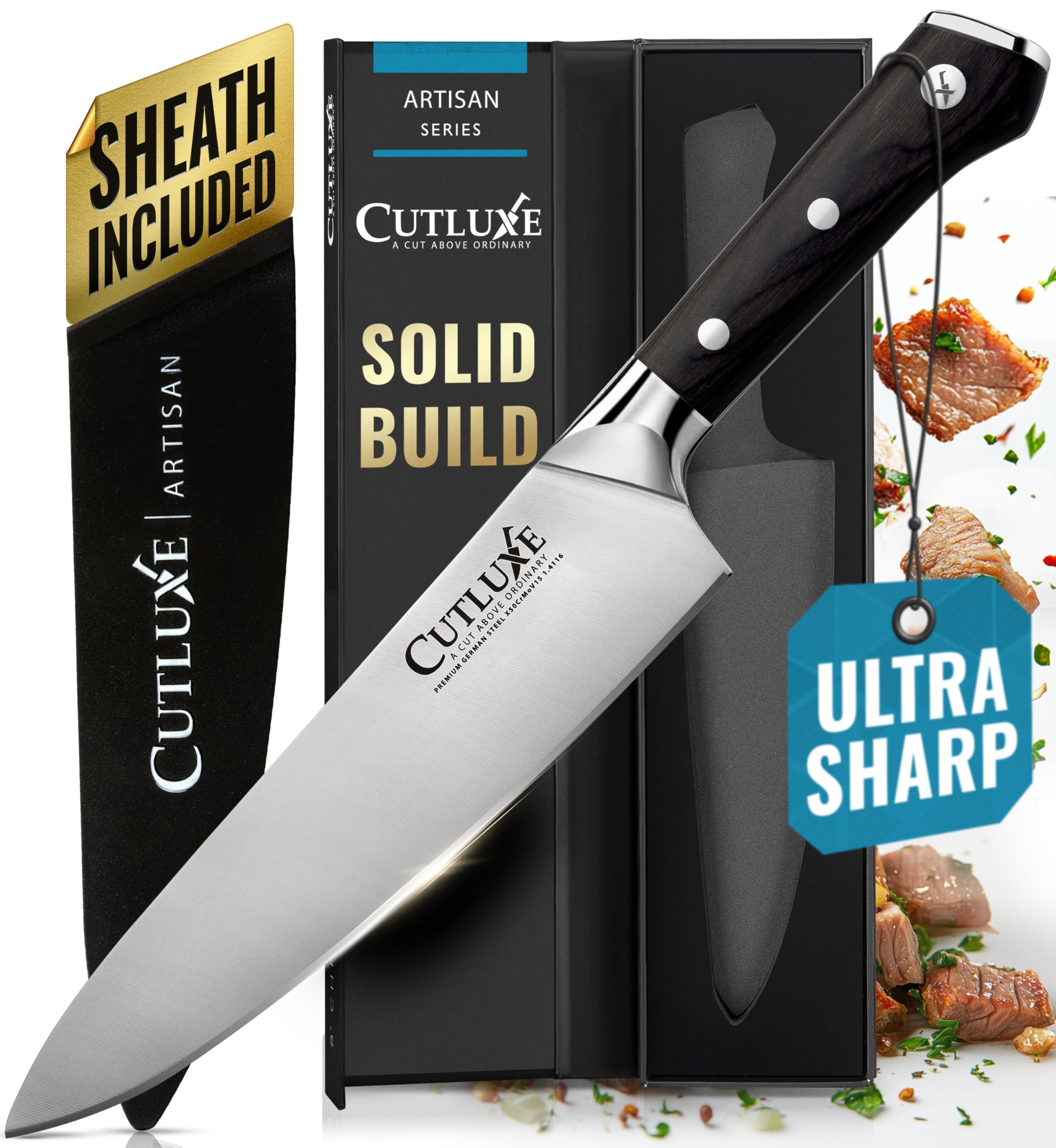
See the Cutluxe Chef's Knife I Use
A sharp chef’s knife makes food preparation easier and gives you better control than a dull blade. I use my Cutluxe chef’s knife, which has a full-tang blade extending through the handle for strength and stability. It costs more than a basic kitchen knife, but mine has been a dependable kitchen tool when kept properly sharpened.
As an Amazon Associate, I earn from qualifying purchases—this does not affect the price you pay. Read full disclosure.

For rounds, strips, or French fry-style pieces, a multi-function slicer offers several cutting options in one tool. You can also read my full multi-function slicer review before deciding whether it’s right for you.
As an Amazon Associate, I earn from qualifying purchases—this does not affect the price you pay. Read full disclosure.
Best Carrot Varieties for Dehydrating (And Why)
There are many different types of carrots that you can grow. Some popular varieties include the Nantes carrot, the Chantenay carrot, and the Imperator carrot.
Experiment and see what type of carrot you like best! Whatever type of carrot you end up with, the process for dehydrating them is the same.
Dehydrated Shredded Carrots: A Shortcut to Carrot Cake Bliss
 Dehydrating these carrots for use later in Carrot Cake!
Shredded carrots are perfect for use in carrot cake, and coleslaw. Make extra shredded carrots—once you taste that homemade carrot cake, you’ll wish you had a freezer full of them!
Fresh vs. Frozen Carrots: Which Dehydrates Best?
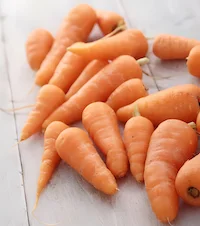
When dehydrating carrots, I prefer to use fresh whole carrots and SLICED after peeling, but
you can use whole frozen baby carrots with great results. (Let 'em thaw first).
Remember: Baby carrots WILL take longer to dehydrate because of their size and thickness.
Frozen carrots are a great stand-in and require absolutely NO preparation aside from thawing. Why? Because when stuff is frozen, the manufacturers have prepped them for us!
Fresh carrots need peeling, then slicing—or grating, and I highly recommend a mandoline shown earlier on the page for the slicing. BE CAREFUL with a regular mandoline slicer where you hold the item... they're very sharp!
Read my review of the SupMaKin mandoline.
You have a pusher that keeps your fingers away from the blade and it's a ton of fun to use!
Baby Carrots Explained: What They Are and How They Dry
As the name implies, a baby carrot is a small, young carrot. They tend to taste sweeter and have a crisper, juicier texture than 'mature' carrots. The older a carrot gets the more fibrous and starchier it becomes.
I hope you enjoyed learning how to dehydrate carrots. Try these tasty recipes below:
Growing Carrots at Home: Tips for Dehydrator Success
Carrots are fairly easy to grow, but they do require some special care. For example, they need to be planted in an area that receives full sun. They also need to be watered regularly.
If you live in an area with a temperate climate, you may be able to grow carrots outdoors all year round. However, if you live in a cooler climate, you'll need to bring the plants indoors during the winter months.
Easy Recipes You Can Make with Dehydrated Carrots
Check out this fantastic carrot soup recipe, either make it from fresh or dehydrated carrots.
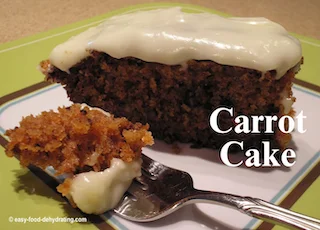
We have a delicious Carrot Cake to share with you too!
If you want to have dehydrated carrots put away for making the carrot cake at a later date, then we suggest using the fruit roll sheets to keep the finely grated carrots from falling through the food dehydrator trays.
Learn how to rehydrate your carrots here.

Carrot Dehydration Questions You’ve Always Wanted Answered
How long will dehydrated carrots last in storage?
How long will dehydrated carrots last in storage?
When stored in airtight jars or vacuum-sealed bags with oxygen absorbers, dehydrated carrots can last up to 12 months in a cool, dark pantry.
Do carrots need to be blanched before dehydrating?
Do carrots need to be blanched before dehydrating?
Blanching or spraying with lemon juice helps preserve color and flavor, but if you’re short on time, you can skip this step. Just note the carrots may darken slightly.
Can you dehydrate carrots for dogs?
Can you dehydrate carrots for dogs?
Yes, you can dehydrate carrots to make healthy treats for dogs! Dried carrots make a nutritious snack that most dogs love. Here are some tips:
- Wash and peel a few carrots, slice thinly or grate to make smaller pieces that will dry faster. Blot with a paper towel.
- Place carrot pieces in a single layer on dehydrator trays without overlapping. (Use a solid fruit leather sheet if you want). Dehydrate at around 135°F for 6-12 hours until hard and crisp.
- Once dried, let carrot pieces cool fully before giving to your dog. Break any large chips into bite-sized portions to prevent choking.
- Store leftover dehydrated carrots in an airtight container out of sunlight for up to 2 months. Rehydrate carrots before eating if desired.
In addition to their sweet, tasty appeal for dogs, dehydrated carrots offer great nutritional value like vitamins A & K, beta carotene and potassium.
In moderation, dehydrated carrots make a crunchy, nourishing treat that dogs absolutely love!
Can I dehydrate shredded carrots for baking?
Can I dehydrate shredded carrots for baking?
Yes! Shredded carrots dry quickly and rehydrate beautifully for recipes like carrot cake, muffins, or coleslaw. Spread them thinly on fruit leather sheets to prevent them from falling through trays.
How do you store dehydrated carrots?
How do you store dehydrated carrots?
Store dehydrated carrots in airtight containers like Mason jars or vacuum-sealer bags with oxygen absorbers and desiccant packets for best freshness.
What’s the best way to rehydrate carrots?
What’s the best way to rehydrate carrots?
Soak dehydrated carrots in hot water for 10–15 minutes, or add them directly to soups and stews where they’ll soften as they cook.
Thanks for joining me on this carrot-drying adventure! With your dehydrated carrots tucked away, you’re set for quick soups, hearty casseroles, or even a surprise carrot cake.
Before you go, don’t forget to grab your copy of the free 5 Dried Food Recipes That Actually Taste Great PDF below—featuring carrot soup, minestrone, split pea, spicy beef jerky, and even banana cinnamon rolls.

5 Free Dried Food Recipes
That Actually Taste Great
Put your dried food to delicious use!
Five very different recipes.
Not one dull bite...
5 Free Dried Food Recipes
That Actually Taste Great
Put your dried food to delicious use!
Five very different recipes.
Not one dull bite...
More From Easy Food Dehydrating
How to Dehydrate Vegetables: Step-by-Step Guides by Type
Learn how to dehydrate vegetables with preparation, blanching, temperatures, doneness, storage, and guides for carrots, broccoli, potatoes, and more.
How to Dehydrate Celery: Preparation, Drying, and Storage
Learn how to dehydrate celery for soups, stews, and pantry storage, with preparation, drying tips, and homemade celery salt.
How to Dehydrate Zucchini: Slices, Shreds & Chips
How to dehydrate zucchini—slice, shred, or spiralize. Dry at 125–135°F for 5–11 hours. Storage, rehydrating, chips.
How to Dehydrate Green Beans: Fresh, Frozen, or Canned
Learn how to dehydrate fresh, frozen, or canned green beans with blanching, 140°F drying, doneness, conditioning, storage, and rehydration guidance.
How to Dehydrate Butternut Squash (Fresh or Frozen)
Learn how to dehydrate fresh or frozen butternut squash, test it for dryness, store it, and rehydrate it for soups, stews, and dog food.
How to Dehydrate Spinach: Make Flakes, Powder Easily
How to dehydrate spinach for homemade spinach powder - perfect for soups, smoothies, and long-term storage.


More From Easy Food Dehydrating
How to Dehydrate Vegetables: Step-by-Step Guides by Type
Learn how to dehydrate vegetables with preparation, blanching, temperatures, doneness, storage, and guides for carrots, broccoli, potatoes, and more.
How to Dehydrate Celery: Preparation, Drying, and Storage
Learn how to dehydrate celery for soups, stews, and pantry storage, with preparation, drying tips, and homemade celery salt.
How to Dehydrate Zucchini: Slices, Shreds & Chips
How to dehydrate zucchini—slice, shred, or spiralize. Dry at 125–135°F for 5–11 hours. Storage, rehydrating, chips.
How to Dehydrate Green Beans: Fresh, Frozen, or Canned
Learn how to dehydrate fresh, frozen, or canned green beans with blanching, 140°F drying, doneness, conditioning, storage, and rehydration guidance.
How to Dehydrate Butternut Squash (Fresh or Frozen)
Learn how to dehydrate fresh or frozen butternut squash, test it for dryness, store it, and rehydrate it for soups, stews, and dog food.
How to Dehydrate Spinach: Make Flakes, Powder Easily
How to dehydrate spinach for homemade spinach powder - perfect for soups, smoothies, and long-term storage.
Before You Go...
If you enjoyed this page, tap the ❤️ in the lower right-hand corner. It saves this page to your Grow bookmarks so you can find it again later.
You’ll also see quick share buttons to copy the link, post to Facebook, or save it straight to Pinterest.

Test Your Food-Dehydrating
Know-How
Choose a food, make the right preparation, drying, and storage decisions—and see how many stars you can earn!
Play “Save the Harvest”Test Your Food-Dehydrating
Know-How
Choose a food, make the right preparation, drying, and storage decisions—and see how many stars you can earn!
What We Mean by “Dehydrate”
Here at Easy Food Dehydrating, “dehydrate” always means using an electric food dehydrator — the easy, reliable way to dry food at home.
What We Mean by “Dehydrate”
Here at Easy Food Dehydrating, “dehydrate” always means using an electric food dehydrator — the easy, reliable way to dry food at home.


LATEST READS on EFD


-
How to Dehydrate Citrus Slices: Lemons, Limes & Oranges
Sep 19, 26 03:28 PM
 Learn how to dehydrate citrus slices at 135°F. Easy steps for lemons, limes, and oranges with tips for checking doneness, conditioning, and storage.
 -
How to Dehydrate Cabbage: Temperature, Storage & Creamy Slaw
Sep 19, 26 11:57 AM
 Learn how to dehydrate cabbage at 125°F, including how to prepare, steam-blanch, test for doneness, condition, store, rehydrate, and make creamy coleslaw.
 -
How to Make Homemade Dog Food: Chicken & Beef Recipes
Sep 18, 26 01:11 PM
 Meet Chicken Chow-Chow and Bow Wow Beefy Chow, learn how I prepared Minnie’s meals, and discover what to consider before feeding homemade dog food daily.

Unlock the Secrets of Food Dehydrating... from Fruit 'n' Veg to Doggie Dinners!




AFFILIATE DISCLOSURE: I am an Affiliate for Amazon, and other sellers of quality merchandise. Should you purchase an item through their links, I may receive compensation. The price you pay does not increase. THANKS for your support! Read full disclosure here.
easy FOOD DEHYDRATING: Making food preservation simple since 2010. I show you how to keep your food pantry full, whatever the reason or season!

HOME ARTICLES CONTACT ADVERTISING DISCLOSURE DISCLAIMER FAQ PRIVACY SITEMAP TERMS TESTIMONIALS
ALL CONTENT COPYRIGHT © 2010-2025 • ALL RIGHTS RESERVED REGARDLESS OF LINKS OR ATTRIBUTIONS.
POWERED BY SBI! (SOLO BUILD IT!)
As an Amazon Associate, I earn from qualifying purchases.