- Home
- How to Dehydrate Fruit
- How to Dehydrate Apricots

How to Dehydrate Apricots for Chewy Snacks and Storage

Dehydrating apricots turns ripe fruit into sweet, chewy snacks you can enjoy long after apricot season ends. You can dry halves or slices, but thicker pieces take longer—so don’t rely on the clock alone. I’ll show you how to prepare them, reduce browning, test the centers for doneness, condition the finished fruit, and store it properly.
✅ Quick Answer: How do you dehydrate apricots?
Wash the apricots, cut them into halves or slices, and remove the pits. If desired, soak them briefly in an anti-browning solution, then drain well and arrange them in a single layer with the skin side down. Dry at 135–140°F—or use your dehydrator manufacturer’s fruit setting—until leathery and pliable with no moist or sticky areas inside. Slices may take 8–16 hours, while thick halves can take 20–36 hours, so always cool and cut open a test piece before deciding they’re done.
Fresh apricots usually produce the firmest, chewiest results, but you can also dehydrate frozen or canned apricots. Thaw frozen apricots completely and drain away excess liquid before placing them on the trays. Drain canned apricots well; if they’re packed in syrup, rinse them gently and pat them dry to reduce stickiness during drying. Because frozen and canned fruit is already softer, handle it carefully and expect a softer finished texture than you’ll get from fresh apricots.

How to Dehydrate Apricots Step by Step
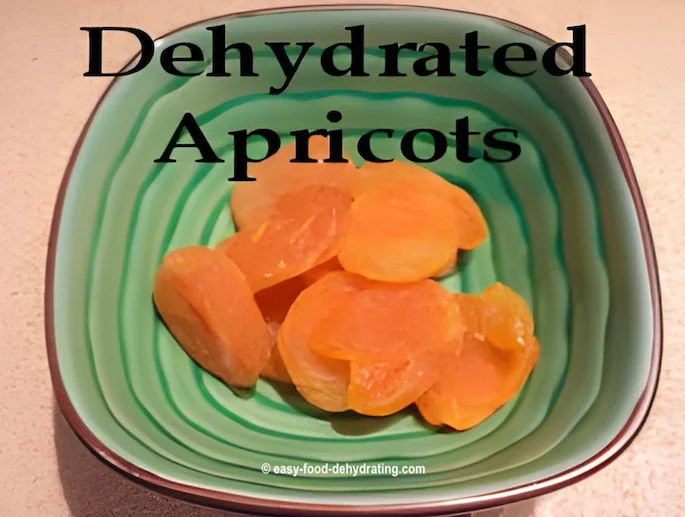
Choose firm, fully ripe apricots without mold or decay, and cut away any badly bruised areas. As a rough planning guide, six pounds of fresh apricots will produce approximately one pound of dried fruit. Fresh apricots hold their shape best, but properly thawed frozen apricots and well-drained canned fruit can be dehydrated too.
- Wash and prepare the apricots. Rinse them thoroughly under cool running water. Cut each apricot in half along its natural seam, twist the halves apart, and remove the pit. There’s no need to peel them.
- Choose halves or slices. Leave the apricots in halves for thick, chewy pieces, or cut each half into evenly sized slices for faster drying. Gently flatten each half or press the pit cavity outward so more of the flesh is exposed to the moving air.
- Pretreat them if you want to reduce browning. Mix equal parts bottled lemon juice and cold water. Soak the prepared apricots for 3–5 minutes, then drain them thoroughly. This step is optional; untreated apricots are still suitable for drying, but they will naturally turn a darker orange-brown.
- Arrange the apricots on the trays. Place them in a single layer without overlapping, with the skin side down and the cut side exposed to the air. Leave a little room between the pieces for good airflow. If you’re using an Excalibur dehydrator, you may need to remove alternating trays when drying large apricot halves. I find my Nesco better suited to thick halves because it has slightly more space between the trays.
- Set the dehydrator to 135–140°F. You can also use the fruit setting recommended by your dehydrator manufacturer.
- Dry until leathery and pliable. Begin checking slices after about 8 hours and halves after about 20 hours. Slices commonly take 8–16 hours, while thick halves may take 20–36 hours. Rotate the trays if your dehydrator dries unevenly, and remove individual pieces as they finish.
💡 Outside the United States? Use my quick Fahrenheit-to-Celsius converter to find the equivalent Celsius temperature.
Optional: Syrup-Blanch Apricots for a Sweeter Result
If you prefer sweeter, softer dried apricots, syrup blanching is another recognized pretreatment. It helps fruit retain its color and produces a result that is closer to candied fruit. It isn’t necessary for successful drying, so skip it if you prefer naturally flavored, firmer apricots.
- Combine 1 cup sugar, 1 cup light corn syrup, and 2 cups water in a saucepan. Bring the mixture to a boil.
- Add 1 pound of prepared apricots and simmer for 10 minutes.
- Remove the pan from the heat and let the fruit stand in the hot syrup for 30 minutes.
- Lift out the apricots, rinse them lightly under cold water, and drain them well before arranging them on the dehydrator trays.
A quick word of caution: One lovely lady wrote to tell me that her apricots turned into jam while she was syrup blanching them! Use firm, ripe fruit rather than very soft or overripe apricots. If your fruit begins breaking apart, lift it out of the syrup rather than letting it become any softer. All is not lost—you may have made apricot jam—but that wasn’t the plan!
How to Tell When Dehydrated Apricots Are Done
Remove several apricot pieces from the dehydrator and let them cool completely before testing them. Properly dried apricots should feel leathery and pliable rather than hard or brittle. Cut open one of the thickest pieces and check the center carefully—it should contain no visible moisture and should not feel cool, wet, or sticky.
Squeeze several cooled pieces together in your hand. They should spring apart when you release them rather than sticking together. Plain dried apricots shouldn’t feel sticky, although syrup-blanched apricots may remain slightly tacky on the surface because of the added sugar. If any centers still feel moist, return those pieces to the dehydrator and check them again later.
How to Condition and Store Dried Apricots
Allow the dehydrated apricots to cool completely before conditioning or packaging them. Warm fruit can create condensation inside a storage container, even when it has been dried properly.
Place the cooled apricots loosely in a clean glass or plastic container, filling it no more than about two-thirds full. Cover the container lightly and keep it in a dry, well-ventilated place for 7–10 days. Shake or stir the apricots once each day so the remaining moisture can distribute evenly among the pieces.
Watch the container closely for condensation. If moisture appears inside, return the apricots to the dehydrator, dry them a little longer, cool them completely, and restart the conditioning period.
Once the apricots pass conditioning without producing condensation, package them in small amounts in airtight, moisture-resistant containers. Label them with the date and store them in a cool, dry, dark place. Properly dried and stored fruit generally retains good quality for 6–12 months. Refrigeration or freezing can extend its quality further.
Discard dried apricots if you notice mold, an off odor, or other signs of spoilage.
For more packaging and shelf-life guidance, see my complete guide to storing dehydrated food.
These recommendations follow research-based dried-fruit guidance from Colorado State University Extension.
Ways to Use Dehydrated Apricots
Homemade dried apricots are delicious straight from the jar, but there are plenty of other ways to use them:
- Add them to trail mix with nuts, seeds, and other dried fruit.
- Chop them into oatmeal, granola, yogurt, or cold cereal.
- Snip them into smaller pieces with kitchen shears and add them to muffins, scones, quick breads, or cookies.
- Toss chopped dried apricots into salads, rice dishes, curries, and tagines for a sweet-tart burst of flavor.
- Rehydrate them in hot water until plump, then use them in sauces, compotes, desserts, or baking.
If your dried apricots are especially chewy, soaking them before cooking will soften them and make them easier to chop.
A Childhood Memory: Croissants and Apricot Jam Bliss

As a kid, my family and I spent our summers in Saint-Mandrier, a tiny naval village on the Mediterranean coast in the South of France. My favorite time of day was always breakfast!
It was designated “my job” to visit the pâtisserie each morning and return with a giant bag filled with warm, buttery croissants au beurre.
The best part? Slathering those flaky croissants with thick apricot jam the moment I returned with the goodies. It was pure heaven on a plate.
And to work off all those sweet treats? A few quick dips in the sparkling blue waters of the Mediterranean kept our waistlines—and our smiles—in check.
That flavor memory is probably why apricots still make me smile. Dried apricots aren’t jam, of course, but they carry that same sweet-tart flavor into snacks, baking, and recipes long after summer ends.
Frequently Asked Questions About Dehydrating Apricots
How long does it take to dehydrate apricots?
How long does it take to dehydrate apricots?
Apricot slices commonly take 8–16 hours, while thick halves may require 20–36 hours. The exact time depends on the fruit’s size and moisture, your dehydrator, the temperature, airflow, and humidity. Use the doneness test rather than relying only on the clock.
Do apricots need to be pretreated before dehydrating?
Do apricots need to be pretreated before dehydrating?
No. Pretreatment isn’t required, but an anti-browning soak can help reduce darkening. Syrup blanching is another optional method that produces sweeter, softer fruit resembling lightly candied apricots.
Why are my homemade dried apricots darker than store-bought apricots?
Why are my homemade dried apricots darker than store-bought apricots?
Many commercially dried apricots are treated with sulfur dioxide to preserve their bright orange color. Homemade apricots that aren’t sulfured naturally become darker as they dry. A lemon-juice or ascorbic-acid pretreatment can reduce browning, but it may not prevent it completely.
Can I dehydrate apricots in the oven?
Can I dehydrate apricots in the oven?
Yes, provided your oven can maintain a low temperature close to 140°F. Arrange the apricots on racks that allow air to circulate, verify the temperature with an oven thermometer, rotate the trays, and check the fruit frequently. If your oven can’t maintain a sufficiently low temperature, a food dehydrator will give you more reliable results.
How long do dehydrated apricots last?
How long do dehydrated apricots last?
Properly dried, conditioned, and packaged apricots generally retain good quality for 6–12 months when stored in a cool, dry, dark place. Refrigeration or freezing can help preserve their quality longer. Discard them if you see mold or notice an off odor.
Thanks for joining me in learning how to dehydrate apricots! Once they’re dried, conditioned, and stored, you’ll have chewy fruit ready for snacking, baking, and recipes.
If you’d like more tasty ways to use dried food, don’t miss my free 5 Dried Food Recipes That Actually Taste Great PDF below. Inside you’ll find carrot soup, minestrone, split pea soup, spicy beef jerky, and even banana cinnamon rolls—all proven favorites that make dehydrating fun and delicious!

5 Free Dried Food Recipes
That Actually Taste Great
Put your dried food to delicious use!
Five very different recipes.
Not one dull bite...
5 Free Dried Food Recipes
That Actually Taste Great
Put your dried food to delicious use!
Five very different recipes.
Not one dull bite...
More From Easy Food Dehydrating
How to Dehydrate Pears: Easy Steps & Long Shelf Life
Dehydrate pears the easy way for snacks, smoothies, and baking. Save money and enjoy sweet pear flavor all year long!
How to Dehydrate Grapes: Make Homemade Raisins
Learn how to dehydrate grapes at 135°F for homemade raisins, with preparation choices, realistic drying times, doneness checks, conditioning, and storage tips.
How to Dehydrate Melons for Sweet Snacks & Safe Storage
Learn how to dehydrate melons, including watermelon and honeydew, for sweet snacks and long-term storage.
How to Dehydrate Rhubarb: Easy Method + Sauce & Jam
Learn how to dehydrate rhubarb at 125–135°F in 6–14 hours, plus easy rhubarb sauce and jam recipes for year-round use.
How Much Fruit Fills a Dehydrator: Tray Guide & Tips
Find out how much fruit fills a dehydrator using Nesco tray estimates, with tips for slicing, spacing, and planning each batch.
How to Dehydrate Citrus Slices: Lemons, Limes & Oranges
Learn how to dehydrate citrus slices at 135°F. Easy steps for lemons, limes, and oranges with tips for checking doneness, conditioning, and storage.

More From Easy Food Dehydrating
How to Dehydrate Pears: Easy Steps & Long Shelf Life
Dehydrate pears the easy way for snacks, smoothies, and baking. Save money and enjoy sweet pear flavor all year long!
How to Dehydrate Grapes: Make Homemade Raisins
Learn how to dehydrate grapes at 135°F for homemade raisins, with preparation choices, realistic drying times, doneness checks, conditioning, and storage tips.
How to Dehydrate Melons for Sweet Snacks & Safe Storage
Learn how to dehydrate melons, including watermelon and honeydew, for sweet snacks and long-term storage.
How to Dehydrate Rhubarb: Easy Method + Sauce & Jam
Learn how to dehydrate rhubarb at 125–135°F in 6–14 hours, plus easy rhubarb sauce and jam recipes for year-round use.
How Much Fruit Fills a Dehydrator: Tray Guide & Tips
Find out how much fruit fills a dehydrator using Nesco tray estimates, with tips for slicing, spacing, and planning each batch.
How to Dehydrate Citrus Slices: Lemons, Limes & Oranges
Learn how to dehydrate citrus slices at 135°F. Easy steps for lemons, limes, and oranges with tips for checking doneness, conditioning, and storage.
Before You Go...
If you enjoyed this page, tap the ❤️ in the lower right-hand corner. It saves this page to your Grow bookmarks so you can find it again later.
You’ll also see quick share buttons to copy the link, post to Facebook, or save it straight to Pinterest.

Test Your Food-Dehydrating
Know-How
Choose a food, make the right preparation, drying, and storage decisions—and see how many stars you can earn!
Play “Save the Harvest”Test Your Food-Dehydrating
Know-How
Choose a food, make the right preparation, drying, and storage decisions—and see how many stars you can earn!
What We Mean by “Dehydrate”
Here at Easy Food Dehydrating, “dehydrate” always means using an electric food dehydrator — the easy, reliable way to dry food at home.
What We Mean by “Dehydrate”
Here at Easy Food Dehydrating, “dehydrate” always means using an electric food dehydrator — the easy, reliable way to dry food at home.


LATEST READS on EFD


-
How to Dehydrate Grapefruit: Slices, Zest, and Peel
Oct 16, 26 02:40 PM
 Learn how to dehydrate grapefruit slices, zest, and peel in a food dehydrator, with step-by-step instructions, storage tips, and creative ways to use them.
 -
How to Dehydrate Strawberries for Snacks and Smoothies
Oct 16, 26 01:53 PM
 How to dehydrate strawberries for snacks, cereals, and smoothies, with step-by-step preparation, drying, and storage tips.
 -
How to Dehydrate Spinach for Flakes and Powder
Oct 16, 26 12:09 PM
 Learn how to dehydrate spinach with blanching, dehydrator and oven tips. Make dried spinach flakes or powder for soups, sauces, and smoothies.



Unlock the Secrets of Food Dehydrating... from Fruit 'n' Veg to Doggie Dinners!




AFFILIATE DISCLOSURE: I am an Affiliate for Amazon, and other sellers of quality merchandise. Should you purchase an item through their links, I may receive compensation. The price you pay does not increase. THANKS for your support! Read full disclosure here.
easy FOOD DEHYDRATING: Making food preservation simple since 2010. I show you how to keep your food pantry full, whatever the reason or season!

HOME ARTICLES CONTACT ADVERTISING DISCLOSURE DISCLAIMER FAQ PRIVACY SITEMAP TERMS TESTIMONIALS
ALL CONTENT COPYRIGHT © 2010-2025 • ALL RIGHTS RESERVED REGARDLESS OF LINKS OR ATTRIBUTIONS.
POWERED BY SBI! (SOLO BUILD IT!)
As an Amazon Associate, I earn from qualifying purchases.