- Home
- How to Dehydrate Fruit
- How to Dehydrate Bananas

How to Dehydrate Bananas for Easy, Healthy Snacking

If you’ve got more ripe bananas than you can eat, dehydrate them! In just a few hours, you can turn them into naturally sweet, chewy banana chips for snacking, trail mixes, and baked goods.
✅ Quick Answer: How do you dehydrate bananas?
Peel ripe but still firm bananas and slice them evenly, about ⅛ to ¼ inch thick. Pretreat the slices to reduce browning, arrange them in a single layer, and dehydrate at 135°F for approximately 6–12 hours. They’re ready when they feel dry and leathery after cooling.
This step-by-step guide shows you how to prepare, pretreat, dry, condition, and store bananas so you can enjoy them for months.
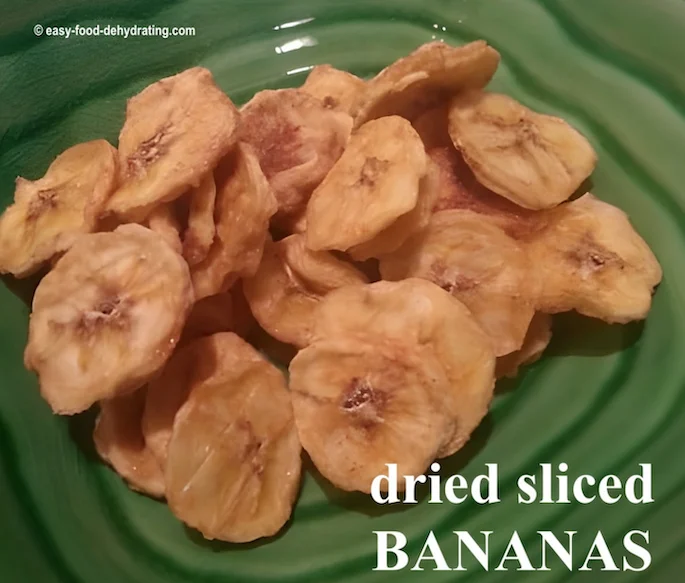 Dehydrated Banana Chips
Dehydrated bananas are easy to pack for backpacking adventures, add to homemade trail mix, or rehydrate for a tasty banana pudding.
A food dehydrator is an excellent way to preserve bananas before they become too soft to slice. Choose ripe, firm bananas that are yellow or lightly speckled with brown—the riper they are, the sweeter the dried fruit will taste.
If your bananas are already extremely soft, bruised, or mushy, save them for smoothies or banana bread instead.
It's Time to Make Your Own Banana Chips!

Step-by-Step: How to Dehydrate Bananas the Right Way
TIP: Chill soft bananas briefly before peeling them to make slicing easier and less messy.
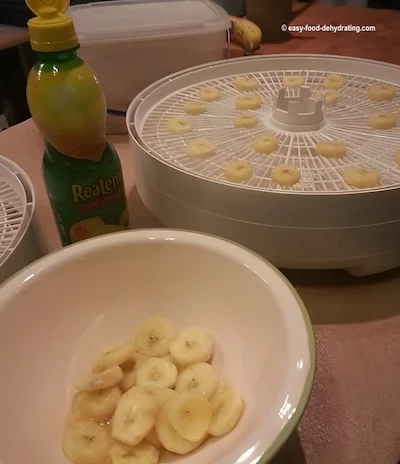
- Peel—or “unzip”—the bananas and cut them into even slices, approximately ⅛ to ¼ inch thick. A knife and cutting board work better than a mandoline because ripe bananas are soft and easy to slice.
- To reduce browning, place the slices in a mixture of equal parts bottled lemon juice and cold water for 3–5 minutes. Drain them well and gently blot away excess moisture. For a quicker pretreatment, generously spray both sides of the slices with bottled lemon juice, tossing them gently for even coverage. A clean pump top from a new, unused spray bottle makes this easy.
- Arrange the banana slices in a single layer on your dehydrator trays, leaving a little room between them for air to circulate.
- Dehydrate at 135°F for approximately 6–12 hours. Begin checking them after 6 hours, rotating the trays if your dehydrator dries unevenly.
💡 Outside the United States? Use my quick Fahrenheit-to-Celsius converter to find the equivalent Celsius temperature.
To test for doneness, remove one piece, let it cool, and then bend it. Properly dried bananas should feel leathery and chewy, with no visible moisture or sticky center. Very thin slices may become firmer or slightly crisp after cooling, but they will not have the brittle crunch of commercially fried banana chips.
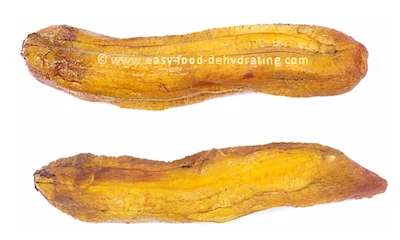
You can also slice bananas lengthwise into strips for wrapping around dates and other dried fruits, as shown in my Banana Cinnamon Rolls recipe.
How to Condition and Store Dehydrated Bananas
Allow the dried bananas to cool completely before conditioning them. Loosely fill a clean, dry glass jar with the banana pieces, seal it, and leave it at room temperature for 7–10 days. Shake the jar once a day to redistribute any remaining moisture.
If condensation appears inside the jar, return the bananas to the dehydrator and dry them longer. Once conditioned, pack them in airtight containers and store them in a cool, dark, dry place. Properly dried and stored bananas should retain their best quality for approximately 6–12 months.
Best Banana Types for Dehydrating—and Which Ones to Skip
Cavendish bananas—the familiar yellow variety found in most grocery stores—are an excellent choice for dehydrating. Lady Finger and red bananas also work well and offer slightly different flavors and levels of sweetness.
Choose ripe bananas that are yellow or lightly speckled but still firm enough to slice. Skip green, unripe bananas if you want a naturally sweet snack, and save extremely soft, bruised, or overripe bananas for smoothies or banana bread.
Plantains can also be dehydrated, but they are starchier and less sweet than dessert bananas. Their finished flavor and texture will be different, especially when they are still green.
Ways to Use and Rehydrate Dried Bananas
Enjoy dehydrated bananas straight from the jar, or add them to trail mix, granola, oatmeal, cereal, cookies, muffins, and banana bread. You can also chop them into smaller pieces for snack mixes or pack them for hiking and road trips.
To rehydrate dried bananas, place them in a bowl, cover them with warm water, and let them soak for approximately 10–15 minutes. Drain away any remaining water before adding the softened bananas to pudding, oatmeal, smoothies, or baked goods. They will soften but will not regain the exact texture of fresh bananas.
Make Our Delicious Banana Cinnamon Rolls
For another delicious way to use dehydrated bananas, try my naturally sweet Banana Cinnamon Rolls, made with bananas, dates, raisins, and cinnamon.


For this recipe, slice the bananas lengthwise before dehydrating them. The long, flexible pieces are perfect for wrapping around the naturally sweet date-and-raisin filling used for the Banana Cinnamon Rolls.
Your Top Banana Dehydrating Questions—Answered!
How do you dehydrate bananas in an air fryer?
How do you dehydrate bananas in an air fryer?
Use an air fryer with a dehydrate setting that can maintain approximately 135°F. Peel the bananas, cut them into ⅛- to ¼-inch slices, and arrange them in a single layer without overlapping. Dehydrate for approximately 6–10 hours, turning the slices or rotating the trays if needed. Cool one piece before checking for a leathery, chewy texture with no sticky center. Always follow your air fryer manufacturer’s instructions.
Are dried bananas good for dogs?
Are dried bananas good for dogs?
Plain, unsweetened dehydrated bananas can be given to most dogs as an occasional treat. Because drying concentrates the fruit’s natural sugar and calories, offer only a small amount appropriate for your dog’s size and break it into bite-sized pieces. Avoid fried, sweetened, or flavored commercial banana chips. Check with your veterinarian if your dog has diabetes, weight problems, or another health condition.
Are dried bananas high in potassium?
Are dried bananas high in potassium?
Yes. Bananas naturally contain potassium, and removing their water concentrates the nutrients—and natural sugars—into a smaller portion. Enjoy dried bananas in moderation, especially if you are monitoring carbohydrates or have been advised to limit potassium.
Are dehydrated bananas healthy?
Are dehydrated bananas healthy?
Plain dehydrated bananas contain fiber and potassium without the added oil or sugar often found in commercial banana chips. Because removing water concentrates their natural sugar and calories, enjoy them in smaller portions than you would fresh bananas.
Can people with diabetes eat dehydrated bananas?
Can people with diabetes eat dehydrated bananas?
Dehydrated bananas can fit into some diabetes eating plans, but their carbohydrates and natural sugars are concentrated into a small portion. Choose plain, unsweetened bananas, keep the serving modest, and consider pairing them with a source of protein or healthy fat. Monitor your individual blood sugar response and follow the advice of your healthcare professional.
Do I need to use lemon juice when dehydrating bananas?
Do I need to use lemon juice when dehydrating bananas?
No, but pretreating the slices helps reduce browning. Lemon juice is convenient, but an ascorbic-acid or citric-acid solution can also be used. If using bottled lemon juice, mix it with an equal amount of cold water and soak the slices for 3–5 minutes before draining them well. You can skip pretreatment if you do not mind the bananas becoming darker as they dry.
With properly dried, conditioned, and stored bananas on hand, you’ll always have a naturally sweet snack ready for trail mix, baking, or enjoying straight from the jar.
Before you go, grab my free 5 Dried Food Recipes That Actually Taste Great PDF below. It includes carrot soup, split pea soup, minestrone soup, spicy beef jerky, and banana cinnamon rolls.

5 Free Dried Food Recipes
That Actually Taste Great
Put your dried food to delicious use!
Five very different recipes.
Not one dull bite...
5 Free Dried Food Recipes
That Actually Taste Great
Put your dried food to delicious use!
Five very different recipes.
Not one dull bite...
More From Easy Food Dehydrating
How to Dehydrate Fruit: Step-by-Step Guides by Type
Learn how to dehydrate fruit with preparation, temperatures, doneness, conditioning, storage, and individual guides for apples, bananas, and more.
How to Dehydrate Cherries (Fresh or Frozen)
Learn how to dehydrate fresh or frozen cherries, check for doneness, store them properly, and make easy candied cherries.
Easy Food Dehydrating: Reviews, Testimonials & Thanks
Read real Easy Food Dehydrating testimonials—fans share money-saving wins, pantry prep tips, and favorite recipes.
Keeping Dehydrated Fruit Fresh: Essential Storage Tips
Keeping Dehydrated Fruit Fresh: Essential storage tips for best practices.
Pros and Cons of Dried Fruit: Smart Snacking Tips
Dried fruit is packed with nutrients but high in sugar—learn to snack smart.
How to Dehydrate Grapefruit: Slices, Zest, and Peel
Learn how to dehydrate grapefruit slices, zest, and peel using three methods, with storage tips and creative serving ideas.



More From Easy Food Dehydrating
How to Dehydrate Fruit: Step-by-Step Guides by Type
Learn how to dehydrate fruit with preparation, temperatures, doneness, conditioning, storage, and individual guides for apples, bananas, and more.
How to Dehydrate Cherries (Fresh or Frozen)
Learn how to dehydrate fresh or frozen cherries, check for doneness, store them properly, and make easy candied cherries.
Easy Food Dehydrating: Reviews, Testimonials & Thanks
Read real Easy Food Dehydrating testimonials—fans share money-saving wins, pantry prep tips, and favorite recipes.
Keeping Dehydrated Fruit Fresh: Essential Storage Tips
Keeping Dehydrated Fruit Fresh: Essential storage tips for best practices.
Pros and Cons of Dried Fruit: Smart Snacking Tips
Dried fruit is packed with nutrients but high in sugar—learn to snack smart.
How to Dehydrate Grapefruit: Slices, Zest, and Peel
Learn how to dehydrate grapefruit slices, zest, and peel using three methods, with storage tips and creative serving ideas.
Before You Go...
If you enjoyed this page, tap the ❤️ in the lower right-hand corner. It saves this page to your Grow bookmarks so you can find it again later.
You’ll also see quick share buttons to copy the link, post to Facebook, or save it straight to Pinterest.

Test Your Food-Dehydrating
Know-How
Choose a food, make the right preparation, drying, and storage decisions—and see how many stars you can earn!
Play “Save the Harvest”Test Your Food-Dehydrating
Know-How
Choose a food, make the right preparation, drying, and storage decisions—and see how many stars you can earn!
What We Mean by “Dehydrate”
Here at Easy Food Dehydrating, “dehydrate” always means using an electric food dehydrator — the easy, reliable way to dry food at home.
What We Mean by “Dehydrate”
Here at Easy Food Dehydrating, “dehydrate” always means using an electric food dehydrator — the easy, reliable way to dry food at home.


LATEST READS on EFD


-
How to Dehydrate Citrus Slices: Lemons, Limes & Oranges
Sep 19, 26 03:28 PM
 Learn how to dehydrate citrus slices at 135°F. Easy steps for lemons, limes, and oranges with tips for checking doneness, conditioning, and storage.
 -
How to Dehydrate Cabbage: Temperature, Storage & Creamy Slaw
Sep 19, 26 11:57 AM
 Learn how to dehydrate cabbage at 125°F, including how to prepare, steam-blanch, test for doneness, condition, store, rehydrate, and make creamy coleslaw.
 -
How to Make Homemade Dog Food: Chicken & Beef Recipes
Sep 18, 26 01:11 PM
 Meet Chicken Chow-Chow and Bow Wow Beefy Chow, learn how I prepared Minnie’s meals, and discover what to consider before feeding homemade dog food daily.


Unlock the Secrets of Food Dehydrating... from Fruit 'n' Veg to Doggie Dinners!




AFFILIATE DISCLOSURE: I am an Affiliate for Amazon, and other sellers of quality merchandise. Should you purchase an item through their links, I may receive compensation. The price you pay does not increase. THANKS for your support! Read full disclosure here.
easy FOOD DEHYDRATING: Making food preservation simple since 2010. I show you how to keep your food pantry full, whatever the reason or season!

HOME ARTICLES CONTACT ADVERTISING DISCLOSURE DISCLAIMER FAQ PRIVACY SITEMAP TERMS TESTIMONIALS
ALL CONTENT COPYRIGHT © 2010-2025 • ALL RIGHTS RESERVED REGARDLESS OF LINKS OR ATTRIBUTIONS.
POWERED BY SBI! (SOLO BUILD IT!)
As an Amazon Associate, I earn from qualifying purchases.