- Home
- How to Dehydrate Vegetables
- How to Dehydrate Cabbage

How to Dehydrate Cabbage for Storage, Soups, and Slaw

Learning how to dehydrate cabbage is easier than you might think—and it’s a practical way to save space and keep this budget-friendly vegetable on hand. Dried cabbage works especially well in soups, stews, casseroles, and camping meals. With proper rehydration, you can even use it to make a small batch of creamy coleslaw.
✅ Quick Answer: How do you dehydrate cabbage?
Remove the outer leaves and core, rinse the cabbage, and shred it into thin strips about 1/8 inch wide. Steam-blanch for 2½–3 minutes, then spread the cabbage evenly on dehydrator trays. Dry at 125°F for approximately 8–12 hours, or until brittle and crisp. Let it cool completely before conditioning and storing it in an airtight container.
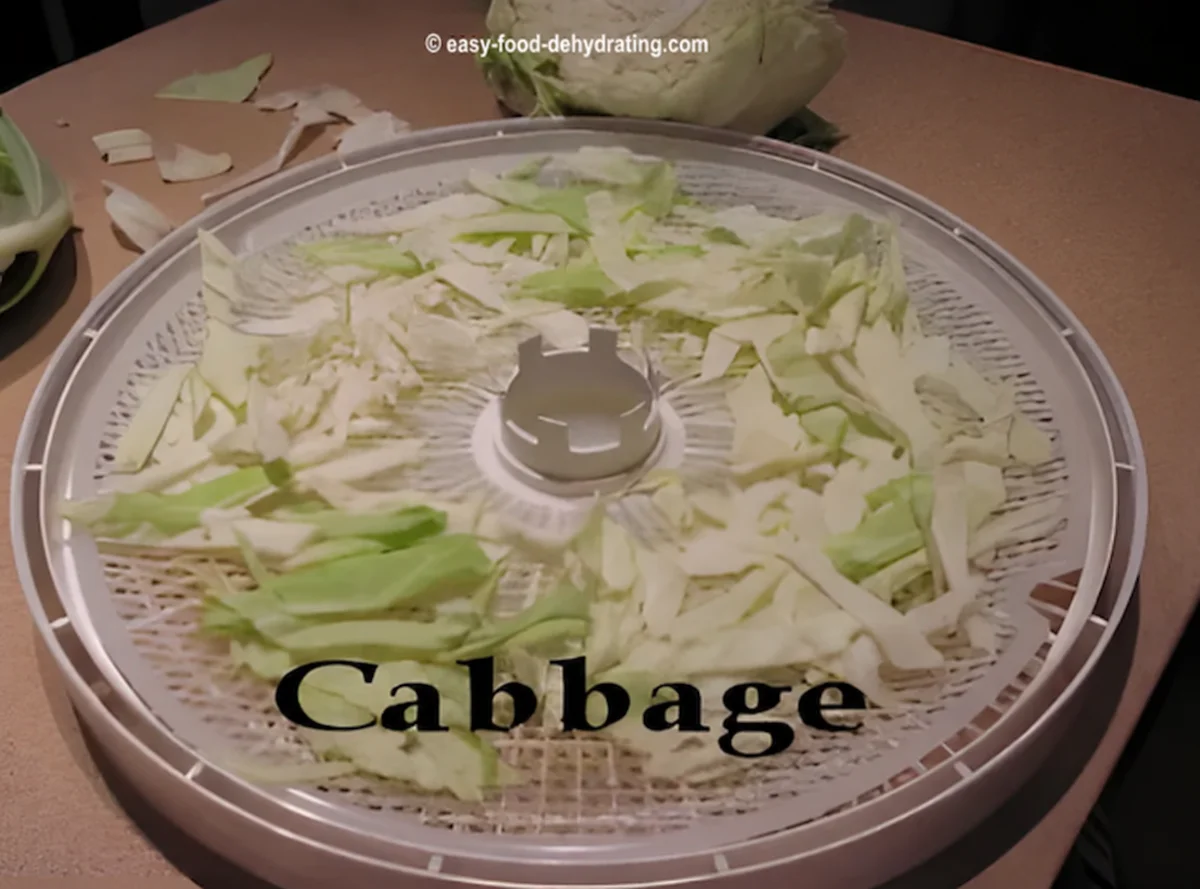
Real-life tip: My cabbage strips weren’t perfectly uniform—and yours don’t have to be, either. Aim for about 1/8 inch, spread them loosely on the trays, and allow thicker pieces extra drying time if needed.
Why Dehydrate Cabbage?
As a kid, I loved hot cabbage bathed in butter, with a sprinkle of salt and white pepper. And let’s be honest—I still do!
Cabbage is inexpensive, but a whole head can take up a surprising amount of refrigerator space. Dehydrating it frees up that space completely, turning bulky fresh cabbage into a compact, lightweight pantry ingredient. It’s easy to keep on hand for soups, stews, casseroles, and other everyday meals, and it absorbs surrounding flavors beautifully as it rehydrates.

Cutting Cabbage the Easy Way (My Knife Tip)
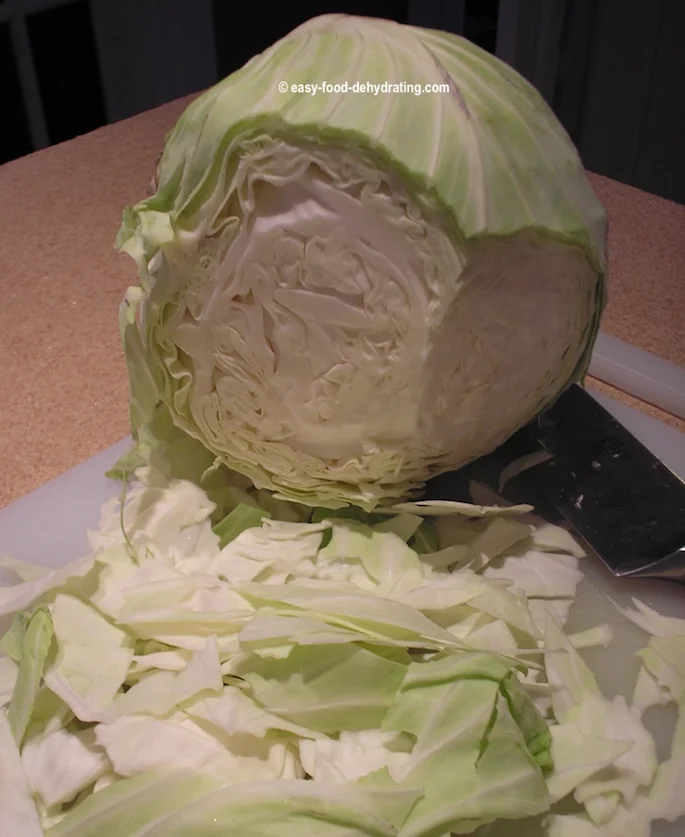 Cabbage being sliced
See the Cutluxe Chef's Knife I Use
A sharp chef’s knife makes food preparation easier and gives you better control than a dull blade. I use my Cutluxe chef’s knife, which has a full-tang blade extending through the handle for strength and stability. It costs more than a basic kitchen knife, but mine has been a dependable kitchen tool when kept properly sharpened.
As an Amazon Associate, I earn from qualifying purchases—this does not affect the price you pay. Read full disclosure.
How to Dehydrate Cabbage in a Dehydrator
An electric dehydrator provides steady airflow and controlled heat, making it the easiest and most reliable way to dry cabbage evenly.
- Prepare the cabbage: Remove any damaged outer leaves, cut the cabbage into quarters, and remove the tough core. Rinse under cool running water.
- Shred it thinly: Cut the cabbage into strips approximately 1/8 inch wide. Keeping the pieces similar in size helps them dry evenly.
- Steam-blanch the cabbage: Steam-blanch for 2½–3 minutes, or until slightly wilted. Cool it promptly in ice water, then drain thoroughly and pat away as much excess moisture as possible.
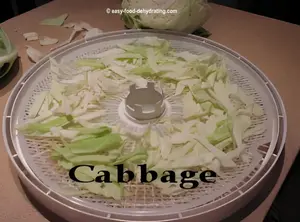
- Fill the trays: Spread the cabbage evenly over the dehydrator trays. A slight overlap is acceptable, but avoid thick clumps that restrict airflow.
- Set the temperature: Dehydrate at 125°F, or follow the vegetable setting recommended by your dehydrator’s manufacturer.
- Dry until crisp: Dry for approximately 8–12 hours, checking periodically toward the end. Rotate the trays if your dehydrator does not dry evenly.
💡 Outside the United States? Use my quick Fahrenheit-to-Celsius converter to find the equivalent Celsius temperature.
The cabbage is fully dehydrated when the leaves and thicker rib pieces are brittle and crisp, with no soft or flexible areas remaining.
How Much Dried Cabbage Do You Get from One Head?
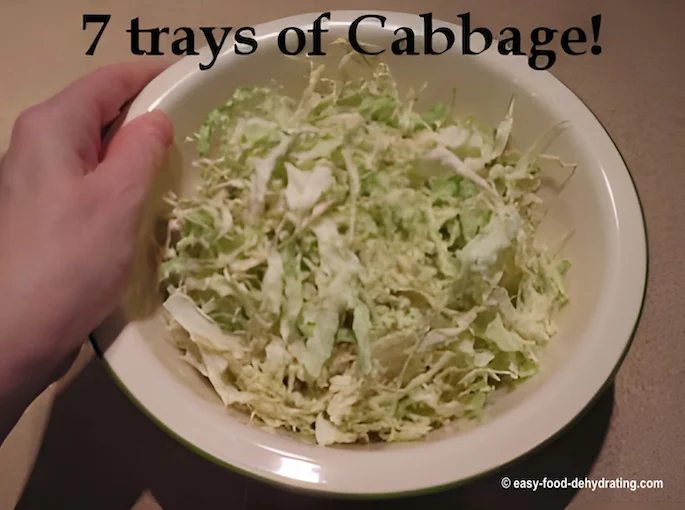
Can you believe this small bowl contains the cabbage that filled seven of my Nesco dehydrator trays before drying? That’s one of the biggest advantages of dehydrating cabbage: a bulky fresh head shrinks into a compact amount that takes up very little pantry space.
This was a particularly large head of cabbage. Your own batch may fill more or fewer trays depending on the size of the head, how thinly you shred it, and the capacity of your dehydrator.
Ways to Use Dehydrated Cabbage
Dehydrated cabbage is especially handy in recipes that contain plenty of liquid. Add it directly to soups, stews, and ramen, where it will rehydrate as the dish cooks.
For casseroles, stir-fries, egg rolls, or other recipes with less liquid, soak the cabbage in hot water for 20–30 minutes first. Drain it thoroughly before adding it to your dish.
You can also rehydrate cabbage for coleslaw, although it will be softer than freshly shredded cabbage. The small-batch creamy coleslaw recipe below shows you how.
Recipe: Small-Batch Creamy Coleslaw (Fresh or Dehydrated Cabbage)

Ingredients
- 4 cups freshly shredded green cabbage or 4 cups rehydrated cabbage, drained thoroughly
- 1 carrot, peeled and grated
- 1/4 small red onion, thinly sliced
- 1/3 cup mayonnaise
- 1 Tbsp apple cider vinegar
- 1 Tbsp sugar or honey
- 1/2 tsp Dijon mustard
- 1/4 tsp celery seed (optional)
- Salt and freshly ground black pepper, to taste
Instructions
- If starting with dehydrated cabbage, place a generous amount in a bowl and cover it with hot water. Let it soak for 20–30 minutes, or until fully rehydrated. Drain thoroughly, gently press out excess water, and allow it to cool completely. Measure 4 cups for the recipe.
- In a large bowl, combine the cabbage, carrot, and red onion.
- In a separate small bowl, whisk together the mayonnaise, apple cider vinegar, sugar or honey, Dijon mustard, and celery seed until smooth.
- Pour the dressing over the cabbage mixture and toss until evenly coated.
- Season with salt and black pepper to taste. Cover and refrigerate for at least 30 minutes before serving.
Tips:
- Rehydrated cabbage will be softer than freshly shredded cabbage, but it still makes a tasty, creamy slaw.
- This recipe is ideal for a small household or when you need a simple side dish.
- Double the ingredients when serving a larger group.
- Store leftover coleslaw covered in the refrigerator and enjoy it within 2–3 days for the best quality.
How to Condition and Store Dehydrated Cabbage
Allow the dehydrated cabbage to cool completely before conditioning or packaging it. Warm cabbage can create condensation inside the container, introducing moisture that may lead to spoilage.
Condition the cabbage: Loosely place the cooled cabbage in a clean, clear, airtight jar. For seven days, shake the jar once a day and check for condensation or pieces sticking together. If you see any moisture, return the cabbage to the dehydrator until it is completely dry, then begin the conditioning process again.
Once conditioned, choose the storage method that best suits how quickly you plan to use it:
- For regular use: Store the cabbage in an airtight Mason jar in a cool, dark, dry cupboard.
- For longer storage: Use a vacuum-sealed bag or properly sealed Mylar bag. Add an oxygen absorber only after you are certain the cabbage is thoroughly dried and conditioned.
- Protect it from moisture and light: Humidity, heat, air, and light gradually reduce the quality of dehydrated food.
For the best quality, plan to use your dried cabbage within 6–12 months. Check it before each use and discard it if you notice moisture, mold, an unusual odor, or any other signs of spoilage.
FAQs About Dehydrating Cabbage
Do I need to blanch cabbage before dehydrating?
Do I need to blanch cabbage before dehydrating?
Blanching is recommended because it slows enzyme activity and helps the cabbage retain better color and quality during storage. Steam-blanch the shredded cabbage for 2½–3 minutes, cool it promptly, and drain it thoroughly before placing it on the dehydrator trays.
How long does dehydrated cabbage last?
How long does dehydrated cabbage last?
For the best quality, plan to use dehydrated cabbage within 6–12 months. Its actual storage life depends on how thoroughly it was dried, the packaging used, and the temperature, humidity, air, and light where it is stored. Always check for moisture, mold, or an unusual odor before using it.
Can I dehydrate cabbage without a food dehydrator?
Can I dehydrate cabbage without a food dehydrator?
This guide uses an electric food dehydrator, which provides the controlled temperature and airflow I rely on for drying cabbage. Some convection ovens have suitable dehydration settings, but models vary considerably. Read my Dehydrating Food in Convection Ovens guide before trying it with your particular oven.
What is the best way to rehydrate dried cabbage?
What is the best way to rehydrate dried cabbage?
Cover the dried cabbage with hot water and soak it for 20–30 minutes, or until tender. Drain it thoroughly and gently press out excess water before using it in coleslaw, stir-fries, casseroles, or egg rolls. When making soup, stew, or another dish with plenty of liquid, you can usually add the dried cabbage directly and let it rehydrate as the dish cooks.
Before you go, don’t forget to grab your free 5 Dried Food Recipes That Actually Taste Great PDF below—including carrot soup, minestrone, split pea soup, spicy beef jerky, and even banana cinnamon rolls.

5 Free Dried Food Recipes
That Actually Taste Great
Put your dried food to delicious use!
Five very different recipes.
Not one dull bite...
5 Free Dried Food Recipes
That Actually Taste Great
Put your dried food to delicious use!
Five very different recipes.
Not one dull bite...
More From Easy Food Dehydrating
How Many Vegetables Fill a Dehydrator: Tray Guide & Tips
Find out how many vegetables fill a dehydrator using Nesco tray estimates, with tips for slicing, spacing, and planning each batch.
How to Dehydrate Broccoli: Easy, Tasty, and Foolproof
Learn how to dehydrate broccoli—fresh or frozen—at 125–135°F. Easy steps, storage tips, and tasty ways to use it.
How to Dehydrate Peppers: Easy, Bold Flavor Storage
Step-by-step guide to dehydrate peppers for long-term storage, quick cooking, and homemade spice blends.
How to Dehydrate Peas: Fresh, Frozen & Canned
Learn how to dehydrate fresh, frozen, or canned peas with the right preparation, temperature, drying time, storage tips, and an easy glove trick!
Dehydrate Brussels Sprouts for Tasty Snacks & Storage
Learn how to dehydrate Brussels sprouts with simple steps, storage tips, and tasty ways to enjoy them year-round.
How to Dehydrate Pumpkin: Slices, Powder & Dog Treats
Learn how to dehydrate pumpkin at 135°F for brittle slices and powder, with preparation, drying, storage, troubleshooting, and dog treat tips.

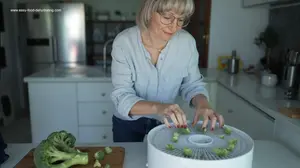




More From Easy Food Dehydrating
How Many Vegetables Fill a Dehydrator: Tray Guide & Tips
Find out how many vegetables fill a dehydrator using Nesco tray estimates, with tips for slicing, spacing, and planning each batch.
How to Dehydrate Broccoli: Easy, Tasty, and Foolproof
Learn how to dehydrate broccoli—fresh or frozen—at 125–135°F. Easy steps, storage tips, and tasty ways to use it.
How to Dehydrate Peppers: Easy, Bold Flavor Storage
Step-by-step guide to dehydrate peppers for long-term storage, quick cooking, and homemade spice blends.
How to Dehydrate Peas: Fresh, Frozen & Canned
Learn how to dehydrate fresh, frozen, or canned peas with the right preparation, temperature, drying time, storage tips, and an easy glove trick!
Dehydrate Brussels Sprouts for Tasty Snacks & Storage
Learn how to dehydrate Brussels sprouts with simple steps, storage tips, and tasty ways to enjoy them year-round.
How to Dehydrate Pumpkin: Slices, Powder & Dog Treats
Learn how to dehydrate pumpkin at 135°F for brittle slices and powder, with preparation, drying, storage, troubleshooting, and dog treat tips.
Before You Go...
If you enjoyed this page, tap the ❤️ in the lower right-hand corner. It saves this page to your Grow bookmarks so you can find it again later.
You’ll also see quick share buttons to copy the link, post to Facebook, or save it straight to Pinterest.

Test Your Food-Dehydrating
Know-How
Choose a food, make the right preparation, drying, and storage decisions—and see how many stars you can earn!
Play “Save the Harvest”Test Your Food-Dehydrating
Know-How
Choose a food, make the right preparation, drying, and storage decisions—and see how many stars you can earn!
What We Mean by “Dehydrate”
Here at Easy Food Dehydrating, “dehydrate” always means using an electric food dehydrator — the easy, reliable way to dry food at home.
What We Mean by “Dehydrate”
Here at Easy Food Dehydrating, “dehydrate” always means using an electric food dehydrator — the easy, reliable way to dry food at home.


LATEST READS on EFD


-
How to Dehydrate Citrus Slices: Lemons, Limes & Oranges
Sep 19, 26 03:28 PM
 Learn how to dehydrate citrus slices at 135°F. Easy steps for lemons, limes, and oranges with tips for checking doneness, conditioning, and storage.
 -
How to Dehydrate Cabbage: Temperature, Storage & Creamy Slaw
Sep 19, 26 11:57 AM
 Learn how to dehydrate cabbage at 125°F, including how to prepare, steam-blanch, test for doneness, condition, store, rehydrate, and make creamy coleslaw.
 -
How to Make Homemade Dog Food: Chicken & Beef Recipes
Sep 18, 26 01:11 PM
 Meet Chicken Chow-Chow and Bow Wow Beefy Chow, learn how I prepared Minnie’s meals, and discover what to consider before feeding homemade dog food daily.


Unlock the Secrets of Food Dehydrating... from Fruit 'n' Veg to Doggie Dinners!




AFFILIATE DISCLOSURE: I am an Affiliate for Amazon, and other sellers of quality merchandise. Should you purchase an item through their links, I may receive compensation. The price you pay does not increase. THANKS for your support! Read full disclosure here.
easy FOOD DEHYDRATING: Making food preservation simple since 2010. I show you how to keep your food pantry full, whatever the reason or season!

HOME ARTICLES CONTACT ADVERTISING DISCLOSURE DISCLAIMER FAQ PRIVACY SITEMAP TERMS TESTIMONIALS
ALL CONTENT COPYRIGHT © 2010-2025 • ALL RIGHTS RESERVED REGARDLESS OF LINKS OR ATTRIBUTIONS.
POWERED BY SBI! (SOLO BUILD IT!)
As an Amazon Associate, I earn from qualifying purchases.